Largest wildlife overpass in North America located in Colorado with 91% reduction in collisions: "Big success"

Nine months after North America's largest wildlife overpass opened in Douglas County, the officials behind it say it's been a big success. For decades, I-25 restricted the seasonal movement of animals in Douglas and El Paso counties, and was the end of the road for many.
"It was an effective wall that they had to play Frogger and try to get across," said Brandon Marette, CPW wildlife biologist. "This area was getting about one deer hit a day during those high movement periods in the spring and fall."
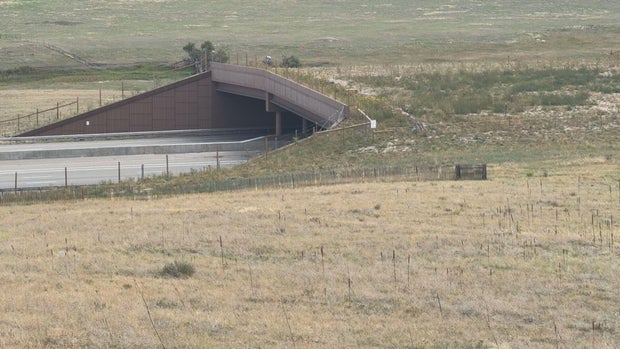
But now, a wildlife mitigation system made up of North America's largest wildlife overpass, five wildlife underpasses and fencing to guide animals to the crossings, has led to a 91% decrease in wildlife collisions.
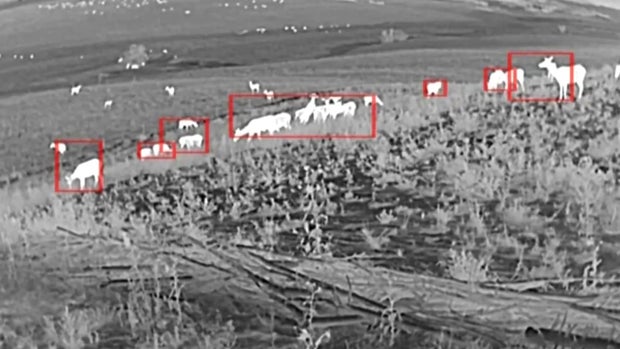
"Based on the video feed that we're collecting, huge success. We're seeing elk herds cross the bridge. We're seeing pronghorn for the first time in decades cross over to the west side of I-25 because of the bridge," said Chuck Attardo, CDOT Environmental Manager.
The 209-by-200-foot overpass spans Interstate 25 near the Greenland exit between Larkspur and Monument, an area that has historically seen many wildlife collisions. It was designed especially for pronghorn and elk.
"Elk and pronghorn like these big open structures where they can see for miles in each direction," Attardo said. "For decades, pronghorn going from Trinidad to Greenland were looking for a place to cross on I-25. And when we open this up, we have pronghorn on video using the overpass, and for the first time in decades they're coming over here to the west side."
But in the last nine months, it's also provided safe passage for bears, deer, coyotes, and other animals.
Wildlife biologists even piled wood into a pathway for small mammals.
"So that coyotes, foxes, and hawks don't pick them off when they're trying to cross I-25 on the overpass," Marette said. "We're not just focused on the big game species, but also on the smaller. This is an area where Preble's meadow jumping mouse, which is federally threatened, lives, and so Preble's also needs to get to the other side of I-25 too. But it's not just Preble's; it's also northern leopard frogs. It's also all the non-listed species of reptiles, amphibians, and rodents."
CDOT is working to establish more vegetation on the overpass to better attract animals; this year's drought has slowed that progress because it affected germination and growth. Next year they will bring in new topsoil and try again.
The overpass opened in December ahead of schedule and under budget. The project received $22 million in federal infrastructure investment funds and $8 million from the state, but Attardo said contractor Kraemer North America was able to complete it for just $15 million.
"They pay for themselves in about 15 years because of all those accidents that they prevent, and so why wouldn't you do more of these?" Attardo said.
Attardo points out that reducing wildlife collisions doesn't just save human and animal lives, but prevents property damage, the spending of public service dollars, and traffic delays.
CDOT hopes to create similar crossings elsewhere in the state when federal grant funding becomes available. Some priority areas include: I-25 at Raton Pass near the New Mexico border, US-40 near Empire, State Highway 160 near Mesa Verde, East Vail Pass, US-40 near Craig, US-287 near Fort Collins, and projects near Boulder.
A state law recently passed makes more state funding available for these mitigation projects.
"We think [the law] could generate, you know, in the neighborhood of $3 million a year through this. And we're already starting to think about what projects we can do. Now, $3 million a year is not huge money, but that gives us money that we can use as grant match for the big federal grants that we need to go after to build these big projects," Attardo said.
The goal is safe passage for humans and animals alike.
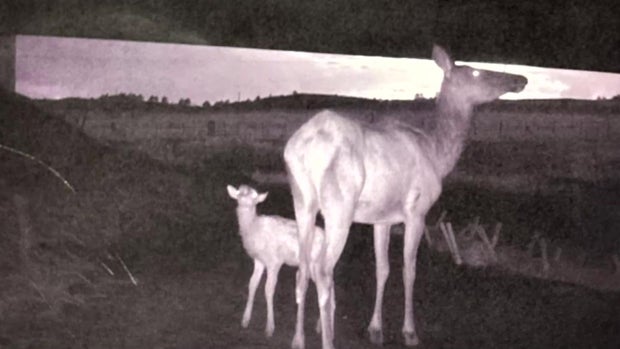
"One of the most heartwarming moments for me was when CDOT sent me a picture of an elk mama taking her calf under I-25," Marette said.
The proof is in the pictures.
"All the hard work for six years," Marette said, "all came to fruition in that one moment. That elk with her calf was just standing there in safety, getting to the other side of I-25."
Attardo and Marette both credit partnerships with getting the overpass project done. The Federal Highway Administration, CDOT, Colorado Parks and Wildlife, Douglas County, the Douglas Land Conservancy and the Colorado Cattlemen's Agricultural Land Trust all made the Greenland wildlife crossing possible.
"Everybody marching in the same direction. So I really can't stress enough how important it is to have leadership on your side when you're trying to do big projects like this," Attardo said.
"Big success, and something that I'm very proud of the collaboration with not only internal staff but also with CDOT, Douglas County and the Douglas Land Conservancy," said Marette.
The Douglas Land Conservancy and Colorado Cattlemen's hold conservation easements on either side of the highway.
"Douglas Land Conservancy is a small land trust. We hold a little over 28,500 acres of different public spaces and private spaces," said Laura Sanford, executive director of the Douglas Land Conservancy. "Our conservation easements allow different uses on each side of the overpass."
CBS Colorado was invited to join the partners on a field trip to the overpass as part of the Rally National Land Conservation Conference.
"It's something that is one of the most altruistic things you can do because it's not just for you; it is for everyone," Sanford said. "Conservation is all around you, and it's for everyone."


