Fired immigration court judge shares concerns about enforcement of nation's laws
A federal immigration judge fired by the Trump Administration's Department of Justice is sharing the story of her dismissal and concerns about the court system.
"I can honestly say that every day I went in and made the decision that I thought was correct under the law," now former Judge Brea Burgie told CBS Colorado.
"I tried to look at the law every day and apply the law as I saw it."
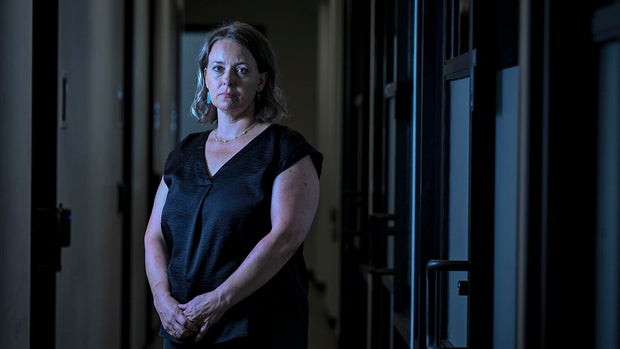
Burgie says she signed thousands of deportation orders through her years as a judge. She was appointed under President Trump in 2019, after 10 years working as an attorney in the nation's immigration system as an immigration staff attorney and a representative to the immigration courts with the general counsel's office.
Burgie is one of more than 100 immigration judges around the country who have been fired by DOJ. She is contesting her termination with the Merit System Protection Board. During the years from the George W. Bush Administration through the Obama, Trump and Biden years, Burgie says political priorities would swing to the right or left depending upon the administration in office.
"In every administration there is this back-and-forth swing of priorities, of which cases we're going to hear, which cases we're not going to prioritize," said Burgie.
But Burgie says the Trump Administration has taken things further than previous administrations.
"To me there is certainly a pushing of boundaries that has never happened before," said Burgie.
Immigration judges are under the employment of the Justice Department and the U.S. Attorney General, unlike federal district court judges who are supervised by the courts, with the Chief Justice of the Supreme Court as the top authority.
Burgie's firing came from the Executive Office for Immigration Review in the Department of Justice in June. But the dispute between her and the Department of Justice started months earlier.
She first was publicly criticized by Immigration and Customs Enforcement late last year after a bond decision relating to immigrant Jeanette Vizguerra, a resident of Colorado. Vizguerra, an immigrant in the country without documents and a well-known critic of President Trump, was held in ICE custody for nine months as the government asserted Vizguerra should be deported. A district court ruled that Vizguerra was entitled to a bond hearing which ICE had denied her. Burgie found that Vizguerra, who has U.S. born children, including a daughter in the U.S. military, was neither a flight risk or a threat and granted bond.
ICE lashed back following the decision, with an ICE spokesperson calling Burgie "an activist judge."
In late January immigration judges received a directive from the Justice Department that Burgie and other judges said they found disconcerting. It told them they were to deny bond hearings after a federal district court ruled that people in certain categories in the immigration system were eligible for bond hearings.
"We all got an email from the chief immigration judge saying that DOJ's official policy was that we had to follow what the Board of Immigration Appeals had said and not follow the District Court Order," she explained.
The decision came from a Justice Department board.
"Essentially the Board of Immigrations Appeals changed 30 years of interpretation of that bond law in September. Saying that none of these people were even eligible to even have a bond hearing let alone receive one and be released."
Burgie said she and other judges were in a bind.
"My interpretation of that and the interpretation of the majority of the other judges here in Denver was that we were bound by that District Court order and so all of us were granting bond hearings," she said.
Soon after, Burgie was removed from hearing any detainment proceedings in a disciplinary action.
Burgie says the vast majority of cases heard by immigration judges are requests for asylum. She says her asylum grant rate was higher.
"It was the highest in the Denver court. It was not high compared to the national rate," she said.
She believes she was willing to make hard choices.
"Sometimes you have families that have been here for again decades and have done all the right things, except for the initial entry illegally. But there's no immigration relief. And you that's not fun to order somebody like that deported. But that's the law."
In June, while Burgie was on vacation with her family, she got a call informing her that she'd received a termination notice. The emailed notice from the Department of Justice's director of the Executive Office for Immigration Review within the Department of Justice did not state a reason for her firing.
The Executive Office for Immigration Review in the Department of Justice declined to discuss her firing, saying it does not comment on personnel matters. But the DOJ did share this comment:
"After four years of the Biden Administration forcing Immigration Courts to implement a de facto amnesty for hundreds of thousands of aliens, this Department of Justice is restoring integrity to our immigration system and encourages talented legal professionals to join in our mission to protect national security and public safety."
Last month the Tenth Circuit Court of Appeals, which has jurisdiction over Colorado and five other states, ruled the ICE policy of mandatory detention is unlawful. The Department of Homeland Security which oversees ICE said at the time:
"DHS strongly disagrees with the Tenth Circuit panel and is confident in its legal position regarding mandatory detention. That is why DHS recently sought Supreme Court review of a similar decision from the Sixth Circuit. Opinions from the Board of Immigration Appeals and two other federal courts of appeals reflect the soundness of DHS's legal position."
Burgie says, "I've watched the immigration court over the past year-and-a half just change dramatically," she said, explaining that the changes during the second Trump Administration are far greater than under other administrations. "We went from granting around 40% of asylum cases to 8% now."
She believes it is a tactic.
"So you can hold people in detention for long periods of time, they give up and go home. So this is part of this larger strategy by the Trump Administration to increase deportations."
She feels the interference in the work of judges is improper.
"I spent eight years at the General Counsel's office managing federal litigation and I will tell you that we never told judges how they had to rule based on federal court litigation," she explained.
"If a conservative administration is allowed to do this, then a Democratic administration will also be allowed to do this. And it's going to wipe out all the institutional knowledge, it's going to wipe out essentially the ability of our government to function," she said.


