Historic downtown Denver office building overlooking State Capitol will be converted to housing

Office buildings in Denver took a hit during the COVID-19 pandemic when people stopped commuting into the office and began working remotely. The owners of these spaces are continuing to see the effects: Nearly 30% of downtown office spaces are vacant, according to the Downtown Denver Partnership.
Changes are now underway at a historic downtown Denver office tower that has been around for nearly 70 years. After the sale of the Petroleum Club Building on the corner of 16th Street and Broadway fell through back in 2020, its owner, Tim Borst, turned his attention to housing.
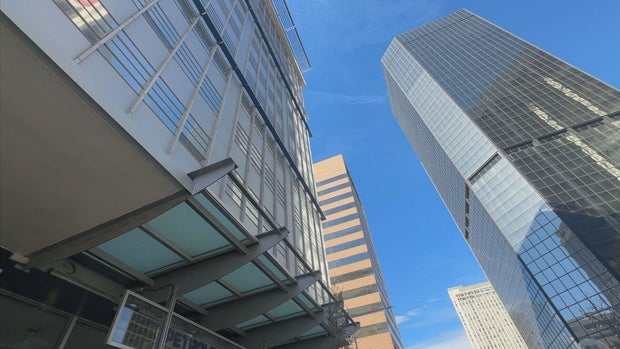
Borst's solution to the vacancy issue is a $67 million project to convert the building into 178 market rate apartments. The units will range from studios to three-bedroom apartments.
"It preserves the urban fabric of Denver. It preserves history, and it also converts to a new use," said Alex Garrison, the design director at Gensler, the project's architect.
This particular building is packed with history. It helps tell the story of Denver's growth, as it was the tallest building in the Mile High City when it was built in the 1950s. It also helps tell the story of Denver's rich history in the oil and gas industry, as it once housed the club of oil and gas professionals it gets its name from.
Garrison says older office buildings make for perfect conversion to residential because the smaller spaces are easier to divide into units that get enough natural light. However, the project will also come with added costs.
"If it's a new project, the bigger pie chart might be the structure or the facade of the building," Garrison said. "But, in conversions, it typically just means there's just a lot more work that goes into plumbing, electrical, mechanical."
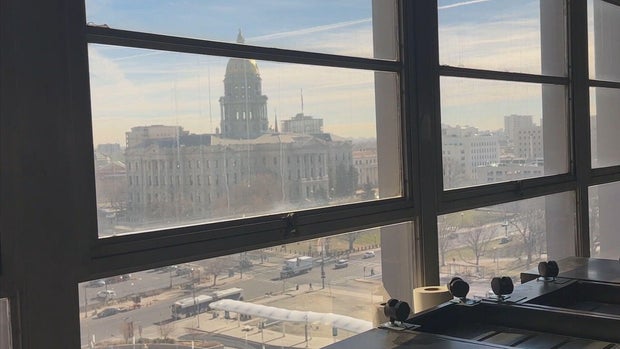
Construction is set to begin late spring of 2026 with a completed goal of the summer of 2027.
The project is backed by the Downtown Development Authority, which recently awarded a low-interest loan to help fund it. The owners are also able to take advantage of state and federal historic tax credits, paving the way for the next chapter in the building's story.
"This project is notable because it is among a few that are leveraging other more creative ways to get this project done through partnership," Garrison said. "It also is a great location, so it puts residential where it wants to be, which is in the heart of downtown."