Floating islands helped reduce algae. Lakewood is using what it learned to protect a popular Colorado swimming lake.

Four years after Lakewood launched a project using floating wetlands to fight harmful algal blooms, officials in the Colorado city say the pilot succeeded. It also taught them that no single solution will be enough as Colorado's summers become hotter and drier.
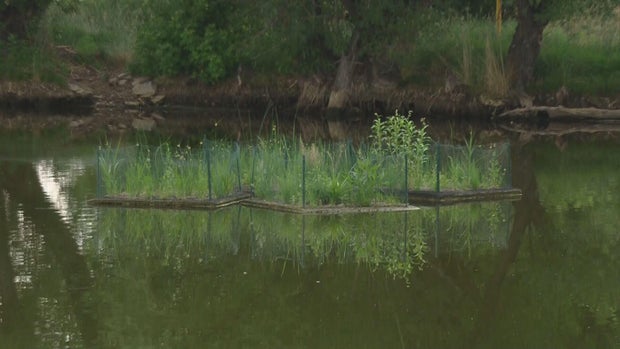
In 2022, CBS Colorado first reported on the city's installation of floating treatments, where artificial islands planted with native vegetation were designed to absorb excess nutrients that fuel blue-green algae.
At the time, officials hoped the project could reduce harmful blooms while improving water quality. Today, the floating islands remain in place.
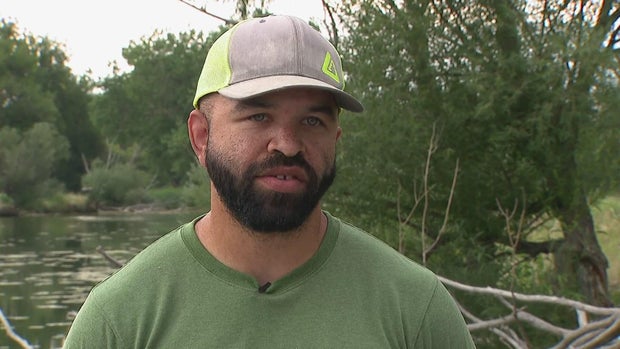
"I feel pretty good overall," said Lee Blair, Lakewood's open space supervisor. "They've been pretty successful for the pilot project."
The floating islands work by acting as living filters. Native plants grow on floating platforms while their roots extend into the water, absorbing nitrogen and phosphorus — nutrients commonly introduced through lawn fertilizer and urban runoff. The roots also provide habitat for beneficial microbes that compete with blue-green algae for those same nutrients.
At Stonehouse Pond, the islands were paired with EutroSORB F filtration socks, which capture phosphorus as water enters the pond. Together, the two systems reduce the amount of nutrient pollution available to feed harmful algal blooms.
Despite the project's success, visitors to Stonehouse Pond today will still find algae.
Blair said this summer's combination of drought, extreme heat and low water levels has created ideal conditions for blooms.
With lower water levels, the pond isn't circulating the way it normally would.
"We're not getting the flow that we normally would," Blair said. "Sitting stagnant water will also kind of contribute to that."
Blue-green algae, a cyanobacteria rather than a true algae, naturally exists in many Colorado water bodies. But, when warm temperatures, stagnant water and excess nutrients come together, it can rapidly multiply into blooms capable of producing dangerous toxins.
This summer, blooms have already closed Lake Windsor, Jackson Lake and Boulder Reservoir.
Those toxins can make people and animals sick if contaminated water is swallowed. Blair said pet owners should wash their dogs if they come into contact with water experiencing a bloom.
While Stonehouse Pond still experiences algae, Blair pointed to nearby Big Soda Lake as an example of how the city has expanded on what it learned.
Instead of floating islands, Big Soda Lake receives an annual spring treatment using EutroSORB G, a granular product spread across the lake that sinks to the bottom and permanently binds phosphorus trapped in lake sediment before it can fuel summer algae blooms.
"We've done a lot of work over there," Blair said. "It locks up a lot of the phosphorus that allows these blooms to happen, and you can see, right now, it's pretty crystal clear."
Without those treatments, Blair said the lake would likely look much different.
"It probably would be getting a blue-green algae bloom at this time, very soupy, dark green," Blair said.
Although funding for the original floating wetlands pilot has declined, Blair said the project has influenced other communities.
"We've actually seen a lot of different agencies kind of following suit," he said, citing Denver, Westminster and other municipalities exploring similar floating wetland projects.
Blair said maintaining the islands requires ongoing work, including removing invasive plants, repositioning islands that drift and caring for the native vegetation.
Looking ahead, Blair hopes communities continue investing in a combination of passive systems such as floating wetlands and newer phosphorus treatments.
"I'd love to see more floating islands and more technology down that way," he said. "There are newer pre-treatments and active treatments in lakes that are becoming safer and more affordable for everyone."
As climate conditions continue changing, Blair said protecting Colorado's lakes will only become more important.
"All these bodies of water people need for a variety of different reasons, whether it's recreating, drinking water and also our wildlife," he said. "It's really important for them too."


