Flight patterns change at Rocky Mountain Metropolitan Airport in Colorado, bringing new complaints
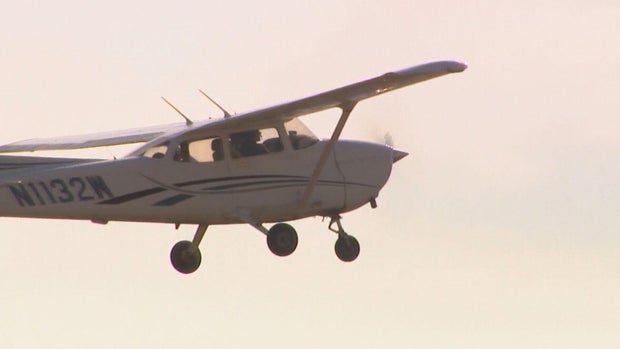
Last year, the Rocky Mountain Metropolitan Airport in Broomfield, Colorado, had record takeoffs and landings with a total of 294,000 flights. That averages up to 33 flights an hour.
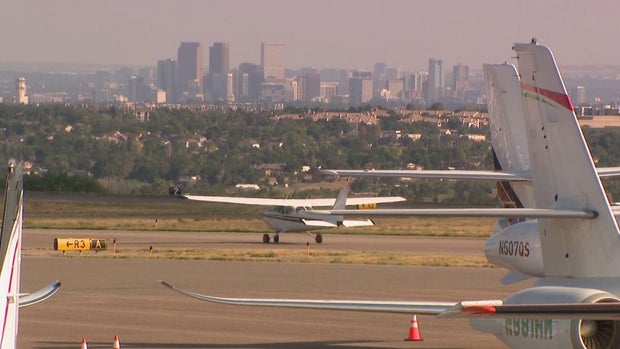
That volume of flights has also landed some complaints and lawsuits that are ongoing. But a new flight pattern has a different community lodging complaints against Colorado's third-busiest airport.
CBS Colorado has reported extensively in the past about efforts from people in Superior to limit the flights over their homes. Now, new neighbors in parts of Louisville and the Spanish Hills area of Boulder County are finding the skies less than friendly.
"This chopping sound. It's, it's like, worse than a lawnmower right outside your window," Louisville resident Gary Mansdorfer said.
"It's chop, chop, chop. And it goes kind of through your body," Louisville resident Janice Whitaker said.
One of her neighbors, Marty Reibold, said, "It's constant, it's every couple of minutes, another one goes over."
Mansdorfer just moved back into the neighborhood after losing his home in the Marshall Fire. He explained, "We didn't move in next to an airport, and we may not have rebuilt this house for the last year and a half had we known it was going to be like this."
And while the City of Louisville neighbors the Broomfield airport, the planes didn't fly this way before, only coming over their homes after flight paths changed this summer.

"The people of Superior, I knew that was going on, and I felt sorry for them, but I never expected them to push it over to our neighborhood, like, get out of here, go someplace else," Whitaker said.
CBS Colorado Your Reporter in Broomfield Sarah Horbacewicz asked the Airport Director, Erick Dahl, "What can you do?"
To which Dahl said, "We don't control the flight paths. We don't control operations in and out of the airport. We don't really control operations on it. And so what we're trying to figure out is how we can take people's frustrations or their voices and their concerns."
And on Wednesday, addressing those concerns came in the form of a town hall at the Rocky Mountain Metropolitan Airport. Pilots and concerned neighbors showed up, but the FAA did not.
Dahl explained that his last guidance from the FAA about flight paths came from a community round table that disbanded more than a year ago.
"What the FAA told us then was that they don't make flight path changes without hearing from the community first, in this case, took us by surprise. We were not asked. The airport was not consulted about changes to the airspace," Dahl said.
But if you call the FAA, their voicemail for noise complaints encourages callers to contact their local airport instead.
"I don't know who to talk to. That's part of the frustration: who is really accountable?" Mansdorfer said.
When asked if the new patterns would stay and for how long, Dahl said, "I don't have an answer."
At the town hall on Wednesday, RMMA staff also encouraged the public to share their concerns in a letter to the FAA.
In the meantime, Dahl says the airport has asked pilots this year to try and follow curfews and limit touch-and-gos, but according to federal regulations, all of that has to be voluntary.