Douglas County seeks Colorado Supreme Court review in open meetings lawsuit

A lawsuit centering around whether the Board of Douglas County Commissioners violated Colorado's open meetings laws could continue all the way to the Colorado Supreme Court.
"Transparency is what we want," said former Douglas County Commissioner Lora Thomas.
Thomas says current commissioners violated the Colorado Open Meetings Law during closed-door discussions about last year's Home Rule effort.
"Meetings where they were discussing public policy, but they weren't posted, they weren't recorded, so the public didn't know about it," Thomas said. "There had been no public discussion before the three commissioners put Home Rule on the ballot, so we knew that they had been violating open meetings laws."
Thomas, a Republican, sued the board in April 2025, along with Democratic state Rep. Bob Marshall and unaffiliated voter Julie Gooden.
"We wanted to make this clear that this isn't a partisan issue. Everybody demands transparency from their government, and we're not getting it from the Douglas County commissioners," Thomas said.
Thomas resigned as commissioner in late 2024 after years of infighting with her fellow commissioners, but she insists the lawsuit has nothing to do with personal grievances.
"All we want is for the commissioners to follow the law, and whether George Teal and Abe Laydon abused and picked on me for four years has nothing to do with the public being able to see government in action," Thomas said.
In May 2025, a district court judge denied a preliminary injunction to stop the Home Rule election and sided with the board, concluding the challenged meetings were largely administrative and were not subject to the Colorado Open Meetings Law, and finding the plaintiffs had not proven the commissioners made Home Rule decisions in secret.
Voters rejected Home Rule last June, but the case kept playing out in court.
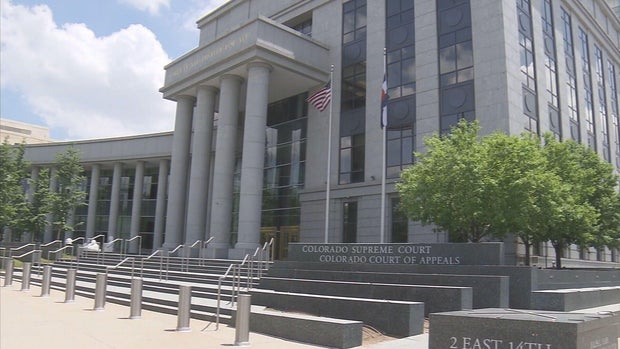
In April of this year, the Colorado Court of Appeals reversed the district court's ruling, finding the executive sessions were subject to Colorado Open Meetings law, and the board failed to comply with executive session requirements.
"It says accordingly, 'We conclude that the BOCC's failure, by its own admission, to strictly comply with the statutory requirements to convene an executive session violated COML,'" Thomas said while reading from the appellate court's decision. "So right here the county attorney says they violated the law, and the Court of Appeals confirms that the law was violated."
The appeals court sent the case back to the district court to proceed and determine if the commissioners continued to violate the open meetings law.
"We were excited because we want a good government. We want our public decisions by our commissioners done in the public, and so by the Court of Appeals saying the commissioners violated open meetings laws is the first step in bringing transparent government back to Douglas County," Thomas said.
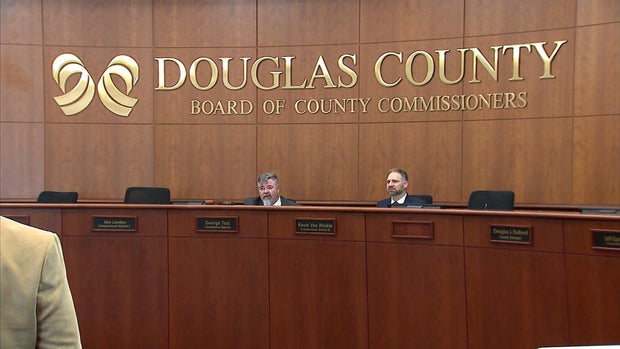
On April 2, Douglas County shared the following statement:
"Today, the Colorado Court of Appeals reversed and remanded a decision denying allegations Douglas County violated Colorado Open Meeting laws.
State Rep. Bob Marshall and Douglas County residents Lora Thomas and Julie Gooden filed legal action against the Board of Douglas County Commissioners on April 22, 2025, seeking to halt the Home Rule special election, which occurred in June 2025.
They filed for a temporary restraining order on April 22, which the judge did not grant. The judge in May 2025 denied a preliminary injunction, also seeking to halt the election while their legal action is pursued. On June 8, the Court denied the Plaintiffs' forthwith motion for entry of injunction pending appeal. Today, the Colorado Court of Appeals reversed that decision.
Still, the Court found Plaintiff's request to stop the County's Home Rule election moot and granted no injunction in this matter.
The Appellate Court held the Trial Court did not adequately make all the required findings. The Appellate Court has ordered the parties have another hearing where the Trial Court can hear additional evidence.
While the County disagrees with portions of the decision, because the Appeal was related to a preliminary injunction, it anticipated the matter would require further adjudication.
The County is currently weighing whether to return to the Trial Court where it can present further evidence of its compliance with the law or request additional review by the Colorado Supreme Court."
On April 9, after deciding to appeal to the state Supreme Court, the county shared more information and this statement:
"Douglas County continues to agree with the District Court's ruling. The County intends to challenge the recent Court of Appeals' decision regarding county meetings to further clarify Colorado Open Meetings law and provide improved transparency and access to information. Douglas County remains steadfast in its commitment to transparency and adherence to Colorado Open Meeting laws."
After the Court of Appeals denied the county's requests to rehear the case and publish its opinion, the plaintiffs sent a settlement offer.
"Give them a way to save face and admit they violated the law, promise not to violate the law anymore, go into executive sessions following the law, and pay our legal fees," Thomas said.
Thomas says she never got a response to that settlement letter. Instead, the county recently filed for a 30-day extension to file a petition for writ of certiorari with the Colorado Supreme Court. It was granted, and now the county has until June 29 to formally petition the Supreme Court.
The county told CBS Colorado:
"The Board of Douglas County Commissioners takes this lawsuit, and the Colorado Open Meetings Law, seriously. The Board's request for a routine extension to file for review in the Colorado Supreme Court is consistent with the diligence and seriousness with which they are approaching this matter."
But Thomas thinks it's a waste of taxpayer dollars. If her side ultimately prevails, the county would be responsible for their attorney fees.
"The commissioners have spent a lot of money. We have spent over $80,000 trying to get transparency in Douglas County government, so this is wasting more taxpayer dollars," Thomas said. "This was not done for us to become rich. In fact, every month I get an email from Steve Zansberg's office with another amount I need to pay. It's coming out of my retirement funds, but this is how much I believe that we need transparent government here in Douglas County."
On a webpage with information about the Open Meetings lawsuit, the county says:
"Douglas County values transparent, efficient government and public accountability. That's why the Board of Douglas County Commissioners is seeking legal clarity regarding a recent interpretation and application of Colorado's Open Meetings Law by the Colorado Court of Appeals."
Under an FAQ titled "How much is this costing the County?" on that webpage, it says:
"The Board has hired outside legal counsel at a rate between $495-$700 per hour. The legal questions at stake could affect governance across Colorado for years to come, and the County has a responsibility to ensure it receives experienced legal representation on matters with long-term implications.
Without clear legal standards, local governments across Colorado could face increased litigation, inconsistent interpretations and operational uncertainty. Clarifying the law now may reduce future legal disputes and taxpayer costs over time."
"That's simply not true. The law is clear. If you talk about public business, it needs to be in the public," Thomas said. "There's no confusion, no new standards."
Now, Thomas, her fellow plaintiffs, and the county will wait for the Supreme Court's decision. If the state's highest court doesn't take the case, the Court of Appeals ruling will stand, and the lawsuit will head back to district court.
"The commissioners are continuing to sneak around behind closed doors, making deals with their cronies without the public seeing what's going on. That's what's frustrating. We want that to stop. We want transparent government," Thomas said. "What we want is for the commissioners to stop violating Colorado open meetings laws and discuss public business in public. That's all we want."


