Diesel prices just hit a new record. Would a U.S. export ban bring relief?
Some Republican lawmakers are calling for a ban on U.S. diesel exports as a way to lower record-high prices. But energy experts warn the move could backfire and drive diesel prices even higher by worsening the global supply crunch.
Average diesel costs hit a record $6.53 a gallon on Tuesday, up 77% from a year ago, according to AAA data. Diesel is vital across the nation's agriculture, trucking and construction sectors, with the price surge especially painful for farmers and small businesses.
Many of the calls for a diesel export ban are coming from lawmakers in states with agriculture-rich economies. Iowa Republicans Sen. Chuck Grassley and Rep. Ashley Hinson are among those calling for American energy companies to be barred from selling diesel outside of the U.S., arguing that could help lower prices for Americans.
Tennessee Rep. Tim Burchett, a Republican, introduced two related bills on Sept. 17, one that would ban diesel exports through January 2027 and another that would trigger an export ban any time diesel hit a national average of $5 or more per gallon.
"W diesel $6.57 in Iowa why doesn't Pres Trump put an embargo on diesel exports like presidents in the 70s put embargoes on ag products bc food prices were inflated. High diesel prices ARE KILLING FARMERS INCOME," Grassley wrote in a Sept. 19 social media post.
President Trump on Tuesday said his administration is considering a diesel export ban as a way to lower costs for businesses and farmers, according to the New York Times.
"I've called for it," Mr. Trump said of a diesel export ban, the newspaper reported. "I've called for it within my people. I've been talking about it."
Mr. Trump and Energy Secretary Chris Wright have discussed a diesel export ban, although no final decisions have been made, according to administration officials.
Why a diesel export ban wouldn't ease prices
But experts say a proposed diesel export ban wouldn't ease prices because it misdiagnoses the problem. They note that the U.S. exports diesel because domestic refineries produce more of the fuel than the country consumes. But because diesel is traded on global markets, prices have surged due to production and shipping disruptions caused by the Iran war and the Ukraine-Russia war.
In July, Russia banned exports of diesel amid Ukraine's attacks on the country's production facilities, removing supply from an already tight international market. Russia typically produces about one in nine barrels of diesel worldwide, which means it is now effectively supplying none to the market, Patrick De Haan, a petroleum analyst at GasBuddy, told CBS News.
Meanwhile, barring U.S. refiners from selling diesel overseas could increase the global shortage, pushing diesel prices higher, he added.
An export ban "is very likely to backfire," De Haan said. "Most lawmakers think, 'Oh, hey, this sounds easy, let's just back up products in the United States,' but that doesn't put them in the place they need to be. It's just fraught with problems that haven't been thought out."
U.S. refineries produce about 5.3 million barrels of so-called distillates — the energy industry's term for fuels that include diesel, home heating oil and jet fuel — per day, while domestic demand absorbs about 3.6 million barrels per day for these products, according to De Haan.
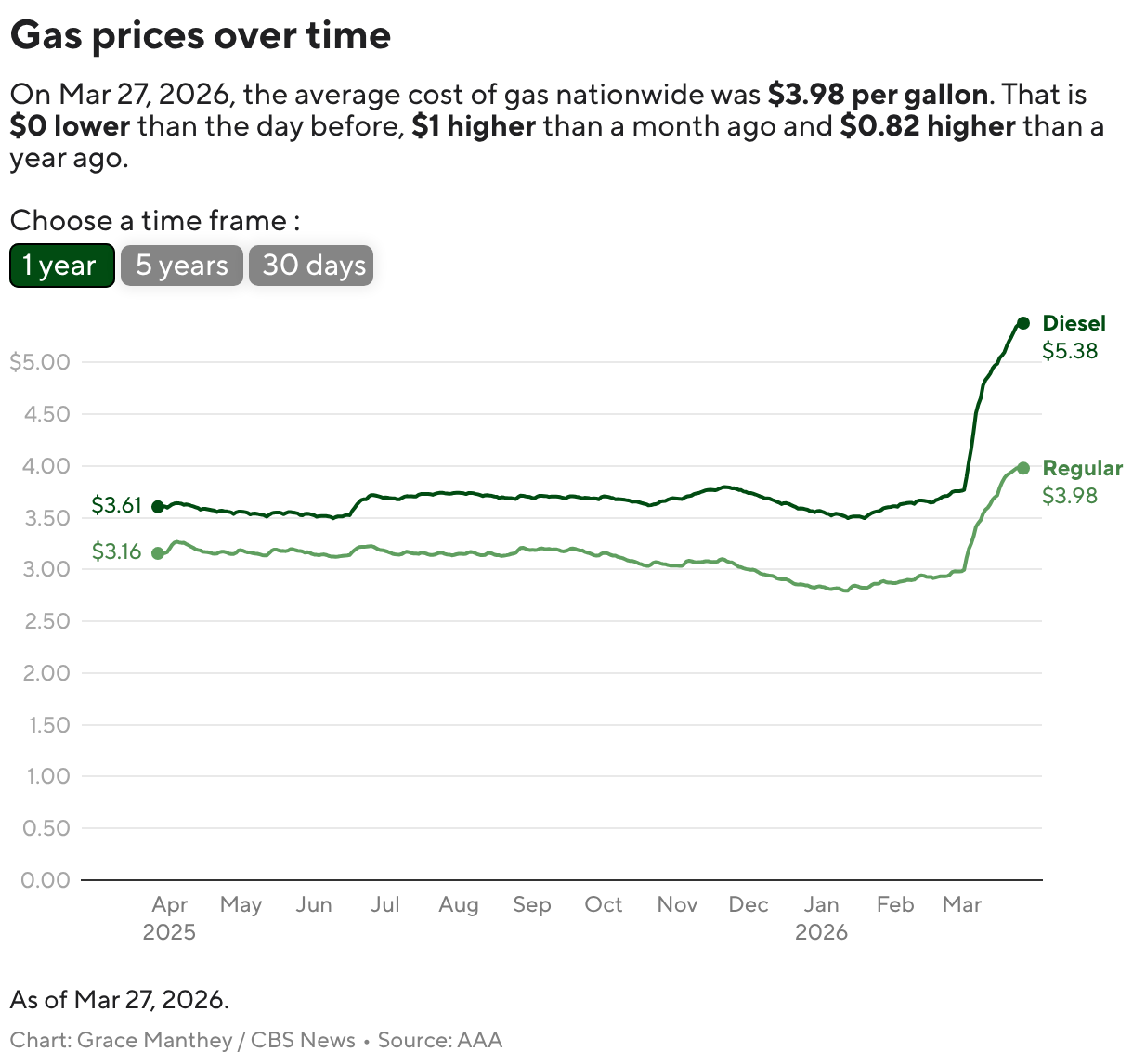
Diesel prices have soared because of global shortages, even though U.S. production exceeds domestic demand. Because diesel trades internationally, American consumers and businesses pay prices shaped by those global dynamics, he explains.
A diesel export ban could also lead to unintended consequences for U.S. production, experts told CBS News. American refiners could respond by cutting output, putting more upward pressure on diesel prices, or even shifting to producing other types of fuel that they could legally sell outside the U.S.
"Refineries are just going to try and get around it — they have a business to run," De Haan said. "There will be shifts that happen whether refineries start producing something that's not quite fully refined and exporting that, or they could very easily switch over to more jet fuel production."
Domestic refineries would likely cut diesel production in response to an export ban, removing domestic supplies that the ban was supposed to protect, Tracy Shuchart, CEO of energy consulting firm Hilltower Resource Advisors, said in a Sept. 15 social media post.
Foreign buyers would likely cement new deals with non-U.S. diesel suppliers, potentially weakening domestic companies in the long term, she added.
So what could lower diesel prices?
Instead of an export ban, the U.S. could turn to other measures to ease diesel prices. De Haan said the Trump administration could extend an existing waiver of a law, the Jones Act, that requires goods shipped among U.S. ports to be carried on U.S.-built, U.S.-flagged and U.S.-crewed vessels. That waiver is set to expire on Nov. 15.
Another option would be to temporarily waive a federal rule that requires refiners and retailers to sell a certain amount of renewable fuel, mostly ethanol, a step De Haan said could lower fuel prices by about 10 cents to 20 cents a gallon.
"Aside from that, the only thing that the administration really can do is get the Strait reopened," he added, referring to the Strait of Hormuz, the vital Middle East waterway that, before the conflict with Iran, carried a fifth of global oil supply.
Separately, De Haan said that fears about diesel shortages in the U.S. are unfounded. Although a handful of gas stations may report being out of fuel at any given time, data from GasBuddy, a real-time tracking service, shows no diesel shortages.
"It's not abnormal for stations to run out of gasoline —premium, mid-grade, diesel — and there can be a lot of different reasons for that," he told CBS News. "On a daily basis, there's probably somewhere in the ballpark of 0.5% to 1% of stations that may temporarily run out."
Some stations may also opt to delay buying a new shipment of diesel, given the current high prices, hoping to see lower costs down the road, he added.