Denver Zoo conservationists tracking flamingo population in Peru
On any given day, there may be a flock of flamingos out for a stroll at the Denver Zoo. The people parade right along with them.
"We took a walk with the flamingos," said 10-year-old Ella. "It was like being really close to the animals. I've never been that close to the animals."
Ella was excited about her flamingo encounter.
"Kind of scared, but kind of like, 'I finally get to do this,'" she said.
In addition to getting close to the birds, she also got a lot of new knowledge about them.
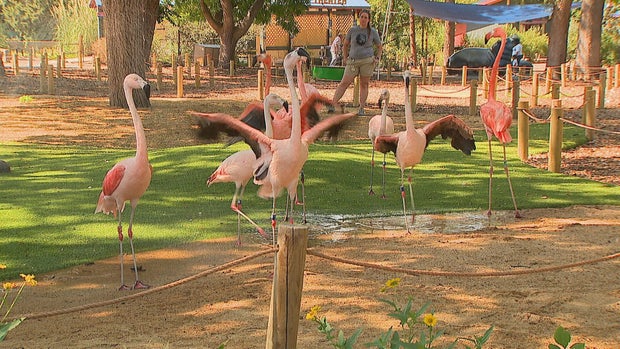
"They get excited. They jump around. They flap their wings. So, we call those 'Flamingo Zoomies.' They're just very happy to be out in a big open space," explained the Denver Zoo Conservation Alliance staff member.
The Denver Zoo houses 72 flamingoes. There are six species of flamingoes worldwide. Denver Zoo is home to both the American species and the Chilean species. American flamingoes are taller and a brighter shade of pink, while Chilean flamingos are more white.
"They have their beak, which has a lot of nerve endings just like our fingertips. So, when they want to feel new textures or new substrates, they will take their beaks and go side to side just to feel it," the staff member explained.
While the staff in Denver is educating visitors about the flock here, Denver Zoo Conservation Alliance workers in the field are focused on Chilean flamingos, which live in South America. One flock lives at 13-thousand feet on Lake Junin in the Andes Mountains of Peru.
"It had been reported that there had been nesting about 10 years ago, but there has been no scientific documentation since," said Matt Herbert, Regional Conservation Director for Latin America at Denver Zoo Conservation Alliance.
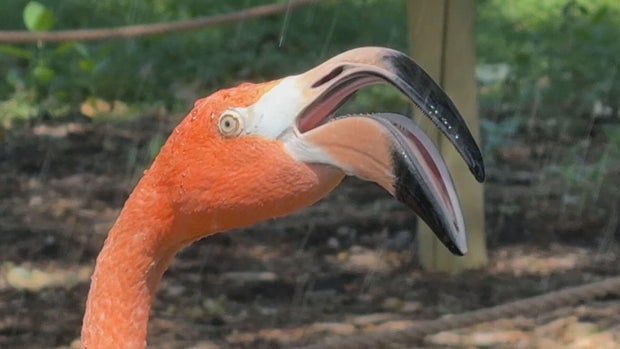
The Chilean flamingos in Peru are categorized as near threatened, which means the population is strong now but could be depleted by illegal egg collection, bird poaching, pollution and mining. Denver Zoo Conservation Alliance and its partners in Peru have been using drones to monitor the Lake Junin flock.
"One of the really exciting discoveries has been we have documented for the first time in ten years nesting flamingoes and successful hatching of chicks, which is a really important documentation that adds to the body of knowledge and helps inform the management and conservation of these birds," Herbert explained.
The next time you take a walk with the flamingos, just know that the Denver Zoo Conservation Alliance is protecting a flock that's 4,000 miles away.
LINK: For Tickets & Information for Flock Party
You can support the conservation work of the Denver Zoo Conservation Alliance and have your own flamingo encounter during Flock Party, which is Sept. 6, 2025, from 6 p.m. to 10 p.m. on the zoo campus.