Denver Woman Taking Cautious & Enlightened Approach To Re-Entering Workforce
DENVER (CBS4) – Restaurants and hotels continue to search for workers as the COVID-19 pandemic slackens. Many have jobs going are unfilled and restaurants are on reduced hours because of a lack of help.
Wanted ads are going unanswered.
"I love to cook, I love feeding people," said Michelle, who agreed to talk to us if we did not use her last name and attempted to protect her identity. Michelle is on unemployment and not going back to her work as a line cook. "I was up at 5:30 in the morning. I was in the kitchen, ready to feed everybody. I'd go to my second job."
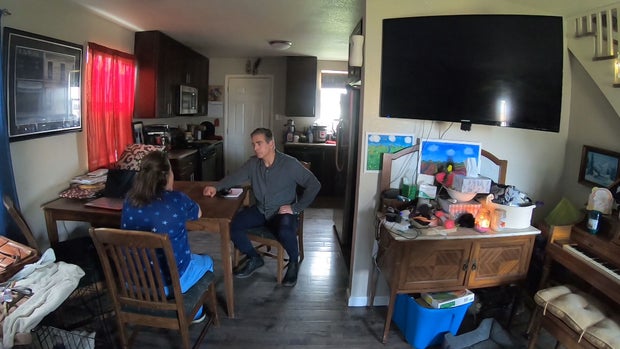
Then she took a third.
"All three of the places that I was working at the time, were closed. March 17 of 2020. Boom. So within 10 minutes I went from working 75, 80 hours a week, to nothing."
Having medical issues, she was reluctant to apply for front line work at a grocery store. She ended up having a heart attack early this year. Now vaccinated, she's doing well.
Some hiring managers told CBS4 they believe unemployment benefits, particularly the extra $300 a week unemployed people are getting until September is a strong disincentive.
"I'm not home because I don't want to work. I'm not home because I'm lazy. I'm home because I don't want to go back to 75 hours a week just to be able to sustain, this," she pointed to the small home she rents with her two working, adult sons.
As a line cook, she had reached $15-$16 an hour 10 years after going to culinary school in her forties.
"And it was the best part of my day to be able to go to work and feed people and see them enjoying my food," recalled Michelle. "Who I was 18 months ago was go, go, go, go, go. Come home and sleep for four hours and get up and do it again. And I was proud of that. 'Hey I got three jobs, I work hard.'"
The long hours and low pay meant for a time, living in a motel with her sons because she couldn't generate the money to get into an apartment. They also lived at a campground.
Now, with unemployment payments and her sons' incomes they have a home. There's frequent violence only blocks away and she "wouldn't around walk at night," but she doesn't worry too much.
What she's found since being on unemployment is the time she lost with her long hours. Her mother passed away during the pandemic (not due to COVID-19) last year, and she was able to spend time with her mother.
"My youngest son when he was 10 years old, used to get himself up in the morning and ride three RTD buses to get to school, because mom was already at work."
She's spent time getting to know her sons better.
"We've had more time in the last year of his life than we had combined in the first 20 years of his life."

She says she is looking for work "every day," but wants to work at home as so many others have done during the pandemic. "I'd love to find a full time work from home job, and then I'd go find a part-time kitchen job."
She admits, things aren't urgent. "I think that I'm being more particular."
She's heard the criticism of those not back to work yet, but feels the payments are not the reason.
"They're not paying us to have a great life. They're paying us to sustain what we were already busting our butts for prior to COVID… This is Denver. What does $1,200 get you in Denver? A one bedroom apartment in the hood?"
She says without the additional payments she'd still be at home.
"I am fortunate I have kids that work, that would help take care of me. Just like I took care of them for the last 25, 30 years."
The pandemic, changed her views of what's important in life, and working long hours, may have taken a back seat.
She notes she's paid taxes all her working life and says before September, she'll be working again.
"I don't expect the government to keep paying me. But I also don't think I should feel guilty for working 45 years of my life and being able to enjoy one. Does that make me a bad person?"