Denver Water reservoir levels are below capacity. "It's a big concern," the public utility says.

The sources for Denver Water's supply are taking a big hit due to the ongoing drought. Its reservoirs are at 75% of capacity, which is down more than 20% from normal at the end of July.
According to Denver Water:
- Dillon Reservoir in Summit County is Denver Water's largest reservoir and is down about 20 feet; it's also expected to drop up to 10 feet more by Labor Day
- Williams Fork Reservoir near Kremmling is about 1/3 full. By the end of summer, the dam's hydro turbines may not be able to produce hydropower
- Antero Reservoir near Fairplay, which is considered an emergency drought storage reservoir, is dry after water was transferred out of it in spring
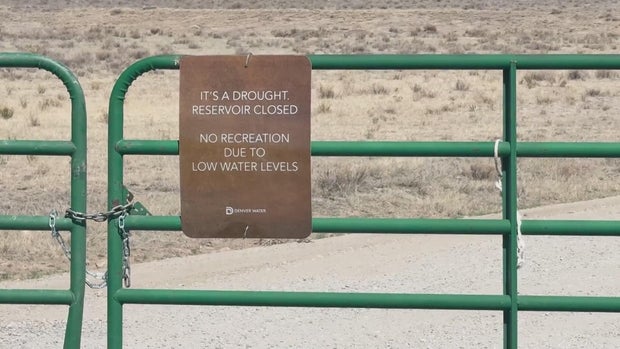
Nathan Elder, the manager of water supply with Denver Water, says the utility company is dealing with its second lowest reservoir storage on record. It's the lowest the reservoir levels have been since the 2003-2003 drought.
"It's a big concern to see reservoir levels only 75% full at this time of year, and they're going to continue to drop. Going into next spring, we think we'll be about 60% to 62% full," Elder said. "We're certainly hoping for a better snowpack, but there's no guarantee."
Elder says it's not a situation that will improve in one season. He added it would take 150% of the normal snowpack to see a turnaround and improvement. Elder said a large snowpack like that has not happened since the 1990s.
"I think given where we're looking at our reservoir storage to be next year, it's definitely going to be a concern over the winter and going into next spring," Elder said. "This drought is not likely to be a quick recovery, and it's going to take multiple years to fully recover."
Elder said, due to the reservoir levels, abiding by water restrictions is very important. As Denver Water is looking to reduce water usage by 20%, the city put watering restrictions in place earlier this year for homeowners and businesses. The city also asked restaurants to, "serve water only upon request."
Carrie Baird, the chef-owner at Bar Dough, said restaurants made several changes to save and conserve water. That included no longer using a drip defrost method to defrost food. The restaurant has also ensured the dishwasher is full before running and making sure all faucets are off.
"We're not just serving water to any guest who comes in; we ask," Baird said. "We've really tried to pivot to imported water, bubbly water from Italy. Especially here at Bar Dough, it goes over pretty well. So we're trying to not tap the Colorado sources as hard as we normally do."
Baird also makes sure tap water doesn't go to waste. She repurposed the water for the vegetable garden outside of Bar Dough and Fox and the Hen, which she is also the chef-owner of.
"This is a pitcher of water left over from last night's service, and I just come out here and I have this wall of cucumbers. So every morning I just grab whatever is left over and go for it," Baird said.
While it's uncertain what winter will bring, what is certain is what Denver Water is asking customers. Elder says every bit of conversation helps.
"That's really why we need people to conserve," Elder said. "Follow the watering restrictions that are in place, those two-day-a-week watering restrictions now, so that next year we can set ourselves up in a better position. We're serving 1.5 million people, and if everybody does a little bit, we can really again help our reservoir storage out and be in a better place going into runoff in 2027."
Denver Water has seen a reduction in water usage by about 5% since putting the restrictions in place.
"We're members of this community too, so it's important that we do our part, and it's just the little things add up," Baird said.


