Denver may be subsidizing suburban fire service amid budget crisis: "We've got a problem"

A CBS Colorado investigation has found Denver may now be subsidizing fire protection for neighboring cities -- despite deals that were supposed to save money -- as the city faces deep budget cuts and layoffs.
"As of today, financially it's not in the best interest of the city," said Denver Fire Chief Desmond Fulton. "And moving forward, it's only going to get more expensive."
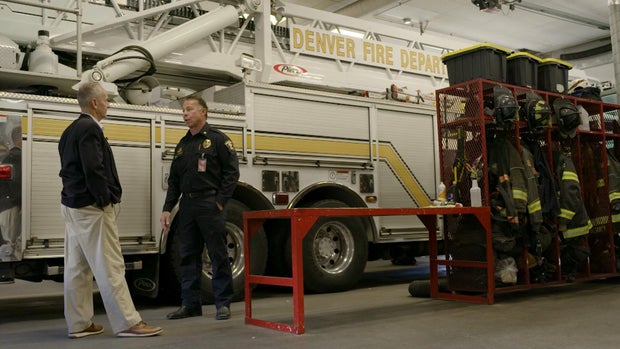
The issue stems from long-term agreements Denver signed with Englewood and Glendale to provide fire service. The contracts -- 20 years each -- lock in annual payment increases of just 3%.
Englewood's deal runs from 2015 to 2035. Glendale's runs from 2018 to 2038.
That 3% growth is no longer keeping up with reality, according to Fulton and others who reviewed the inter-governmental agreements, or IGAs.
Fulton agreed that rising labor costs, equipment prices, inflation and other unforeseen costs have outpaced the agreements -- potentially leaving Denver taxpayers to make up the difference.
In effect, Denver may now be subsidizing fire service in both cities.
The contracts themselves promised Denver residents would "enjoy significant cost savings." As of now, that does not appear to be the case. Fulton said the contract with Englewood will eventually cost Denver taxpayers hundreds of thousands of dollars a year "if not a million plus."
"Common sense says we've got a problem," said Earl Peterson, who led Denver's Civil Service Commission for nearly two decades.
Denver is facing an estimated $200 million budget shortfall this year and has already laid off 170 workers.
"We have financial issues in Denver and can ill afford to be subsidizing other municipalities," Peterson said, after reviewing the contracts.
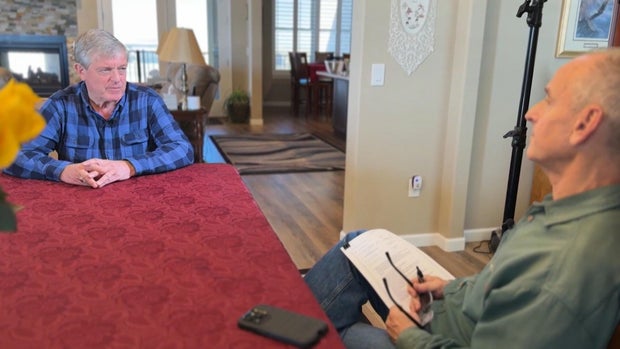
Experts say the flaw is built into the agreements.
Finance professor Mac Clouse, with the Daniels College of Business at the University of Denver, said the deals rely on a "pretty heroic assumption" -- that costs would rise just 3% a year over two decades.
"It's probably been a loser deal," Clouse said. "The costs you knew about have gone up more than that -- and then there are costs you didn't anticipate."
Those costs have surged.
Fire engines now cost more than $1 million. Staffing a single DFD engine runs about $1.65 million a year just for salaries and benefits, Fulton said. New safety standards and cancer prevention measures have also driven up equipment, maintenance and training expenses. Denver firefighters are receiving 5% salary increases this year and next, and Fulton expects labor and equipment costs to keep rising.
None of those increases are tied to the contracts.
There are no inflation triggers. No review periods. No mechanisms to adjust payments.
"The ink is dry," Fulton said. "And it's not going to pan out well."
Fulton was not chief when the agreements were signed, but now manages their impact. He said he hasn't calculated exactly how much Denver may be losing and has not pursued renegotiation. He explained it would make sense to know how much Denver is losing, but that he prefers to focus on things he can improve.
"We're human," he said of the agreements. "Sometimes we miss a couple of things."
Officials involved in approving the deals -- including the former Denver fire chief at the time the deals were struck, and Denver's city auditor -- declined to discuss the agreements.
Glendale's city manager did not respond to requests for comment.
Englewood officials said their contract with Denver reflected conditions at the time and noted that the pandemic, and the subsequent spike in inflation were unforeseen. Englewood's Communication Director, Chris Harguth, said, "as with many long- range agreements, no one could have anticipated the global pandemic and the short- term inflationary impacts that followed." Harguth noted that his city still operates a fire marshall's office and gave Denver equipment, fire engines and vehicles at the start of the contract. "Overall, the agreement reflects the assumptions, market conditions, and information available at the time it was negotiated..." said Harguth.
Fulton said Denver does get some benefit: access to fire stations in both cities, avoiding the cost of building new ones.
"If we didn't have those firehouses in place that we respond out of right now, the city would have to look at building firehouses," said Fulton. He said he could not quantify the value of using those fire stations.
Denver recently took a different approach with another city.
When its agreement to provide fire service to Sheridan expired in 2025, Denver opted for a shorter, three-year deal running through 2028 with escalating annual increases of 4%, and 5%.
"I probably would not recommend a 20-year contract again," Fulton said. He said he has not discussed the contracts with Mayor Mike Johnston -- each deal has about another decade left, and Fulton suggests they won't age well for Denver. "There's no doubt .... they'll definitely turn into money losers in the future."
Peterson said Denver should go further and try to renegotiate the existing deals.
"There's a problem," he said. "Fix it."