New Denver rules target neglected properties, offering neighbors hope for long-standing "Poop House"

The City of Denver is giving itself stronger enforcement tools to hold owners of neglected and derelict properties accountable, including significantly larger fines for those who fail to comply with city orders.
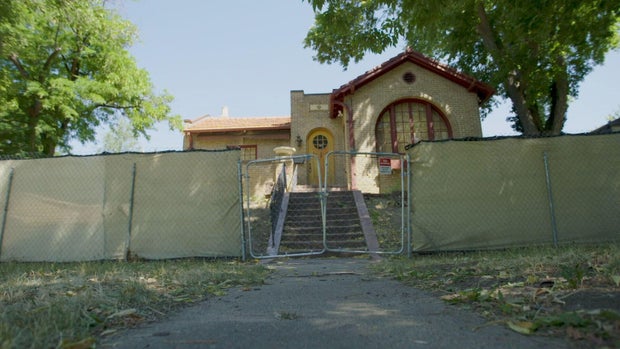
The changes come as nearly 300 properties remain on Denver's neglected and derelict property list, including one that has become a symbol of neighborhood frustration: the so-called "Poop House" along Denver's historic 7th Avenue Parkway.
Some properties on the city's list have been declared unsafe, while others have accumulated repeated code violations or have been deemed public nuisances. But few have drawn as much attention as the vacant home that neighbors nicknamed the "Poop House."
"I think it's very aggravating since it's a historic district ... and we take a lot of pride in the property in the neighborhood," neighbor Marybeth Lambuth said.
Nearly a year ago, CBS Colorado reported on the home, which had sat vacant for more than six years while falling into severe disrepair. Frustrated by the deteriorating property and what they viewed as a lack of action, neighbors began tossing bags of dog waste into the front yard as a form of protest.
"The only thing that's ever got the city's attention is the poop," neighbor Mimi Garrison said. "And the poop is filling up again."
The unusual protest quickly earned the property its nickname.
Garrison, who lives next door, said the neglected home affected her own property when she tried to sell it. She said prospective buyers seemed spooked by the derelict property next door.
"Who wants to deal with it? Fact of the matter is nobody wants to deal with it," she said.
She ultimately removed her home from the market.
This week, officials with Denver Community Planning and Development met with residents concerned about the "Poop House" and other neglected properties to explain new code changes that take effect Aug. 1.
Among the most significant changes is a new enforcement mechanism allowing the city to impose a $5,000 fine on property owners who fail to comply with city requirements.
Lambuth believes the higher penalties could encourage owners to address neglected properties more quickly.
"Hopefully it motivates people because a $5,000 fine gets to be more significant than $1,000 over a year, and hopefully it's a financial incentive for people to step up," she said.
Under the new ordinance, owners of properties placed on the city's neglected and derelict property list must submit a compliance plan within 60 days or face fines. Property owners who fail to respond to the city can also be penalized.
Courtney Ronner with Community Planning and Development said the code changes were approved last year by Denver City Council.
"The changes are significant to how we will handle neglected and derelict properties in the city," said Ronner.
The revised rules also expand the city's definition of a neighborhood nuisance to include properties that are poorly maintained or have been vandalized. In addition, city officials can now require owners to install security measures to help protect vacant buildings from further deterioration or trespassing.
Neighbors say the changes represent meaningful progress and could help the city address nuisance properties that have lingered for years.
Denver residents can report suspected neglected or derelict properties by calling 311.
The owner of the "Poop House," Flavia Montecinos, told CBS Colorado "We have a permit and are working on the house."
"It's not a neglected building. It's a house under renovation and work has not stalled," Montecinos said.


