Denver restaurant reopens after shut down due to unpaid tax penalties

A Denver restaurant owner says the City nearly shut down her business.
Hasena Williams, owner of Ruby's Good Shoes, a restaurant in North Park Hill, is asking city officials to do more for small businesses in Denver. Williams said city leaders showed up at her restaurant on Wednesday to serve a warrant, seize the property, and lock her out over about $5,000 she owed the city. She says her monthly costs to sustain her businesses are up to $80,000 a month. She is asking the city to reconsider giving her a low-interest loan or waive those penalties and fees.
Community showed up on Thursday to support Williams after the restaurant reopened.
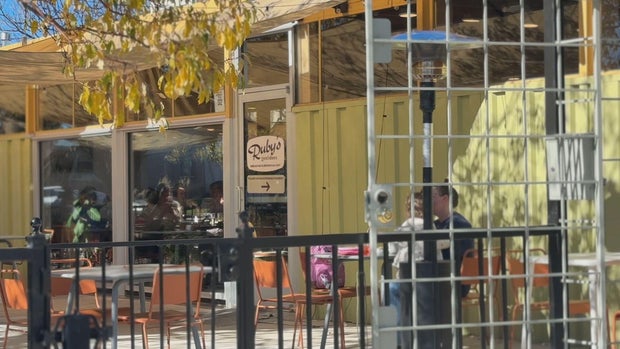
Customers like Regina Jackson said that the restaurant gives the community an opportunity to socialize and come together.
"I am so happy to be here supporting this very new restaurant in the hood to be able to have a place where we can come and socialize," said Jackson.
Williams said the hope is to keep this space for community, but keeping the doors open has become an expensive battle
"Every month I have to make decisions between, 'Do I pay employees? Do I pay to keep the lights on? Or do I pay my sales tax revenues?'" said Williams.
She says when city officials showed up at her restaurant on Wednesday, she felt helpless in that moment.
"Like, 'I don't have any money for your penalties and fees. What are my other options?' And they said that there was none."
Businesses like Ruby's Good Shoes are calling on city leaders to re-examine how rising costs and local regulations are impacting small businesses.
"The city forced me to put all electrified units on my building; the cost of electricity is out of the roof.
My average utility bill is about $2,200 a month for 3000 square feet; that's a direct hit to my bottom line. So, with everything in total- my fixed costs, labor- I'm at about $80,000 to $85,000 a month."
The city tells CBS Colorado it has been working with the owner for a period of several months, even offering a payment plan. Williams called that hogwash.
"Why not waive the penalties and fees? I'm a small business in an industry that needs support more than anything because of the knee-jerk decision that they made to raise minimum wage."
Laura Swartz with Denver's Department of Finance told CBS Colorado the vast majority of businesses in Denver are currently up-to-date on their taxes. There are over 32,000 sales tax filers in Denver, which means businesses that collect and report sales tax; some businesses may get behind for a month or so but typically catch up rapidly.
"There are usually only a handful of businesses a year that have left taxes unpaid long enough, despite repeated attempts at collection, that the city is required to take action."
For businesses that reach that stage, Swartz says it is usually unpaid sales taxes that are the root of the problem. "When businesses charge customers sales tax and repeatedly do not submit that sales tax to the city, the city is responsible for becoming involved."
While officials couldn't discuss this specific case due to taxpayer confidentiality, they say they're glad the restaurant was able to remain open.
"We recognize the importance of local businesses to our communities and helping these businesses understand and manage local taxes is a priority," said Swartz in an e-mail exchange.
After investing more than $800,000 into the building, the owner just wants to be considered.
"My ask to the city is to reconsider the low-interest loan that I've asked for multiple times. I'm asking them to find a way to absorb the late fees and penalties, not just for now, but for the next probably 18 months until I'm able to get on solid footing," said Williams.