$43 million investment made to improve infrastructure, safety at Denver International Airport
As the fourth busiest airport in the country, with almost 1,900 flights taking off and landing each day, efficiency and safety are of the utmost priority at Denver International Airport.
"Making sure that we have that reliability, making sure that we have that customer service, making sure we have that safety. That's why we're doing all of these investments," said Rep. Gabe Evans, a Republican who represents Colorado's 8th Congressional District.
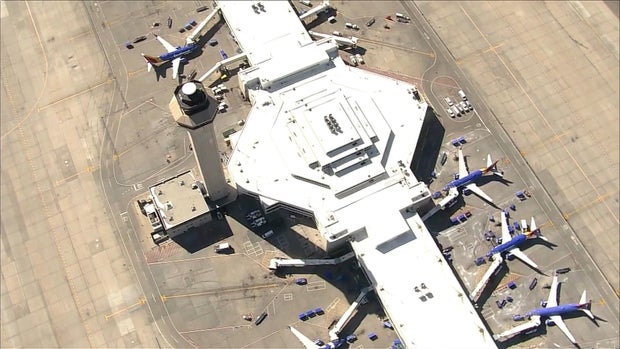
The airport will soon receive $43 million in investments to its infrastructure as part of a sweeping spending bill passed by Republicans last year, known as the "big, beautiful bill" or the "working families tax cut." That's according to Evans and Transportation Secretary Sean Duffy, who have been working together to provide these funding resources to Denver International Airport.
"This isn't just about safety and efficiency. This is about jobs, of Americans doing this remarkable build of new equipment that's going to be deployed not just in Denver, but it's going to be deployed all over the country, and make your flight better and your flight safer," said Duffy, who spoke to CBS Colorado along with Evans in an exclusive meeting on Wednesday.
The funding will benefit a variety of investments that will all be completed over the next two years.
In September 2026, new Surface Movement Radars will be implemented, a technology that helps prevent close calls on airport surfaces. This includes enabling air traffic controllers to track aircraft and vehicles on runways and taxiways and alert them to potential conflicts to help prevent runway incursions.
Concerns with conflicts on the runway gained a lot of attention last month, when a Frontier plane in the process of taking off hit and killed a man who slipped past motion detectors and scaled an 8-foot fence topped with barbed wire.
"You have to think about things differently, learn from what happened in Denver and what tools and procedures do we have to implement to make sure it doesn't happen again," said Duffy.
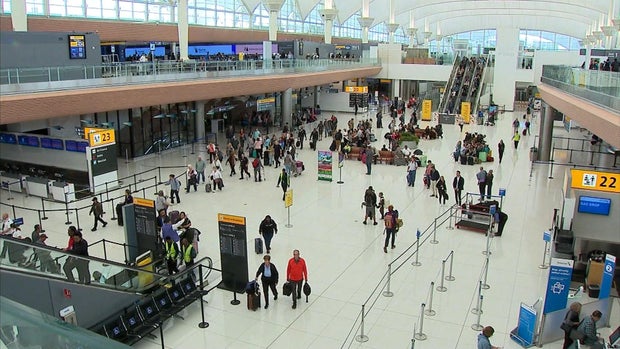
By November 2026, additional radar will also be installed at the airport, giving controllers a better way to track and identify aircraft positions.
Additionally, these funds will replace paper flight stripes with electronic ones, to modernize the way ATC workers communicate.
Outdated radios, displays for controllers, and IP voice switches will also be replaced through these funds.
Both leaders say these are long overdue changes to improve the way flights travel in and out of Denver, with the hope that this will make the process smooth for both workers and travelers.
"As we look at all of these flights, I want to see less delays, less cancellations, people moving more seamlessly through our national airspace," said Duffy.


