Colorado state lawmaker files complaint over a deepfake video with secretary of state's office

State Sen. Cathy Kipp says a deepfake video of her violates Colorado law. She has filed what may be the first complaint under a state law that limits deepfakes, which use artificial intelligence to generate fake images of a person that look and sound real.
The Independence Institute, a Libertarian-leaning think tank, made the video in response to remarks Kipp made on the Colorado Senate floor in April. Lawmakers were debating whether to ask voters if the state could keep hundreds of millions of dollars a year in taxpayer refunds, which Republican state senators called a tax increase.
Kipp disagreed.
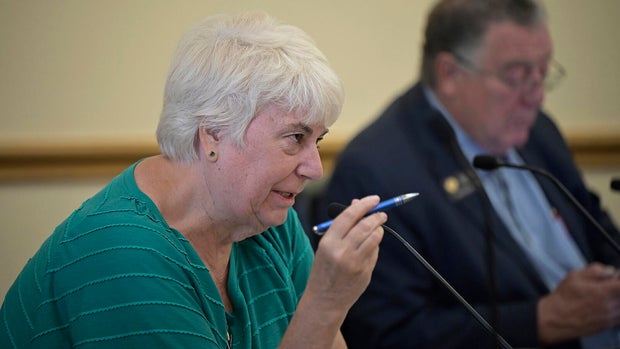
"A tax increase is not when you go to the voters as we are going to the voters and saying can we retain revenue. That is, can we keep the money you have already paid in taxes," she said.
Right now, the state must refund money that exceeds the spending cap under the Taxpayer Bill of Rights, or TABOR.
Proposition NN raises the cap by up to $4.6 billion this year, and even more in future years.
State analysts say it would eliminate $851 million in tax refunds between now and 2028, with most of the money going to K-12 schools for the first 10 years. After that, lawmakers could spend it as they choose.
"When we watched Sen. Cathy Kipp on the floor of the Senate babbling her way around trying to say that this wasn't a tax increase, we thought 'Maybe we should help her,'" said Jon Caldara, president of the Independence Institute.
The organization released a deepfake video depicting Kipp as a grocery store clerk who keeps a customer's change and says it's to help educate children.
"Listen lady, you already gave me the money. I'm keeping it," the AI-generated version of Kipp says in the deepfake. "We've got a lot of children to educate so let's keep the line moving."
Caldara says the video is meant to educate voters.
"Just letting people know what this proposition is. Nobody's talking about it yet. We thought we'd get a conversation going," he said.
Kipp wasn't amused. She filed a campaign finance complaint alleging the video violates a state law that bars deepfakes of candidates or current lawmakers unless they have a disclosure stating, "This (image/audio/video/multimedia) has been edited and depicts speech or conduct that falsely appears to be authentic or truthful."
The disclosure has to be at least as big as other text in the video.
The Independence Institute disclaimer is not only smaller, it says simply, "AI generated content because who gets a human cashier these days?"
Caldara says the law applies to content concerning candidates and the content in his video is regarding a ballot initiative.
"We're not saying don't vote for Cathy Kipp or any one of these people who are grabbing your tax refunds -- forever. We're just saying this Prop NN takes your tax refunds forever," Caldara said.
He says the video is also satire, which the law exempts.
"We had a good chuckle over it because it's cute, it's funny, and it gets the point across," he said.
Kipp released a statement saying, "We should not allow the rampant misuse of AI and the spread of false information to become normalized in our elections. While this millionaire-backed group uses bad-faith tactics, I'm focused on what matters: Funding our schools and making sure every Colorado kid has access to a quality education."
But Caldara says because the state law prohibits any speech concerning a candidate or elected official in a deepfake, it's a violation of the First Amendment.
The Secretary of State's Office is investigating Kipp's complaint, which may be the first one filed under the deepfakes law.
If the office finds the Independence Institute violated the law, it could face fines.


