Court Transparency Project in Colorado finds detained immigrants increasingly give up legal claims
University of Denver researchers who have attended 1,100 immigration hearings over the past year say a policy of mandatory, no-bond detention is pushing many detainees to abandon their legal claims and accept deportation.
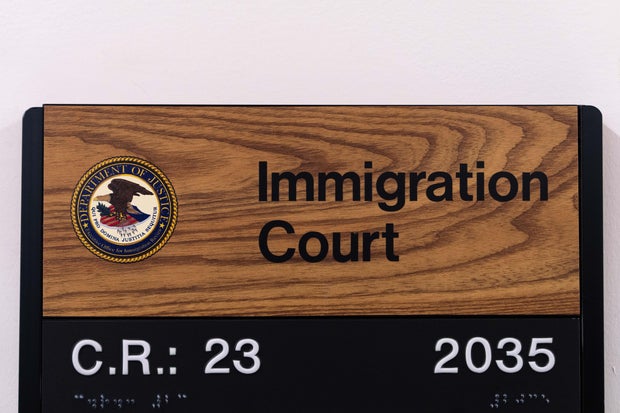
The researchers are part of The Court Transparency Project, organized by the University of Denver and the Colorado Asylum Center. Since last October, the team has observed hearings at both the ICE detention center in Aurora, operated by the GEO Group, and the downtown Denver immigration courthouse.
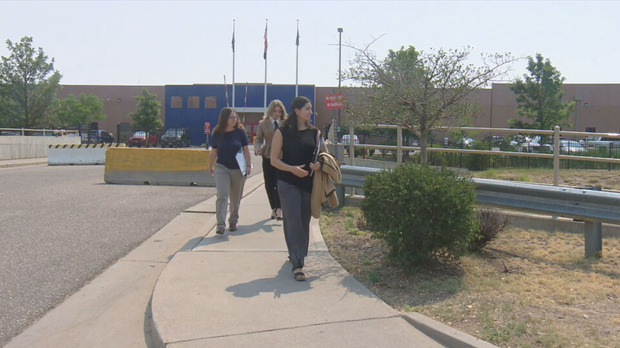
DU professor Rebecca Galemba, the project's principal investigator, said the team has tracked the growing use of mandatory detention for anyone who entered the U.S. without inspection - regardless of when.
"What we've seen, especially over the past year, is the increasing application of this idea that no bond, mandatory detention (applies) to anyone who's ever crossed the border unauthorized, even if you were five years old," Galemba said.
The policy was revised by the Trump administration in July 2025. Late last month, the 10th U.S. Circuit Court of Appeals declared the policy unlawful, ruling that detaining every one of the millions of people who have crossed the border illegally would "pose grave constitutional problems."
"Mandatory detention has been around for a long time, but was previously applied to narrower groups of people," Galemba said, such as people with certain criminal convictions, who'd just crossed the border, were considered a danger to the community, or flight risk.
Researchers found that prolonged detention can wear detainees down. Of the hearings they observed involving people with pending claims, nearly one in three chose to give up and leave the country voluntarily.
Ella Iveslatt, the project's manager, described one case in which a detained woman had three U.S. citizen children, all over 21 and eligible to petition on her behalf, and she still chose voluntary departure.
"So many people you hear in court - we even heard it today - people saying, 'I can't be in here any longer, please let me go home as soon as possible. I don't want to wait for voluntary departure. Please send me, I can't be here anymore,'" Iveslatt said.
CBS Colorado reached out to ICE and the Department of Homeland Security about the researchers' findings. DHS said in a statement that it "will continue to deliver on the President's mandate to remove illegal aliens from American communities," adding that "being in detention is a choice" and encouraging "all illegal aliens to take control of their departure with the CBP Home App. The United States is offering illegal aliens $2600 and a free flight to self-deport now."
Lety Madrigal Tapia, a lead researcher and DU graduate student studying human rights, said her own family's legal immigration from Mexico informs how she views what she's witnessed.
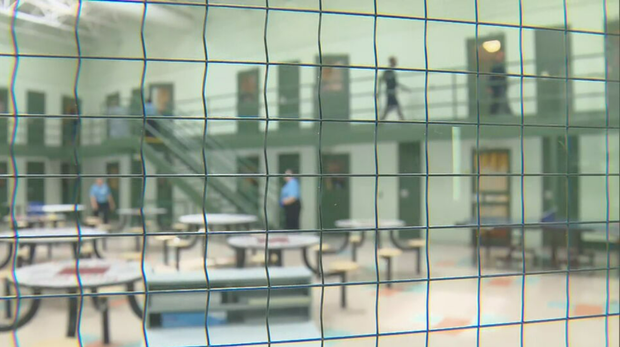
"There's a lot of sorrow and like cruelty that we're watching happen within the docket hearings," Madrigal Tapia said. "People (are) coming to visit their loved ones, and their loved ones (have) no other way of getting out of detention other than to ask for voluntary departure or a removal order, and we're watching people cry, and their families be completely torn apart."
The most recent data provided by ICE, from April, shows 78% of those detained in Aurora did not have criminal records.
DHS has said it encourages people to self-deport so they can "reserve the chance to come back to the U.S. the right legal way to live the American dream." Madrigal Tapia said that framing doesn't square with what she's observed.
"It's a valid argument only if we actually have a valid and correct legal process for these people, and that right now isn't existing," she said.
The DU researchers also found that only about 41% of people attending master calendar hearings had an attorney.
"I think it's really important that we illuminate what's going on behind closed doors," Iveslatt said.
The hearings are open to the public. "Come and experience it, to come and understand what's happening," Madrigal Tapia added.
The Court Transparency Project's research is ongoing. Researchers next plan to track how immigration judges implement the 10th Circuit's ruling that detainees in the six-state region are entitled to bond hearings. DHS has said it has asked the U.S. Supreme Court to review and approve its mandatory detention policy. Find out more at https://ducourtwatch.wordpress.com/the-court-transparency-project/