Colorado's "birthday rule" creates coverage headaches for family of twins

CBS Colorado has been investigating several cases involving families who, despite having health insurance, have been hit with massive medical bills after their babies spent time in neonatal intensive care units.
The claims remain unpaid because of confusion surrounding Colorado's "birthday rule," which applies when parents are covered by different insurance providers. Under the rule, a newborn is automatically added to the policy of the parent whose birthday comes first in the calendar year.
Kelsey Pond and her husband, Travis Pond, said preparing for twins meant double the planning for nearly everything — except this.
"Both babies were born at 32 weeks, and then they went directly to the NICU," Kelsey told CBS Colorado.
Their son, Duke, was eventually flown to Children's Hospital Colorado. Their daughter, Carsyn, followed.
"We were in the NICU for a little over two months," Kelsey said. "Our son actually ended up having to have surgery while he was there."
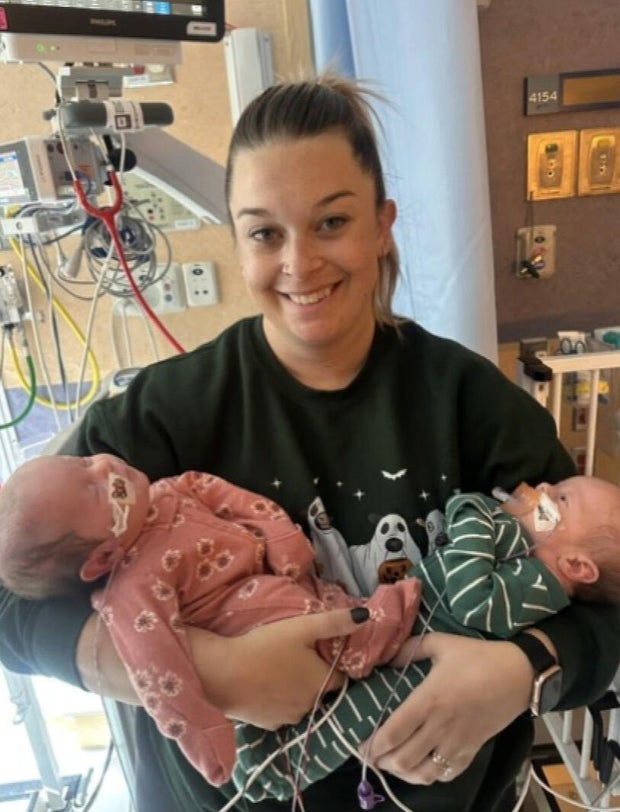
Kelsey said she planned ahead for insurance coverage, including Colorado's "birthday rule," which automatically assigns a newborn to the health insurance policy of the parent whose birthday comes first in the calendar year. In the Ponds' case, that made the twins' father the primary policyholder.
"When we found out we were having the twins, we knew that we were going to put them on my insurance," Kelsey said. "But I knew about the 30-day rule, so when we were at the hospital, I made sure that they had his insurance on file."
But the claims did not go as expected. Kelsey said her insurance company was billed first, and the claims were paid. She said the payments were later reversed, creating a lengthy delay before claims were rebilled. When claims were submitted to Travis' insurer, Kelsey said they were denied because they were not filed on time.
"So right now, we owe over $1 million," Kelsey said.
At least one of the bills has been sent to collections, and each new notice has brought more confusion.
"I got a bill from Children's that had no insurance coverage at all," Kelsey said. "Every place that I've called so far, I have had to explain this 30-day rule to all the billing departments."
Duke and Carsyn are both now 2 years old.
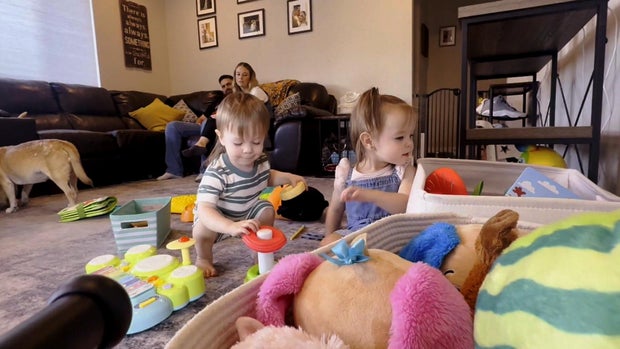
Travis said the uncertainty surrounding the medical bills has left the family in financial limbo.
"For six months, we didn't hear anything. We thought everything was good, and then we get a half-a-million-dollar bill for each baby," Travis said. "It's like, 'Hey, go ahead and pay this for us,' with no explanation."
The Ponds are not the only parents who have contacted CBS Colorado.
Since CBS Colorado first reported on the birthday rule, multiple families with children who required neonatal intensive care have shared similar insurance issues.
One mother told CBS Colorado she had twins, but only one child required NICU care. She said insurance paid claims for one child, but the higher-cost NICU claims triggered the birthday rule for the other child.
The cases are raising questions about whether the rule should be changed.
"What we have right now is a situation where people aren't being protected," Democratic state Rep. Kyle Brown told CBS Colorado. "This rule is not serving these folks, and they end up with gigantic bills even when they have a plan that would cover it. That doesn't work for people."
Brown said there is no simple solution.
"I don't know how you fix the current situation in a way that doesn't have other consequences," Brown said. "If you require people to designate a plan and they forget to do that, and then suddenly the child is not covered, that could create even bigger problems for people."

Still, the state lawmaker said the cases highlighted by CBS Colorado warrant attention.
"I think what these stories have raised is something that we as legislators need to think about," Brown said. "Is this an opportunity for us as legislators to draft legislation? Is this something where we need to be working with our agency counterparts and pushing them in the right direction? Because that's ultimately our job."
Brown also said there are questions about accountability.
"If insurance companies are using their discretion on whether they are applying the law or regulation in Colorado, that would be very concerning to me," Brown said. "Either the rules apply or they don't."
Kelsey Pond said she believes she did everything she was supposed to do. She said she simply wants the insurers and the hospital to agree on who is responsible for paying the claims.
CBS Colorado reached out to each of the hospitals involved, as well as both insurance companies, for comment on why the claims dispute remains unresolved more than two years later. Advent Hospital told us that, because coordination of benefits is between the insurance companies, they are best positioned to address claims.
In a statement, CU Medicine said in part, "When insurance companies reverse payments or disagree on policy, we reach out to the patient for any additional information or authorization needed to support them in resolving the claim."
In a statement to CBS Colorado, a spokesperson for Children's Hospital said in part, "Our hearts are with families facing the uncertainty and stress that can accompany insurance-related challenges. We recognize how difficult these situations can be, and supporting patients and families through them remains a top priority at Children's Hospital Colorado. We have teams across our organization actively reviewing and investigating the concerns raised in the Pond family's situation."
Blue Cross Blue Shield of Texas has been communicating with us about the case, but has a standing policy not to discuss clients.
A spokesperson for Cigna sent a statement saying in part, "We understand how stressful and frustrating unresolved medical bills can be for patients and families and remain available to work directly with the patient to review and resolve any outstanding issues."
The Colorado Division of Insurance has previously told CBS Colorado it is examining whether the "birthday rule" should be changed. However, officials said the process is still in its early stages.


