Colorado veteran's story of courage and sacrifice: "Women have been there"

The words are etched into a small metal bracelet — "First platoon, Charlie Company, 275 Ranger Regiment."
For Emily Miller, the bracelet is more than a keepsake. It is a tribute to her friend, Ashley White, one of the first women who served alongside Army Rangers in Afghanistan and was killed in action.
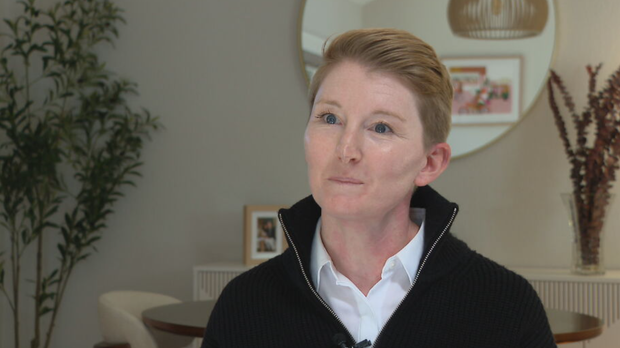
"We wear it to remember her and in honor of her legacy," Miller said.
That legacy is deeply personal for Miller. Years before the U.S. military officially opened combat jobs to women, she was helping shape that history herself as one of the Army's first female members embedded with elite special operations forces in Afghanistan.
"It was historic, and I really do believe that it paved the way for women to officially serve in combat roles," Miller said.
Miller's path to military service began in Indiana after the Sept. 11, 2001 terrorist attacks.
"I was a sophomore in high school when 9/11 happened, and I think that really hit me pretty hard at that age," Miller said. "And I knew that I wanted to serve in some capacity."
That desire led her to the U.S. Military Academy at West Point, where she graduated in 2008 before serving as an Army engineer officer and deploying to Iraq. Then, in 2011, she received a message that would alter the course of her military career.
"I got an email from a friend that said, 'become a part of history,' and it was a newly formed program," she recalled.
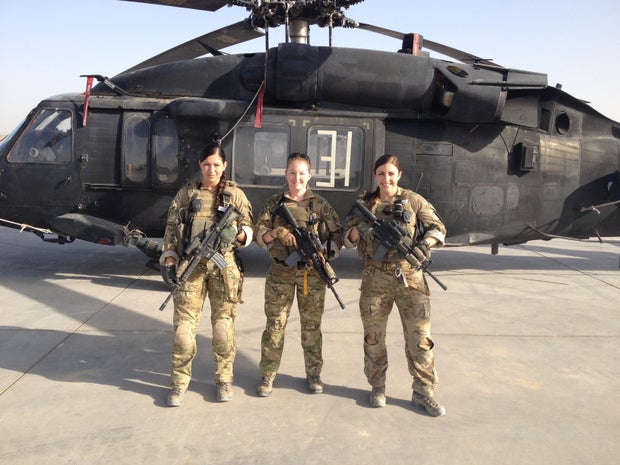
The program was known as the Cultural Support Team, or CST. Miller explained the initiative was created after military leaders recognized a significant challenge facing all-male special operations units operating in Afghanistan.
"This was in 2011 when they realized, after a decade at war, that these all-male special operations teams were going on night raids and going into villages, but they couldn't interact with 50% of the population, the women and children," Miller said.
Female soldiers like Miller were trained to accompany special operations teams on missions, allowing them to engage with Afghan women and children. They would gather intelligence and build relationships in communities where cultural norms often limited interactions between women and male soldiers.
"We were the first women to serve with these teams of all men," Miller said.
Their unique role became an operational advantage. Miller said the work demonstrated that women were not only capable of serving in demanding combat environments but could provide skills and access that made military units more effective.
"Essentially, we would question them about what was happening in their area," Miller said. "We would also have to search them because one of the tactics that was developing was that the Taliban was using women and children to hide sensitive information."
The assignment also came with immense risks. During her second deployment, Miller suffered an ankle injury that forced her to return home. While recovering, she received devastating news. White, her friend and fellow CST member, had been killed while supporting a Ranger mission.
"I needed to go back. I needed to finish my mission on behalf of Ashley, is how I felt," Miller said.
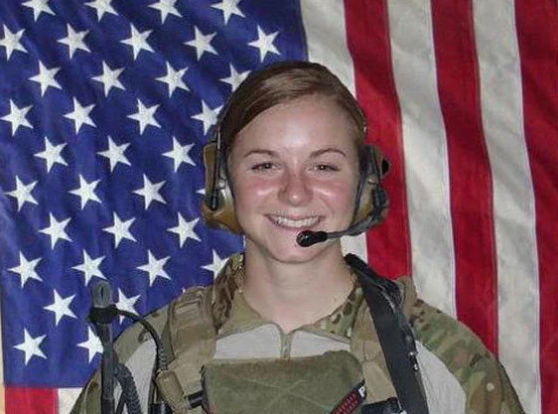
And she did — eventually returning to Afghanistan with CST 3. There, she experienced what she still describes as an extraordinary coincidence.
"In a strange kind of twist of fate, I got posted at Kandahar in her office, right where Ashley was stationed," she said.
For Miller, returning to Afghanistan became part of honoring White's legacy and continuing a mission she believed was bigger than any one person. After leaving the Army about a year later, Miller went on to attend Harvard Business School and build a career in the private sector. Yet she says the people she served with, the sacrifices they made, and the lessons she learned remain with her every day.
"I don't regret it a single second," Miller said.
To this day, Miller continues sharing the story of the women who served alongside special operations forces and helped pave the way for future generations of service members.
"You need courage of all types," she said. "And I think the women that I served with were incredibly courageous, and that's what we should want in people serving and defending our country."
The bracelet honoring White remains a powerful reminder of that courage and sacrifice. For Miller, it also represents a truth she believes deserves to be remembered.
"I think the bracelet is very symbolic," she said. "Women have been there."


