Colorado school district moves closer to mill levy override referral, would increase property taxes

A handful of school districts — including Denver, Jefferson County and Douglas County — could ask voters to weigh in on a mill levy override in November. That means property tax rates would be increased to benefit these school districts.
The Douglas County School District says more funding is needed to meet the goals identified in its strategic plan. It says inflation is causing the district's tax rate to drop.
"Our mill levy override tax rate is significantly lower than it was in 2013, and so our district's been really squeezed," Superintendent Erin Kane told CBS Colorado. "School funding has not kept up with inflation, and yet our expenses have been going up."
Staff compensation, career and technical education programming, safety and security, and special education are all priorities that may be funded by a mill levy override.
"Our students and our families are really asking for these opportunities and more of these opportunities for our students," Kane said.
The school district's board of education is inching closer to asking voters to consider an MLO in November. Recent poll results shared at a Tuesday night hearing showed 55% of those in a random sample were favorable to a mill levy override.
In 2024, voters passed a bond for capital improvements and new schools. In 2023, a mill levy override was passed to increase teacher pay.
"We were the lowest in the metro area by a mile," Kane said.
That MLO increased teacher pay by 9%, and Kane says staff turnover has dropped significantly ever since.
"We're in the pack, but we're still at the bottom of the pack," Kane said. "So an additional boost will help us really get to where we are competitive."
Kane says the district still has a ways to go.
"Our tax rate, even though we passed two recent initiatives, has continued to slowly drop," Kane said. "The biggest reason for that is that our past mill levy overrides have been fixed dollar amounts, which means they don't adjust for inflation or growth or anything else."
Kane says, this time, the board might consider a rate that adjusts with growth and inflation.
"Our long-term goal is to stabilize our tax rates, get our tax rates to where the district is viable going forward and where they can remain the same," Kane said.
But will voters support another school funding initiative when times are tough for many?
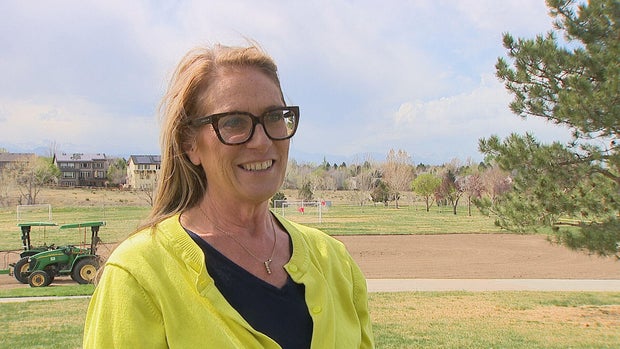
"It's an 'it depends' type of answer," said Liz Wagner, a Highlands Ranch resident and former DCSD parent. "If they went forward with a collective bargaining agreement, I would be a no on a mill levy override."
Wagner is more worried about a collective bargaining agreement with the teachers union. She says a collective bargaining agreement would restrict how the district makes budgetary decisions. She feels the district is headed in the right direction without one.
"The hemorrhaging has stopped. Teacher retention is up. Scores are up for reading and math," Wagner told CBS Colorado.
Wagner does support increasing staff pay and funding for special education programs.
"If a mill passes, it should definitely go toward teacher pay, paraprofessional pay," Wagner said. "It should go to the people who spend 75% or more of their day with students."
DCSD says a collective bargaining agreement has not been discussed by the board. The recently elected slate of school board candidates said, while they were running, they have committed to a collective bargaining agreement but want to listen to teachers.
The MLO would likely cost homeowners about $30 a year per $100,000 of home value.
Those numbers — and specifics of what an MLO would fund — will be worked out by staff, and a plan will be presented to the school board on April 21.
"Certainly, our pollster feels that there's a viable path forward, as do we," Kane said.
The board won't make a final decision on referring the MLO to voters until August.