Colorado's Douglas County School District inches closer to collective bargaining with teachers

Douglas County teachers could be one step closer to having a seat at the table with the school district.
Douglas County School District has gone nearly 15 years without a collective bargaining agreement with the teachers' union. That's a negotiated contract that lays out terms such as wages and working conditions.
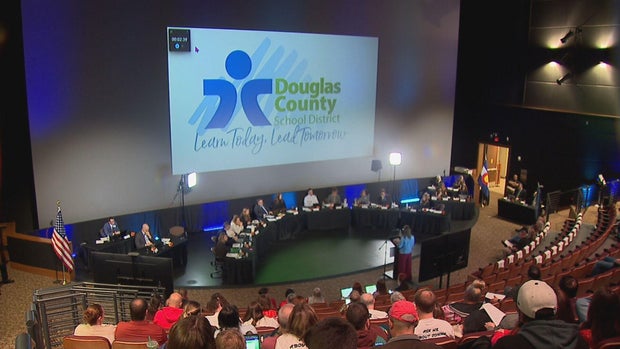
The Douglas County Federation is the teachers' union for certified and classified staff in the district. Another union, the Amalgamated Transit Union, which is made up of bus drivers and some other staff, still has an active agreement with the district.
While the then-school board chose to let the agreement expire in 2012, the federation is still around and has been advocating for a return to bargaining for years.
"Our members never voted to decertify their union. We are alive and well. We have worked in partnership with this district for a long time," said Fiona Boomer, executive director of the Douglas County Federation.
A year ago, the teachers' union was celebrating the election of a progressive school board they campaigned for. But Tuesday night, Boomer says that board has failed to deliver on promises to give teachers a seat at the table.
"We want the board to hear us and hear us loud and clear. That teachers and staff want to be at the bargaining table," Boomer said.
"It's been a slow road, but I am very confident that we will get there. This board is very supportive, and they have been listening to us. It's just getting across that finish line that seems to be the holdup," said Lucy Squire, Douglas County Federation president and third-grade DCSD teacher.
Squire says Douglas County teachers like her want a say in district decisions.
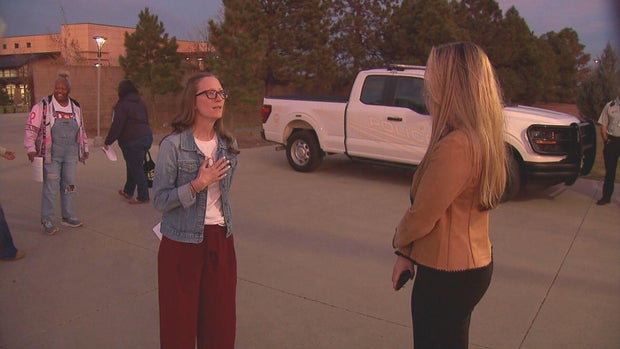
"We are still just missing the avenue to have a voice," Squire said.
DCSD's teachers are the lowest paid in the metro area, and the recent failure of the district's mill levy override means teachers won't be getting a 4% raise.
"This district is struggling and will continue to struggle in terms of compensation and retaining talented educators," Boomer said.
"They need to figure out something to keep us," Squire said.
Squire says that something is a collective bargaining agreement.
While DCSD hasn't had one with teachers since 2012, the federation says every other metro area district has one.
"They have the ability to negotiate for things that are important, and that will benefit them in doing their job to support students," Squire said.
Tuesday, the DCSD board heard a first reading of an amended version of the old collective bargaining policy.
But the teachers' union says the changes made water down that policy.
"It essentially does not guarantee us a spot at the table. It does not guarantee the concept of a living contract," Boomer said. "It doesn't guarantee annual bargaining. It really is an undermining of what really is already a functioning policy."
The changes include removing the district's explicit commitment to annual negotiations and Interest-Based Bargaining, while giving the board greater discretion over union recognition, exclusive bargaining rights, written contracts and negotiating procedures. Boomer also says the changes undermine ATU's existing agreement with the district.
In Tuesday's meeting, many teachers and parents urged the board to adopt the collective bargaining policy unchanged.
"This is not a handful of teachers and staff. This is a large, large group of folks standing together," Boomer said.
While a few speakers were against an agreement:
"I have never had a problem putting framework in to support teachers' voice. My concern has always been about giving union leadership control over crucial decisions and the fiscal burden a CBA would bring," one public commenter said.
"It is not a power move. It is not control. It's just seeking partnership so that we have collaborative avenues to work together," Squire said.
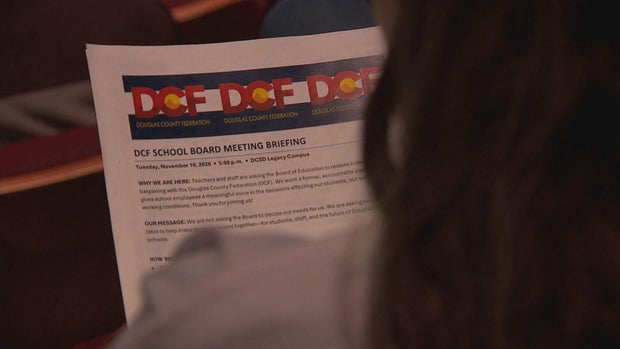
The federation says the failure of the 5A mill levy, coupled with the passage of statewide Proposition NN and Amendment 87, puts new education funding decisions on the horizon that teachers should be a part of.
"We have no interest in bankrupting the district, but our folks who teach people in the classrooms know what resources are absolutely essential and should be included in these kinds of budget crisis decisions," Boomer said. "What we need is the board to unequivocally say they want to have us at the bargaining table."
Before convening an executive session, many board members seemed to agree with the teachers' union's concerns around some of the proposed policy changes.
The board ended their meeting by convening an executive session to receive legal advice about collective bargaining. One board member said they would discuss next steps and potential changes to the draft.
The board could vote on the collective bargaining policy as soon as its Dec. 8 meeting.


