Colorado River plan spares upper basin states from mandatory cuts, for now

The U.S. Department of the Interior has issued its plan for how to manage water on the Colorado River. It comes after Colorado and six other states failed to reach an agreement on releases from two key reservoirs - Lake Powell and Lake Mead.
The river provides drinking water for 40 million people, irrigation for 5 million acres of farmland, and hydropower for seven states. It's been shrinking for the last 20 years.
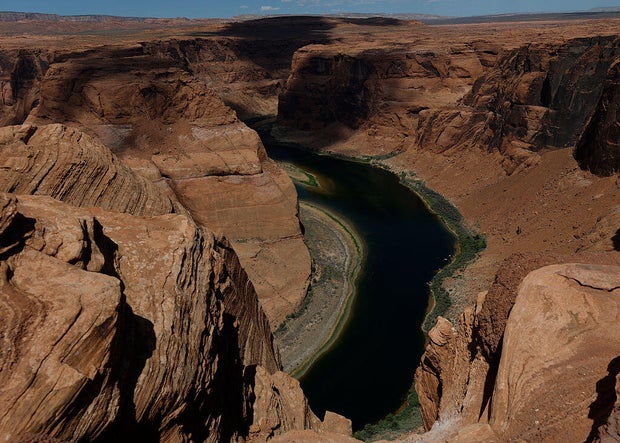
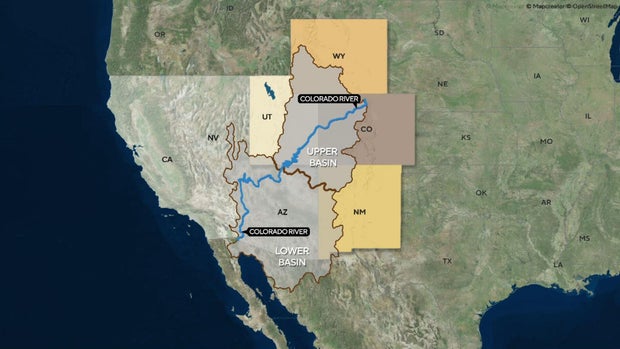
The states that rely on it can't agree on how to balance supply and demand, so the federal government is doing it for them. Under a tentative plan released by the Department of the Interior, lower basin states, California, Arizona, and Nevada, must reduce their water use by 1.6 million acre-feet a year for the next two years and up to 3 million acre-feet a year if conditions worsen.
One acre-foot is 325,000 gallons of water.
Upper basin states, Colorado, New Mexico, Utah, and Wyoming, are being asked to voluntarily conserve 200,000 acre-feet a year.
Over the last 20 years, the lower basin has consumed about 8.5 million acre-feet a year while the upper basin has used about half that, 4.2 million acre-feet.
"Colorado has been given breathing room, not immunity. We need to use it to act voluntarily before the emergency forces action upon us," said water attorney James Ecklund.
Ecklund led negotiations on the Colorado River during the Hickenlooper administration and headed up the Colorado Water Conservation Board. He has long pushed for a statewide conservation plan.
"The federal government has, in a way, bent over backward to allow us to see the error of our ways, fix it, and get on with remedying the crisis," Ecklund said.
The Department of Interior is providing $100 million for the four upper basin states to incentivize farmers and municipalities to use less water.
"I hope those who are creating the program and I hope the legislature can get involved in this, can make sure that it's truly a statewide program. That everybody shoulders a little bit of this pain and these consequences, rather than make a small group of people experience extreme pain," said Democratic State Sen. Dylan Roberts, who serves Summit County.
He says the battle among the states is far from over. The century-old Colorado River Compact says upper basin states cannot cause a reduction in the river's flow to the lower basin.
"At the end of the day, what this all likely means is that we're for sure going to litigation amongst the states. Which could end us in a costly and long legal battle that will create a lot of uncertainty for many years," said Roberts.
The new plan is for ten years, but Ecklund says models already show it doesn't go far enough. While the conservation program is voluntary, Ecklund says if we don't save, the federal government could pull water from reservoirs it controls in Colorado.
He says it also owns a lot of water rights here: "If we don't act, then we should not assume that the next federal intervention will spare the upper basin as this EIS structure does or that it will be designed around Colorado's interests."
Both Ecklund and Roberts say we need long-term conservation like more efficient irrigation systems and less water-intensive crops. They also say all of us, not just farmers and ranchers, need to reduce water usage.
The Department of the Interior is expected to release its final plan within the next couple of weeks.
"I want to thank the U.S Department of the Interior for their hard work over the past few years and for continued engagement with all who depend on this critical resource, and we are thoroughly reviewing the EIS," said Upper Colorado River Commissioner Becky Mitchell. "Colorado remains committed to protecting our state's significant rights and interests in the Colorado River and working collaboratively with the other Basin States, federal government, and Tribal Nations to adapt to supply-based operations."


