Colorado Parks and Wildlife says nuisance species found in Little Thompson River
An aquatic nuisance species has been found for the first time in the West Fork Little Thompson River, according to Colorado Parks and Wildlife.
CPW said this is the first discovery of the rusty crayfish in the northeast region, and the second time the species has been identified east of the Continental Divide in Colorado.
"The rusty crayfish is native to the Ohio River basin," said CPW. "It is larger and more aggressive than native crayfish species, often outcompeting them for food and resources. They are classified as a prohibited aquatic nuisance species due to their voracious appetite on critical habitat vegetation and prolific reproduction habits."
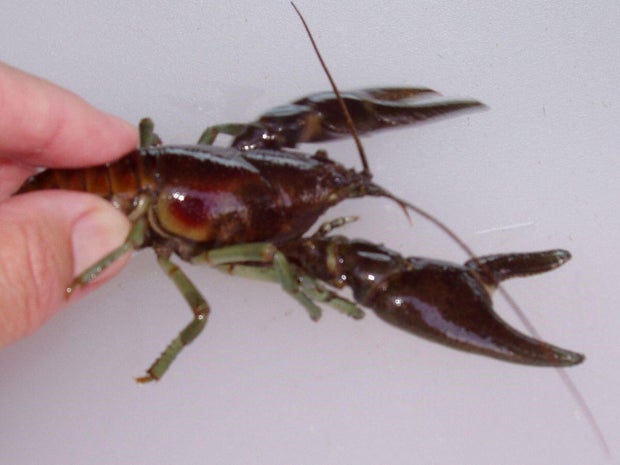
The crayfish have dark black rings near the tips of their claws and rusty patches on the sides of their abdomen. CPW said they can live in pooled or fast water, and the males can grow up to five inches long.
A Colorado resident first reported sighting the rusty crawfish through the species identification app iNaturalist on April 7. CPW performed a follow-up survey and collected samples the following day. They plan to conduct additional surveys of the Little Thompson River over the coming months to determine the size of the population.
CPW said they've confirmed rusty crayfish in five other bodies of water across the state, including Lake Granby in Aug. 2023.
Introducing non-native species can cause numerous problems, including the spread of disease and parasites, they warned. CPW believes the rusty crayfish were introduced to Colorado by anglers using them as bait, who then threw the unused bait into the water. The crayfish may have also been introduced by illegally stocking them as a prey base for a fishery.
CPW stressed the importance of cleaning, draining and drying any watercraft used in the state to stop the spread of the species.
"A boater who has launched their vessel outside of Colorado is obligated to tell inspectors in order to prevent the spread of invasive species," said CPW.
CPW offers inspections for watercraft at state parks and wildlife offices.