Colorado inmate released to community corrections re-arrested after state says release date was miscalculated

For Billy Hailey, an inmate in the Colorado Department of Corrections, his release was a day he had been waiting for and working toward for 20 years. Now, he is unexpectedly back in custody after the state says it miscalculated his release date.
In 2024, the Colorado Department of Corrections released him from prison to a community corrections program in Fort Collins. By all accounts, Hailey was excelling as he reintegrated into society. He had a steady job as a personal trainer at a local gym, a car, his own apartment, a girlfriend and a credit score that was rising.
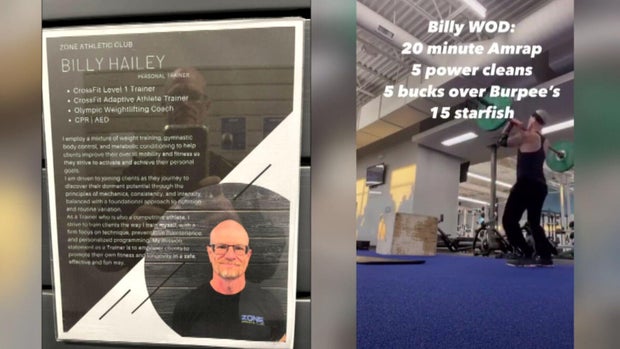
"He was thriving; he was absolutely thriving", said his girlfriend, Tricia Lane.
But after about nine months out of prison, and just days from being paroled in May of 2025, Hailey's road back hit a dead end. The Colorado Department of Corrections suddenly re-arrested him, saying they had miscalculated his sentence and he had to return to prison for another three and a half years.
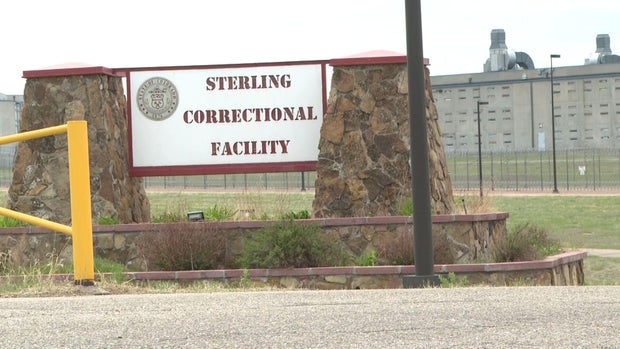
"It crushed me," Hailey told CBS Colorado during a phone call from the Sterling Correctional Facility. "It was hard to believe."
But Hailey added, "At the end of the day, I'm not the only one this had happened to."
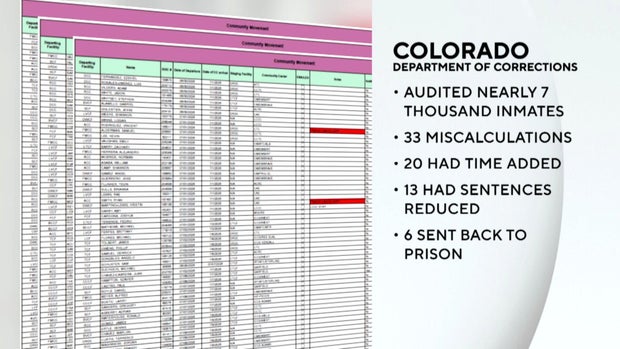
A CBS Investigation found that what happened to Billy Hailey was not an outlier. The Department of Corrections began conducting sentence audits in July 2025 to "verify sentence accuracy and ensure that custody, release, and placement decisions are based on correct information," according to the CDOC.
According to the Department of Corrections, the audit resulted in 20 people who were in community corrections programs having time added back onto their sentences. Of those, six people, including Hailey, were removed from community corrections and returned to the custody of the Department of Corrections. One individual was returned to Phase III of the Youthful Offender System. Fourteen were allowed to remain in the community because they were still eligible for community corrections.
"In some cases," CDOC spokesperson Alondra Gonzalez-Garcia said, "the review process identified time that had been credited in error under Colorado law. While affected individuals may view these corrections as the loss of previously awarded time, the adjustments are not disciplinary in nature. Rather, they reflect a determination that the credit was incorrectly applied and must be corrected to ensure compliance with the law and the sentence imposed by the court."
"While we recognize that these corrections can have an impact on affected individuals, our responsibility is to ensure that all sentence calculations are accurate, lawful, and consistently applied," Gonzalez-Garcia said.
Hailey speaks calmly about what happened to him.
"I actually don't feel any anger towards DOC. There's no one to be angry at. Their stance is this was a miscalculation," he explained.
He said he is frustrated but added, "All I can do is make the choices moving forward that continue to lead me to healthy rehabilitation and healthy choices, and I'm committed to doing that."
To that end, he is getting significant support. State Senator Cathy Kipp, his employer and other supporters are asking Gov. Jared Polis to commute Hailey's sentence. They met June 23 with two representatives of the governor's staff.
"Once they have served their time, served their debt to society, I think it's fair to let them go on with their lives," Kipp said. "Pulling the rug out like that isn't the fair thing to do. I just think it's unconscionable. I just don't think what happened is right. You make promises to people, you keep them."
While Hailey appeared to be on the right trajectory while out of prison, he knows it was poor choices that landed him there in the first place.
Colorado court records show that in 2009, a Morgan County jury convicted him of two counts of felony assault. He was acquitted on several other charges. According to a Fort Morgan newspaper account from October 2009, Hailey was sentenced to 45 years in prison for assaulting a woman at a business and using a deadly weapon in a 2008 incident. The presiding judge said the 2008 case was Hailey's third felony conviction. He choked the victim and used a knife during the assault.
"I lost self-control and caused physical harm to another person," Hailey said. "I've made poor choices in my past, and part of accountability is facing that. I've spent the last almost 20 years working on who I used to be so that's not something that happens again."
But what happened to Hailey, and other inmates moving through community corrections programs, raises questions about when the government makes a mistake that costs someone their freedom, how should the state fix it? Should people who followed every rule be sent back to prison to correct the state's own mistake?
For Cathy Kipp, the answer is simple.
"Why would we, as taxpayers, continue to pay to keep someone incarcerated when they would be perfectly successful on the outside? Returning a rehabilitated, employed and community-supported individual to prison for three and a half years, at taxpayer expense, when that individual has already demonstrated he poses no risk to public safety is difficult to justify on any grounds, legal, fiscal, or moral," said Kipp.
Billy Hailey's new parole date is in 2028. A decision by Gov. Polis could determine whether Hailey returns to freedom before then or remains behind bars.
"I would like the opportunity to pick up where I left off", said Hailey.


