Colorado firefighters train at Eisenhower-Johnson Memorial Tunnel as the state dries up

There is a hidden team of emergency responders ready for action when drivers are traveling through the mountains. It's inside the Eisenhower–Johnson Memorial Tunnel, where crews are constantly training for worst-case scenarios. With an unusually dry winter raising concerns about wildfire risk, those preparations are taking on new urgency along the Interstate 70 mountain corridor.
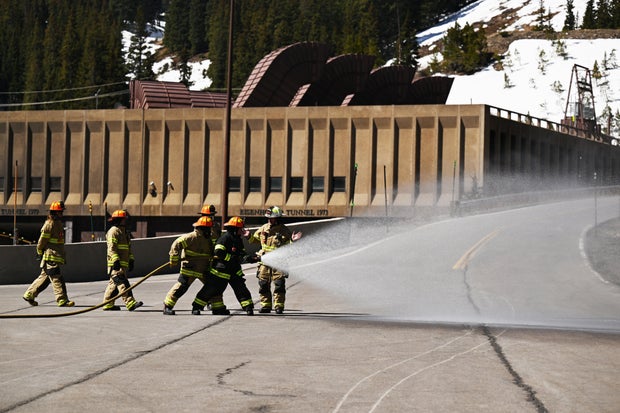
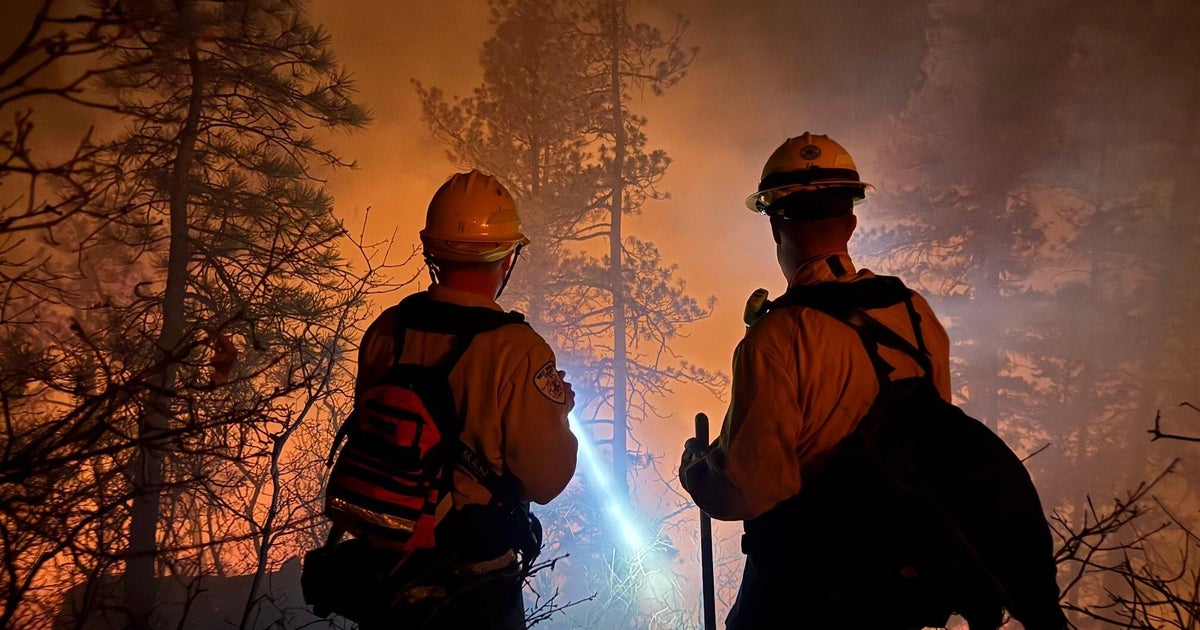
Crews spent the day Wednesday running through fire response drills just outside the tunnel system. It's part of regularly scheduled training by the Colorado Department of Transportation to keep teams ready in one of the state's most critical and challenging stretches of roadway.
"There's a lot of pressure to try and keep (fire) small, catch it quick," explained Pete Ingel, CDOT's fire program manager.
The tunnel fire brigade is on call around the clock with the ability to respond to things such as car fires inside the tunnels, but also within a surrounding 1-mile radius from their base when they might be the closest help available. That includes everything from car fires to wildfires sparked along the mountain corridor.
"With the limited snowpack this year, we obviously have some high concern for wildfires," said Jori Ernst with CDOT's Office of Emergency Management. "Our maintenance crews are doing more fire mitigation along the road to get rid of the dead trees, dead logs."
One of the main differences between this firefighting team and a typical team in a city is how the crew spends it's time. On any given day, the tunnel team might be operating fire engines, clearing crashes or even running heavy equipment to keep traffic moving, or clearing snow. That versatility is critical in a place where conditions can change fast. The tunnels themselves present unique risks, especially with vehicles pushing hard uphill on both approaches.
"Everything's hot," Igel said. "And then they sometimes (have) engine type issues, failures that cause a fire."
According to CDOT, these hands-on trainings happen monthly both at the Eisenhower–Johnson Memorial Tunnel and the Hanging Lake Tunnel in Glenwood Springs. The goal is simple: Build muscle memory now, so crews can respond instantly when something goes wrong.
"As quick as possible, so that if something does happen, they are ready to respond," Ernst said.