RTD sued by Colorado disability group over cuts to Access on Demand program
The Regional Transportation District is being sued in federal court over cuts to a program that provides door-to-door service for Coloradans with disabilities, arguing it violates the Americans with Disabilities Act, Colorado Anti-Discrimination Act, and the rights of people with disabilities.
Attorneys for the plaintiffs are hoping a judge puts a stop to the changes to Access on Demand before the Jan. 1, 2026 implementation.
On Sept. 30, RTD's board of directors voted to start charging $4.50 for the previously free program and reduce hours of service, citing increased costs. Disability advocates and people with disabilities who rely on the service opposed the change, in public comments at the meeting, in letters to RTD board members, and in the media.
RTD said the program's rapid growth in popularity and affordability was a concern, saying Access on Demand currently costs about $17 million a year. But many of those who rely on the program say the small portion of RTD's $1.5 billion budget is worth their ability to travel independently.
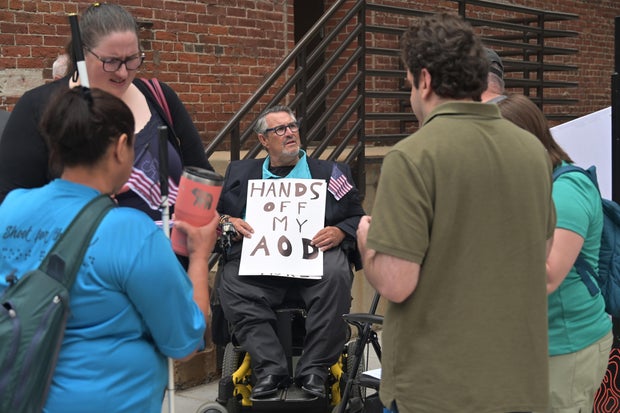
The law firm of Newman | McNulty LLC announced on Monday that it was filing a federal lawsuit on behalf of American Disabled for Accessible Public Transit, or ADAPT, and advocates Dawn Russell, an ADAPT organizer with cerebral palsy, and Claudia Folska, herself a former RTD board member, and the first blind elected official in Colorado.
"It's been 50 years since the Gang of 19 fought for our right to ride public transportation, yet today, ADAPT must again ask a court to make RTD honor it," Russell said at a news conference outside the Alfred A. Arraj U.S. Courthouse in Denver on Monday.
She was referring to the disability advocates who, in the 1970s, staged protests against RTD, demanding it make their buses wheelchair-accessible.
At the time, only 10 of the RTD's 213 buses were wheelchair-accessible, according to Colorado's state archives. Members of the Gang of 19 surrounded a bus at East Colfax Avenue and Broadway for 24 hours, which garnered national headlines at the time.
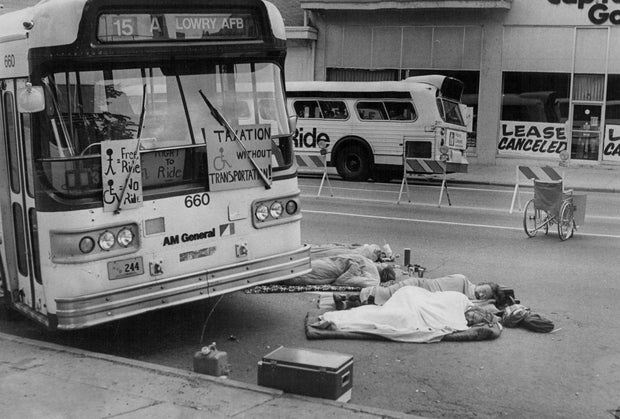
RTD eventually settled a lawsuit, agreeing to retrofit its buses to make them wheelchair-accessible, before the ADA required public transit to be accessible.
"RTD lied to you, to me, and we should be outraged," she continued. "That's why we're here today. To the hundreds of folks who rely on Access on Demand for their freedom and independence, you showed up and spoke up."
The lawsuit, filed in U.S. District Court for the District of Colorado, seeks to stop the rate increase and service reduction, arguing it violates the rights of people with disabilities.
Holding signs that bore slogans like "no taxation without transportation" and "we ride, we vote, we pay taxes, no cuts to AOD," several disability advocates joined Russel, Folska, and their attorneys at the news conference.
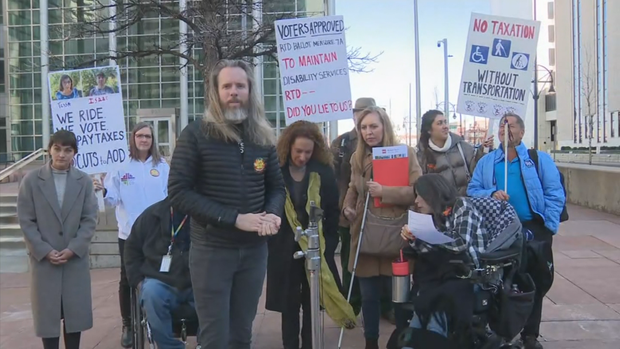
"As a former elected board member for the Regional Transportation District, it causes me great pain and disappointment to see where RTD is today," Folska said at the news conference. "Today, RTD is killing Access on Demand for thousands of people with disabilities, when in fact, it's the best service they've ever had."
RTD Public Relations Manager Tina Jaquez, in a statement on Monday, said the changes will take effect on Jan. 1 and that the changes to Access on Demand don't violate federal law.
"RTD is in receipt of the complaint and its accompanying motion for a preliminary injunction and in the process of reviewing. The agency remains committed to serving the transit needs of all customers who rely on its bus, rail, and paratransit services," Jaquez wrote. "Access-on-Demand is a supplemental, premium, curb-to-curb service for paratransit eligible customers and, unlike Access-a-Ride, is not required by federal law."
RTD said the base fare per trip will by $4.50 upfront or $2.25 for those who qualify for LiVE, an income-based fare discount program. RTD also says the new service hours, which will no longer be from 1:30 a.m. and 3:30 a.m., align with ADA paratransit hours.
Attorneys for the plaintiffs argue that RTD is lying about its inability to pay for Access on Demand and are asking a judge to declare that the changes to Access on Demand violate the ADA, the Colorado Anti-Discrimination Act, thus rendering the changes unlawful.
Folska called the changes "unfair," "unreasonable," and "unconscionable," and is urging RTD to reverse course.
"This is a pivotal turning point for RTD," she said. "They have an opportunity to cut fares for all people; in fact, they could eliminate all fares."