Colorado crash survivor asks drivers to pay more attention as 79 pedestrians killed so far in 2025

The Colorado Department of Transportation says there are too many pedestrians getting killed on Colorado roadways.
As the number of pedestrian deaths climbs at an alarming rate, the survivor of one crash is urging drivers to pay more attention.
Larry Wilson was hit while riding his bike around 8 a.m. on June 17, 2024. Wilson was hit by a pickup truck in the city of Fountain and was unconscious for at least six hours. Wilson survived this traumatic crash and is reminding drivers to pay attention on the roads.
"I was completely oblivious to the tubes and wires attached to me at that time," Wilson said. "I had a minor skull fracture, five facial fractures, a punctured lung, 11 fractures spread across four ribs, and an alliterated liver. I spent nine days in the hospital."
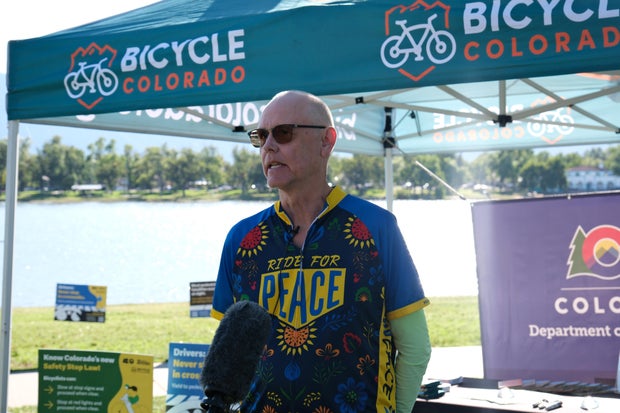
Wilson still rides his bike often after he recovered. CDOT and Wilson are reminding drivers that not paying attention even for a second can cost someone their life in a crash.
There's been an 88% increase in yearly pedestrian deaths from 2015 to 2025, the agency reports. In just 2024 alone, 120 pedestrians were killed. CDOT says so far in 2025, 79 pedestrians have been killed; the same number as were killed in the same time period of Jan. 1 to Sept. 30, 2024.
Most of the fatal crashes are happening at night, according to CDOT. In 2024, 78 pedestrians were killed after dark, while 81 were killed not using a crosswalk. The mix of the two is quite dangerous.
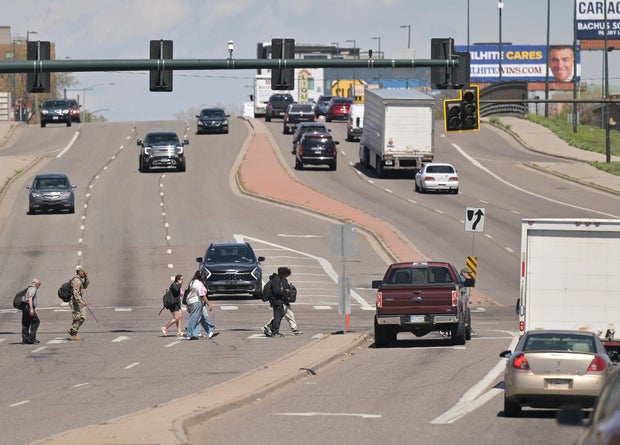
Last year, the counties with the highest number of pedestrian fatalities were Adams with 22, Denver with 18, and El Paso with 16, CDOT data shows. Together, these counties account for 47% of all fatalities that occurred in 2024.
Drivers should always use caution around pedestrians in and outside of intersections, follow the posted speed limit, and avoid distractions.
CDOT is reminding pedestrians, cyclists, and drivers alike of the following laws and safety tips:
Colorado Pedestrian Laws
- Pedestrian Right-of-Way: Pedestrians have the right-of-way in crosswalks and unmarked crosswalks at an intersection when traffic signals indicate it is safe to cross.
- Illegal Crossing: Crossing the street outside of designated crossings is illegal and can result in a ticket and fine. Pedestrians must always yield to vehicles unless crossing at a marked or unmarked crosswalk at an intersection.
- Where should pedestrians walk or run? Pedestrians must use sidewalks whenever available. If there is no sidewalk, pedestrians must walk on the left side of the road, facing oncoming traffic.
- Pedestrians must follow pedestrian-specific traffic signals and signs. If a pedestrian signal is broken or stays on "Don't Walk" or "Walk" for multiple cycles, pedestrians shall not enter the roadway unless it's safe to do so and won't interfere with traffic.
Safety Reminders for Drivers around Pedestrians
- Be sure to stop before the crosswalk, never in it.
- When the light turns green, go slow, check your surroundings and proceed with caution.
- Try to make eye contact with pedestrians to ensure it's safe to continue through the intersection.
- Always use your turn signal.
- At night, reduce your speed and always use headlights.
- Avoid cell phone use and other distractions, obey speed limits and never drive impaired.
- Always yield to pedestrians and slow down, especially in urban areas.
Safety Reminders for Pedestrians around Drivers
- Use sidewalks whenever available, and cross streets at crosswalks or intersections.
- Stay off your phone when crossing the street.
- At crosswalks, try to make eye contact or nod to a driver to confirm they see you before you cross.
- Look for cars in all directions, including those turning left or right.
- Avoid alcohol and drugs when walking; they impair your abilities and your judgment.
- At night, wear light colors and walk where streetlights will illuminate you.
- Watch for cars entering or exiting driveways or backing up in parking lots.
In August 2025, CDOT launched a campaign about the risks of speeding drivers to pedestrians. The risk of death for pedestrians increases from 10% at 23 mph to up to 75% at 50 mph.