Colorado Cargill employee shares concerns over contract negotiations as lockout reaches 3-month mark
It's been nearly three months since Graciela Beltran last set foot inside the Cargill plant in Fort Morgan.
"The majority of us employees are disappointed," said Beltran. "We feel abandoned."
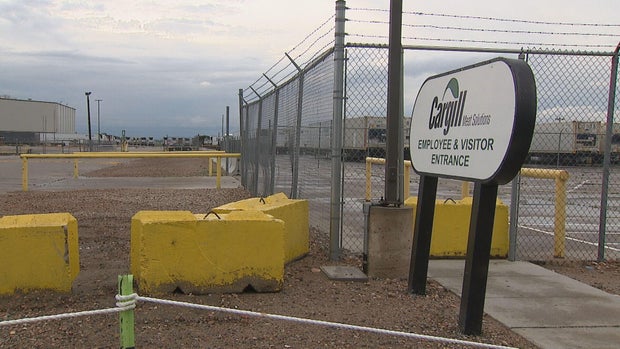
At first, the company's lockout came as a shock to some workers, who were still in the process of negotiating a new contract with Cargill leadership, in the hopes of achieving better wages.
"I kind of felt like Cargill betrayed their employees," said Rosa Beltran, Graciela's daughter and a former employee at the plant.
Yet, workers like Graciela felt motivated to keep advocating for themselves and reach an agreement. It's a task she and other workers entrusted their union, Teamsters Local 455, to help them achieve.
"When all this started, everything they said was, 'Yes, you deserved more. Vote no, so they can give you better wages'," she said.
As negotiations continued to fail in the weeks that followed, however, Graciela says they became increasingly frustrated with Cargill and with their union reps.
"When we went to the meetings [with Teamsters] to see what was happening, they said they were going to give us $1,250 a week for the duration of the strike," she said. "Later, it dropped to $1,000."
As negotiations continue to reach a stalemate, they feel as though those promises have scaled back further.
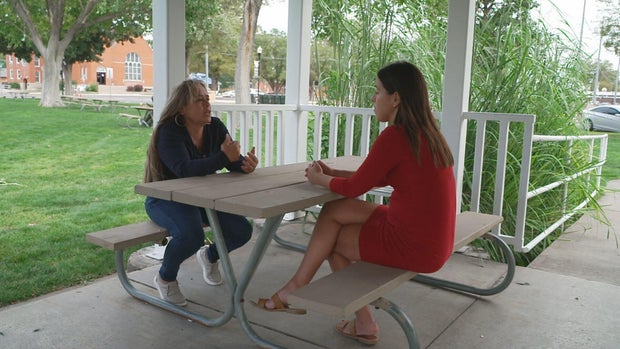
"We had representatives telling us one thing, and then others representing other representatives telling us another thing," said Rosa. "What kind of hurts the most is that you gave them the benefit of the doubt, or I gave them the benefit of the doubt."
Now, starting this week, Graciela says she'll be lucky if she receives only $400 per week.
"They promised a lot of things but aren't delivering on any of them," said Graciela.
After several of our attempts to talk with Teamsters Local 455 leaders went ignored, we visited their Fort Morgan Office.
A spokesperson there could only offer a statement in response to the latest contract that did not get approved by members: "While the company moved money to the front of the contract term, members did not believe it was enough."
"In the beginning, what the union proposed was a $1 raise each year. So, in the course of five years, a $1 raise every year, and that was what they proposed to Cargill," said Rosa.
"[Now] they were offering us a $2.15 increase [in total] over five years, so that's why we didn't want to do it," said Graciela.
Now Graciela feels stuck in the middle of two challenging choices: fighting for better pay or voting for an offer that gets them back in the building.
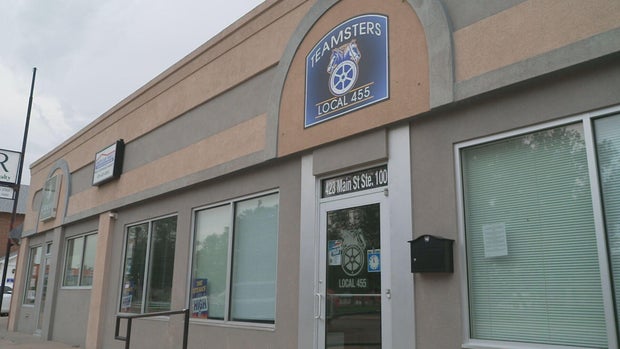
"If the representatives had explained that to us when we started the meetings to negotiate the contract, if they had really explained everything, a lot of people probably wouldn't have voted the way they did," she said. "Now [workers are] gathering more signatures to see if, for those who want to go back, they can make another proposal to see if people are ready to return. It comes down to how the majority votes, right? If the majority votes yes, then I'll go back. If the majority votes no, then I'll stay put and keep fighting to see if they improve our wages.
"Everything is a risk, and I think that regardless of what I say or your neighbor says or what your acquaintances say, you have to vote for yourself ultimately," said Rosa. "I hope that, in the future, that people, when they gather and become united, that they could make the changes that maybe didn't happen today."
Teamsters Local 455 released a statement to CBS Colorado that read, in part, "Until a resolution is reached, these members will receive out-of-work benefits, but at the International Brotherhood of Teamsters' constitutionally allotted amount and the local will pay out-of-work benefits as prescribed by local 455 by-laws. Faced with Cargill's intransigence at the bargaining table, we must be prepared to maintain our strike funds for the long haul-- not only for Teamsters Local 455 Cargill members, but for all our nearly 12,000 members, many of whom will also be at the bargaining table in the coming weeks and months."
See the complete statement below:


