Colorado AI chatbot bill signed into law restricting interactions with children; some parents concerned it doesn't protect kids

Colorado now has its first law restricting how AI chatbots can interact with kids. The bill was signed into law just over 2 ½ years after a Thornton mom lost her daughter to suicide. Cynthia Montoya said her daughter's conversations with a chatbot are to blame for her daughter's death.
The law signed by Gov. Jared Polis creates stronger safeguards for artificial intelligence chatbot platforms and limits their interactions with kids and teenagers. However, Montoya says the bill does not do enough to protect children and instead protects AI companies. Moving forward, she wants to continue fighting for stronger measures.
Montoya still wears a necklace with her daughter Juliana's initials.
"It's my little piece of her that I draw strength from it when I'm doing this, and I feel like I have nothing more to give," said Montoya. "She was every parent's dream kid. She was excited about everything. She was a scholar. She was (in the) National Junior Honor Society. She was a talented musician and an artist. She was a theater kid, she did a lot in her 13 years."
For her, the necklace is strength to fight for stronger online protections for children.
Juliana passed away at the beginning of her eighth-grade year. Montoya said she noticed changes in Juliana's behavior and that she was becoming distant. She thought her daughter was texting friends, but after Juliana's death, Montoya learned her daughter was messaging with an AI chatbot.
"I see exactly how the language changed, and it groomed her, and it looked like a person on the other end," said Montoya.
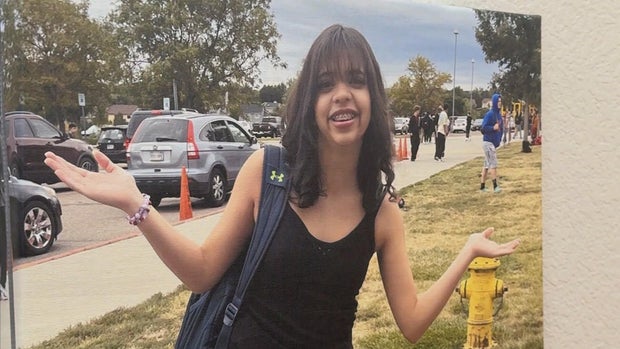
She said the chatbot initiated and engaged in sexual conversations. She also said Juliana shared suicidal thoughts with the chatbot more than 50 times.
"It is incredibly tragic, and certainly something that we cannot ignore when it comes to the victims and their families. We also recognize that we cannot go another year with keeping our children vulnerable," said state Sen. Iman Jodeh, a sponsor for the bill.
The law requires AI platforms to provide disclosures to minors that they're interacting with AI, provide resources if they talk about suicide or self-harm, and prohibit chatbots from having a points or reward system encouraging use.
"We wanted to put guardrails in place that protect kiddos and really hold big tech accountable when it comes to how predatory these chatbots have become," said Jodeh. "It's scary, and these minors start to look to these relationships with these chatbots for advice, for how to navigate life as a student, as a high schooler, or younger, and in some cases becoming fatal.
The law also requires operators to use "reasonable methods" to estimate a user's age and put "technically feasible" measures in place to prevent sexually explicit content.
Montoya shared her concerns about how the law was written.
"My primary concern is what I call the loose language in the bill," said Montoya. "The platforms use a standard of what they think is a reasonable measure to be put in place to prevent child sexual exploitation, self-harm."
"Evolution of technology is happening so fast that keeping the language in the bill, it was made sure that it kept up with that technology that honestly could change between when we passed this bill and when we come back in January, and so we did that intentionally, knowing how much technology is advancing, even within one year," said Jodeh. "I don't want other kids to be at risk simply because we weren't intentional about planning for the advancements in technology."
However, Montoya believes the law sends the wrong message and protects the wrong people.
"I believe that the law protects the technology companies," said Montoya. "I think it's dangerous, because this is getting so much awareness, especially here in Colorado, as a bill that's protecting kids, and my feeling is that it's not doing a lot to protect kids."
What is agreed on is that more work needs to be done. For now, Montoya continues turning pain into purpose. She and other parents continue to meet with lawmakers in D.C. to work on several other pieces of legislation at the federal level. Montoya also wants to be part of new legislation brought forward in Colorado next legislative session.
"This legislation is so flawed. I believe that it's going to take several years to close up all the loopholes that it's now put into law," said Montoya.
"If we can have something in place now that sets the tone for the next year, at the very least, and we can come back and make things stronger," said Jodeh. "To me, at least we're protecting kids for the next year. In my mind, this bill did that.
Montoya, along with a handful of other parents who have similar stories across the country, also sent a letter to Polis in May, sharing their concerns and opposition to the bill that's now become Colorado law.
The law goes into effect in January. Montoya, along with some families also impacted, are also suing the AI chatbot company involved.
"The world is a less bright place without my daughter here, and that's why I'm here fighting, so that no other parent has to speak about their child in past tense," said Montoya. "No parent should walk the path I'm walking."


