Billboards on Colorado State University land could be prohibited by state lawmakers

Months after Colorado State University started installing billboards around their Fort Collins campus against the wishes of the City of Fort Collins, state lawmakers are now looking to create legislation that would potentially force the university to have to take them down.
The City of Fort Collins has prohibited billboards for decades, deeming them a visual disturbance to the otherwise visually appealing landscape of tree-lined roadways and homes. The only billboards in the city are billboards that were grandfathered in when the law was first created, and there are very few of them.
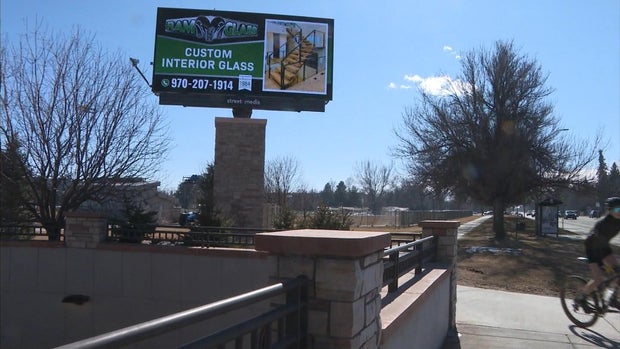
However, Colorado State University rests in the heart of the city and has been installing many billboards in and around the campus in recent months. The university is using a loophole in order to be the only property with modern billboards being installed, as the campus itself is technically state-owned land.
Many of the university's large billboards can now be seen around the edges of the property. Most are high in the air and face major city-managed roadways like College Avenue, Shields Street and Prospect Avenue.
While physically on state land, the billboards are indisputably intended to be seen primarily by those who are on Fort Collins land.
The university has repeatedly denied to interview with CBS Colorado on the topic of the billboards since they were first announced in 2025, instead choosing to issue written statements.
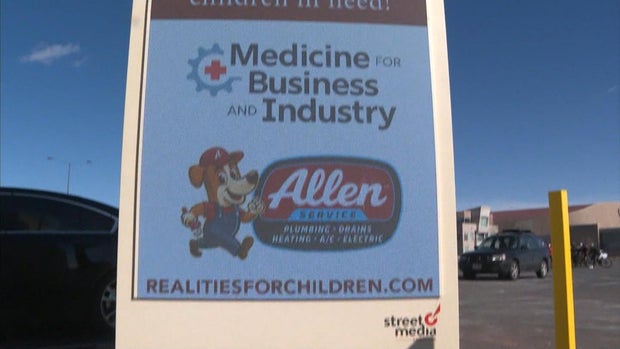
In 2025 a spokesperson for the university said the signs were intended to be a safety measure for students and staff and a way to communicate with them during times of emergencies or other developing incidents. However, nearly 100% of the images shown on the billboards around the edges of the campus are advertisements for local businesses or the university itself, with the occasional awareness campaign asking for the public's help identifying a suspect from a Larimer County murder years ago.
"I know the line of the university is 'We are using them for public service announcements.' Frankly, they are for raising revenue," said state Sen. Cathy Kipp, who represents Fort Collins.
Kipp said she has received a lot of contact from the Fort Collins community with distaste for the signage, adding she tried to address CSU in private about the concerns from her constituents. She said, at first, she was issued a written response from the university which did not satisfy her.
"Look at this thing, it is like we are at the corner of I-25 and Harmony (Road). It is unacceptable that we have this in the middle of campus," Kipp said.
Kipp eventually met with the university. She said the university offered to set up a website for people to share feedback on the billboards on their own website, which she dismissed as insufficient.
"We have a beautiful city. It is tree-lined streets. It is not huge ads all over it. That is why people like to live here in Fort Collins," Kipp said.
Kipp also said her constituents have also expressed frustrations with the noise levels on weeknights that can come from CSU's relatively new on-campus stadium Canvas Stadium.
That is why she is introducing legislation, which has co-sponsors, at the state capitol. Her proposed legislation would prohibit CSU from having signage or sound that is visible or audible from Fort Collins land and would otherwise violate city code.
The legislation would allow CSU to be granted waivers from Larimer County and/or Fort Collins.
"Frankly they are just disregarding the input of neighbors and people who live in the area in putting these things up," Kipp said.
CSU declined to interview on this report, instead issuing a written statement about Kipp's legislation. The statement, provided in-full below, claims the proposed legislation would impact campus safety and negatively impact business in the area.
"CSU has been in dialogue with Sen. Kipp regarding her proposed noise and signage legislation and has sought for months to reach a compromise on this issue. We have great respect and appreciation for the senator and her point of view.
If passed, however, this legislation would set a concerning precedent for the management of state lands throughout Colorado. In addition, the measure would have significant negative economic impact on the Northern Colorado region, potentially diminish cherished and time-honored campus traditions, and erode the public safety infrastructure the campus has put in place to support students and the broader community.
Fort Collins is one of the great college towns in the nation because of the strong town-gown partnership that's been built over more than 150 years. We remain committed to working collaboratively with city leaders, neighbors and other stakeholders to address community concerns while protecting the university's ability to serve its educational mission and support regional economic vitality."
Kipp said she will move forward with trying to get the law passed at the state level after feeling the university has not been a fair partner in the conversation.
"I like having CSU in my community. It is a great university. But, we do have a small disagreement on this," Kipp said.