Denver city leaders say new Axon surveillance system adds privacy safeguards

After months of infighting over Flock surveillance cameras in Denver, city leaders say Flock is on its way out and a different surveillance technology provider is in.
The city announced a new partnership with Axon to operate automated license plate readers, replacing its current network of cameras run by Flock Safety.
City leaders say the move is designed to strengthen public safety while adding stronger privacy protections, something community members have been asking for months.
Denver officials say the technology is here to stay, but they chose Axon because its system better aligns with the city's privacy and security standards.
"There's not going to be federal agents, ICE officers who can get access," said Tim Hoffman, policy director for the City and County of Denver. He called that a non-negotiable requirement when the city began searching for a new provider.
"We wanted to make sure that there's no sort of national lookup feature. There's no sort of ability for federal agencies or ICE officers to access Denver's data," Hoffman said.
For months, community members voiced concerns about the Flock Safety cameras after it was discovered federal agents had used the platform for immigration enforcement purposes.
Under the new agreement, Axon must comply with Colorado law and is prohibited from providing Denver data for civil immigration enforcement, abortion-related investigations, and any use not explicitly authorized by the city.
Hoffman said access to the data will be limited to Denver officers. The data will be retained for 21 days before being destroyed and stored in what the city describes as a high-level security system.
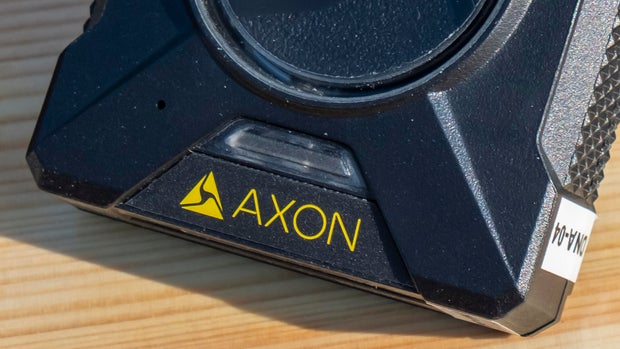
Axon already supplies Denver police with body-worn cameras and Tasers. Leaders say its license plate reader system will integrate with existing technology.
"It's really important for everyone to understand that we are not tracking individuals," Hoffman said. "We are tracking license plates and characteristics of cars that are going through public intersections in the city."
Still, some experts say concerns remain about data security.
"Computers can be hacked, and have been hacked, and will continue to be broken into," said Dr. Steve Beaty, a computer science professor at Metropolitan State University of Denver. "I think there are concerns around the ownership of the data of the video footage, is it being sold to a third party?"
Hoffman said the new contract prohibits Denver data from being used to train artificial intelligence models or being sold for commercial purposes.
"This is really confined to legitimate law enforcement purposes that are driven by the Denver Police Department and other public safety agencies that work in Denver," he said.
Officials say license plate reader cameras have already played a role in public safety, helping recover hundreds of stolen vehicles and assisting in homicide investigations last year.
The proposal now heads to the full city council for a vote.