ACLU alleges years-long cover-up in Colorado DNA scandal, calls for Colorado Supreme Court action

Missy Woods is behind bars for tampering with DNA evidence at the Colorado Bureau of Investigation. Now, the American Civil Liberties Union says her misconduct has exposed much deeper problems and is calling for accountability beyond the former analyst.
The ACLU, ACLU of Colorado and the Exoneration Project are urging the Colorado Supreme Court to hold the state accountable for what attorneys describe as a years-long cover-up that may have compromised thousands of criminal cases.
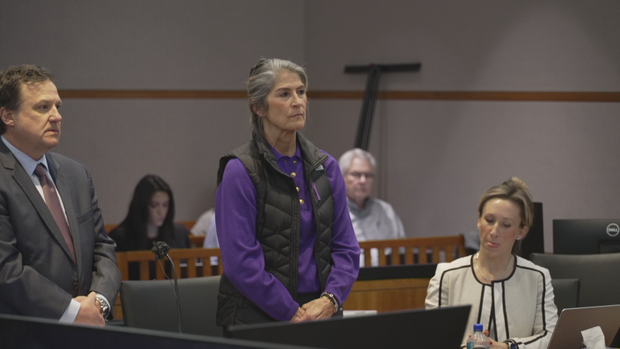
Investigators found Woods altered or deleted DNA data in at least 1,045 cases during her nearly three decades working for CBI. But attorneys argue the number of cases affected could be significantly higher, because some of the original forensic data is no longer available.
Matthew Segal, co-director of the ACLU's State Supreme Court Initiative, told CBS Colorado this should not be viewed as the misconduct of a single employee.
"The evidence is that in both 2014 and 2018, fraud by Missy Woods was brought to the attention of supervisors at the CBI, and instead of discharging their obligation to do something about it and to disclose that fraud to criminal defendants, supervisors covered it up," Segal said.
The ACLU argues that the failure to disclose Woods' misconduct violated defendants' constitutional rights and allowed her to continue working on criminal cases for years after concerns were first raised.
In a statement to CBS Colorado, CBI Strategic Communications Director Rob Low wrote:
"We continue to recognize the seriousness of Missy Woods' misconduct and the concerns it has raised about the integrity of forensic evidence. CBI has addressed these issues extensively and remains committed to ensuring the reliability of its forensic work and maintaining public trust.
We have confidence in the dedicated investigators and scientists who carry out CBI's mission every day. We respect the judicial process and believe that questions concerning individual cases are best addressed through that process."
The agency has a web page that details its response to Woods' misconduct.
According to the filing, the ACLU says the delay also resulted in the loss of crucial DNA instrument data, making it difficult or impossible to determine whether Woods manipulated evidence in additional cases.
"It's important to remember here that it is the state that committed this misconduct," Segal said.
Now, the ACLU wants the Colorado Supreme Court to shift responsibility for addressing those potentially compromised cases. Rather than requiring individual defendants to prove Woods tampered with evidence in their cases, attorneys want the state to demonstrate that misconduct did not occur.
Segal said the issue is also about preserving confidence in Colorado's criminal justice system.
"One way I would put it is that it takes a village to do a criminal case right, and it can take a village to taint a criminal case as well," he said. "And here, unfortunately, the second thing happened."


