Small farmers form coalition to push back against proposed 2026 U.S. Farm Bill
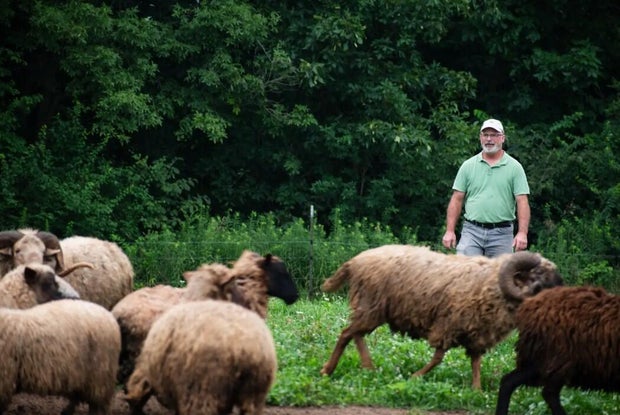
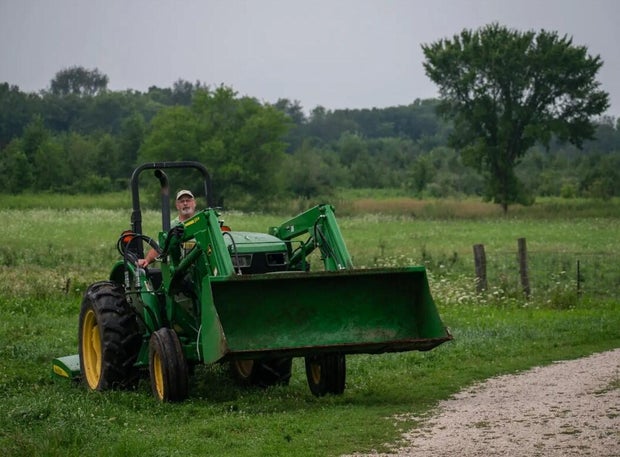
Sitting on 90 acres, Jody and his wife Beth Osmund run one of the remaining small, pasture-based farms in the United States. The couple has spent the last 20 years feeding thousands of Ottawa residents, making daily deliveries of frozen meat through a subscription service.
Cedar Valley Sustainable Farms has felt the "turmoil," according to Osmund, amid soaring tariffs, rescinded government contracts, and the collapse of other small farms as larger corporate farms grow.
Now, he says new legislation could be the next major threat to his business.
"It's a direct blow against independent, humane farmers like myself," Osmund said.
He's not the only one. Osmund is among more than 150 small farmers who have formed a first-of-its-kind national coalition in direct response to their opposition to the 2026 Farm Bill. They're called FACE Ag Network: Farmers for Animals, Communities and the Environment.
"It's a lot of farmers, with multiple species of grazing animals, feeding them grass and pasture, like they're supposed to do. Rather than keeping them in confinement sheds where all of their feed is trucked in," Osmund explained.
They oppose this year's Farm Bill, a massive package of federal legislation that governs agriculture and conservation policy. The bill, renewed approximately every five years, also historically authorizes the Supplemental Nutrition Assistance Program, or SNAP, which provides food stamps and other benefits to millions of Americans.
In an open letter to Congress, FACE Ag Network argues that the bill threatens hundreds of animal welfare laws and prioritizes industrial agriculture over independent farmers. The coalition is urging for leveling the playing field for small farmers and giving them a seat at the policymaking table.
Specifically, they ask for legislators to prioritize funding for local and regional food systems, ensure conservation programs support small and mid-sized farms, and reject the "Save Our Bacon Act," which they say would overturn state animal welfare laws and create a "race to the bottom" for industrial agriculture.
"[We're] trying to give a perspective outside of the bounds of the American Farm Bureau Federation or the crop protection lobby," Osmund said.
The "Save Our Bacon Act" seeks to block Proposition 12, a citizen-led initiative that requires a minimum amount of space to prevent the cruel confinement of breeding pigs, egg-laying hens and calves sold in California, the largest pork buyer.
"If it gets passed, it's going to negate all the investments that the humane farmers have already made and going to hurt consumers, because they're no longer going to have that assurance of being able to purchase humanely raised pork and poultry," Osmund said.
The argument against Prop 12 is that it applies specifically to pork sales in California, the largest state-level consumer of pork products in the United States. Illinois and Iowa, two of the largest pork-producing states, are then "forced" to abide by this law.
"I would say a lot of this is a byproduct of the way the industry itself is shaped," said Johnathan Coppess, former chief counsel for the Senate Committee on Agriculture, Nutrition, and Forestry and associate professor of agricultural policy at the University of Illinois at Urbana-Champaign.
Coppess wrote the book "The Fault Lines of Farm Policy: A Legislative and Political History of the Farm Bill" and emphasized these issues go beyond this year's farm bill.
"Over the decades now, we have really consolidated and concentrated livestock production. Within barns, the pigs are pinned up in what they call gestation crates," Coppess said. He cites safety, efficiency, and cost as reasons larger farms prefer gestation crates over more space.
Major animal advocacy groups, including the ASPCA, have come out in opposition to the Farm Bill, urging action against the move to kill Prop 12.
A Harvard Law School analysis found that hundreds of state laws could be nullified by the "Save Our Bacon Act," including regulations to protect the health of animals, farmers and the public.
Consolidation is an issue across the farming sector, according to Coppess.
"If you're a young farmer or a smaller farmer, it's like everything's stacked against you. The policies as well as this concentration across the industry," he said. "If you go buy fertilizer, when you buy your seeds, you're dealing with just a few companies, some of the same companies. They just have locks on so much of this, it's really difficult to get out of that, or innovate, or be small."
Over 500 stakeholders support the 2026 Farm Bill, according to the House Committee on Agriculture, including Illinois groups like the Illinois Farm Bureau, Illinois Fertilizer & Chemical Association and Illinois Soybean Growers.
The Illinois Farm Bureau applauded the bill in a press release, saying that it helps "strengthen the farm safety net."
Osmund and small farmers say that net is not extended to them, and actually feel like a "rug has been pulled out from beneath them."
According to USDA data, the U.S. has lost over 158,000 farms since the last Farm Bill passed in 2018, hitting the lowest numbers in more than a century. As smaller and mid-sized farms continue to decline, large-scale farms making over $1 million have increased.
Coppess understands the concerns of small farmers and consumers, but said the reallocation of funds in the bill is what is particularly "controversial" to him.
"If we set aside Prop 12 and the pesticide provision that got stripped out, what is controversial is what they did last year. They took hundreds of billions of dollars out of the SNAP program [and] doubled payments to farmers from large, concentrated farm operations," Coppess said.
"The only way to turn the rudder of agriculture in this country is to change policy. We may not have the funding that industrial trade groups have, but the FACE Ag Network is building a community of farmers that, together, can challenge the money by being the majority," Osmund said in the press release.
But Coppess still has questions.
"How is it that we're sitting in a food system in which farmers can't make money producing the food, and consumers increasingly can't afford the food? There's a whole lot of money somewhere in this system. And to me the question is, where's all that money going?" he asked.
Coppess said it's highly unlikely this bill will pass the Senate, which is set to take it up in June.
Osmund and the other farmers of the FACE Ag Network said they are working to schedule meetings with lawmakers to hear their concerns.


