Rev. Jesse Jackson remembers witnessing the assassination of Dr. Martin Luther King, Jr. on 50th anniversary
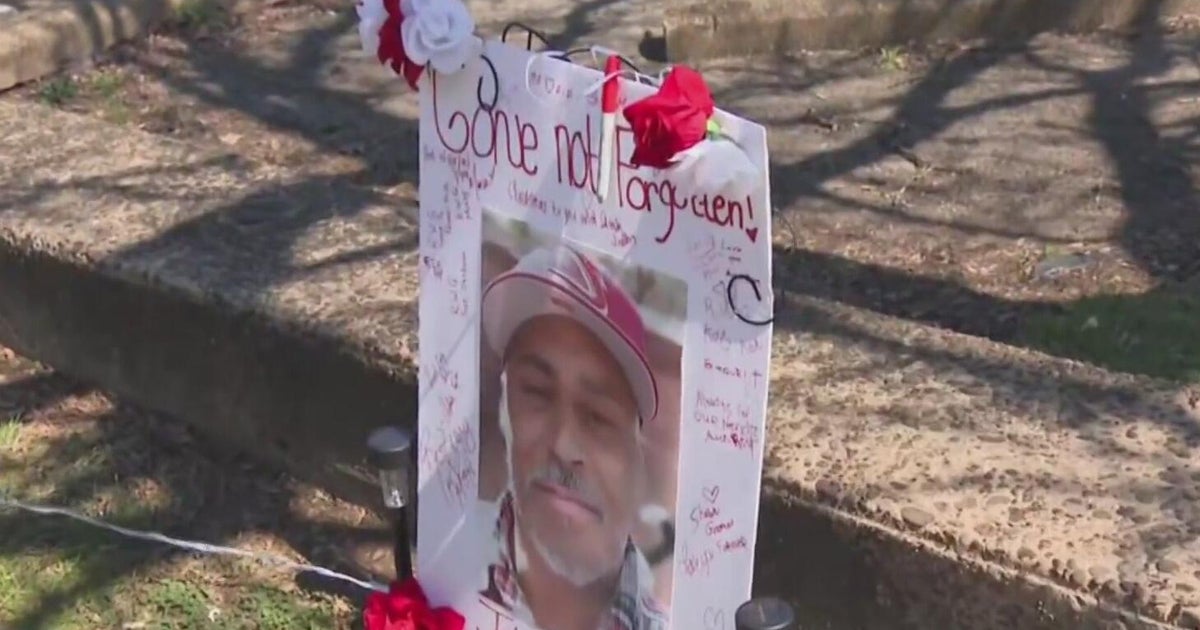
Civil rights leader and American icon Rev. Jesse Jackson died early Tuesday morning at the age of 84.
In 1968, Jackson witnessed the assassination of Martin Luther King, Jr., while standing with him on the balcony of the Lorraine Motel.
On the 50th anniversary of that day he spoke with CBS News Chicago's own Jim Williams to remember the painful loss of his friend and mentor.
It's easy to forget just how young Jackson was when Dr. King was his mentor; he was in his early 20s.
In April of 1968, Jackson was only 26 and living in Chicago. He was summoned, along with other aides, to Dr. King's home in Atlanta. He was in a grave mood, attacked for speaking out against the Vietnam War and even taking heat from other African American leaders.
Jackson recalled he told the group, "I've had a migraine headache for three days. Maybe I could just quit, I've done as much as I could do in 13 years. Maybe I could just fast to the point of death."
But first he'd go to Memphis to rally support for sanitation workers there. Jackson said King was in no mood to speak the night of April 3, but found the energy to give what turned out to be his last oration.
"I'm not worried about anything," King told his audience. "I'm not fearing any man. Mine eyes have see the glory of the coming of the Lord."
"What captured my attention was, I saw ministers crying," Jackson recalled in 2018. "Ministers and funeral directors don't cry very much."
The next day, April 4, 1968, at the Lorraine Hotel, King teased Jackson about his casual attire before dinner.
"I said, 'Doc, the prerequisite for eating is an appetite, not a tie.' He said, 'You're crazy,'" Jackson remembered with a laugh. "We laughed."
Moments later, as Dr. King, Rev. Jackson and others stood on the motel balcony, it all ended.
"He raised his head—pow!" Jackson said. "He raised up, the bullet hit the side of his tie. Back against the wall and he just was out of it."
Jackson was right there, witnessing the death not of an American icon but his friend and mentor.
"I was traumatized, full of pain and anger and sorrow and desperation and many emotions at the same time," he recalled.
Fifty years later, as he recalled that terrible night, Jackson's pain was still raw.
"Whenever the scab comes off the wound, it's fresh again," he said.
But at the time, and for the rest of his life, his resolve never wavered.
"We could not let one bullet kill the whole movement. I was clear: if you play the big game and the best player gets hurt, you can't forfeit the game," Jackson said. "You can't run away. You've got to keep fighting."