Chicago, Illinois leaders address reported plans to deploy military to city: "Mr. President, do not come to Chicago."


Illinois leaders spoke out against reports of President Trump's plan to possibly send National Guard troops to Chicago at a news conference on Monday afternoon.
"Mr. President, do not come to Chicago," Pritzker said. "You are neither wanted here nor needed here."
Pritzker said his team is watching who in the White House is making the decisions on the matter, signaling legal ramifications if they choose to send the troops to the city. He said he hopes that rational minds will eliminate the idea.
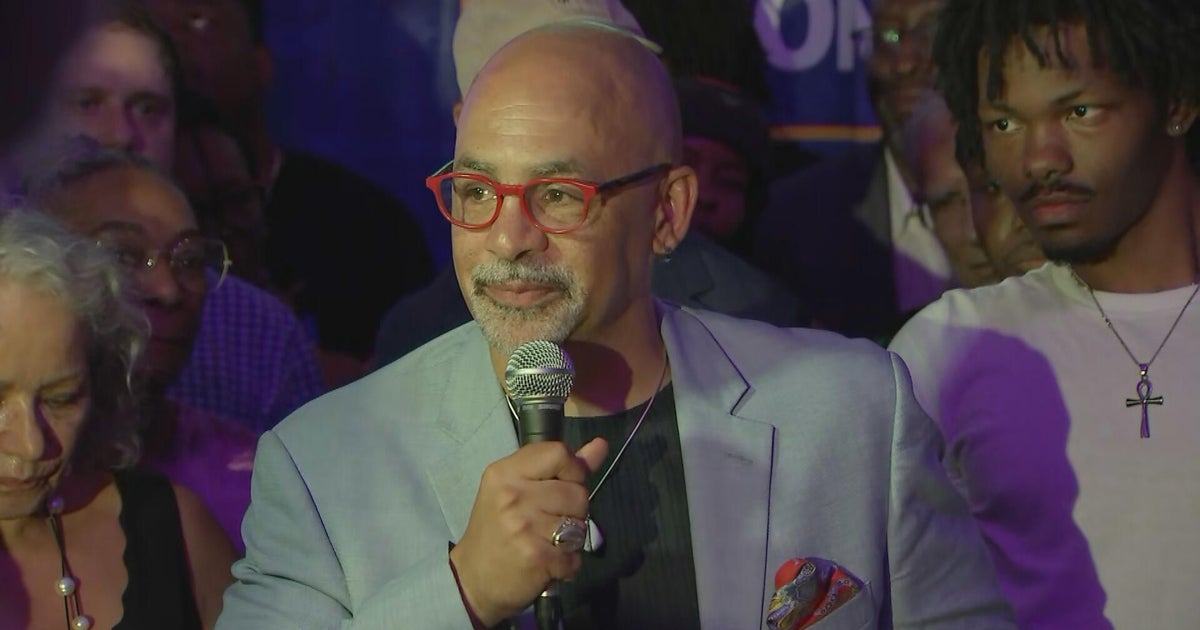
As he spoke Monday afternoon, Gov. Pritzker was surrounded by about 100 local and community leaders — among them U.S. Sens. Dick Durbin and Tammy Duckworth (D-Illinois), Illinois Lt. Gov. Juliana Stratton, Reps. Mike Quigley and Raja Krishnamorthi, Illinois Attorney General Kwame Raoul, Illinois Secretary of State Alexi Giannoulias, and the Rev. Michael Pfleger.
Pritzker and the other leaders said they do not want the National Guard in Chicago and will act to stop it.
"We are watching, and we are taking names," said Pritzker.
Pritzker signaled to White House staff that if they make the wrong move and engage the National Guard in Chicago, the law will track them down in the future.
"If you hurt my people, nothing will stop me — not time or political circumstance — from making sure that you face justice under our constitutional rule of law," Pritzker said.
On Monday, President Trump referenced Pritzker and the plan to send troops during an executive signing on cashless bail.
"When I have some slob like Pritzker criticizing us before we even go there. I made the statement that next should be Chicago, cause, as you all know, Chicago is a killing field, right now, and they don't acknowledge it," he said.
Pritzker and Mayor Brandon Johnson said that crime has gone down in the city. Homicides down 30% from last year.
Pritzker asked why Chicago, when other cities have higher crime rates.
"Memphis, Tennessee, Hattiesburg, Mississippi, have higher crime rates than Chicago, yet Donald Trump is sending troops here and not there? Ask yourself why," Pritzker said. "Donald Trump wants to use the military to occupy a U.S. city, punish his dissidents, and score political points."
Per capita, St. Louis and Detroit also have have have far worse crime statistics. Yet President Trump remains zeroed in on a Chicago he calls a killing field.
"We may or may not," President Trump said of sending the military to Chicago. "We may just go in and do it, which is probably what we should do. They need help badly. Chicago desperately needs help. Just look at the crime statistics."
At the news conference Monday night, Mayor Johnson echoed Pritzker, calling the plan "unsolicited" and "unwarranted."
"Military takeover is not needed," Johnson said. "Our message is simple — listen to what our people are actually calling for. We're calling for investments, resources. This stunt that this president is attempting to execute is not real. It doesn't help drive us towards a more safe, affordable big city."
Johnson also called for more resources and the $800 million for violence prevention, he said, was taken away by the Trump administration.
"We are calling on the Trump administration to release the $800 million for violence prevention funds that he stole back in April. We are calling for more resources to stop the endless flow of guns into our city, and we are calling for transformational investments into affordable housing and community safety."
If the guard does get called up, Gov. Pritzker urged his supporters to protest peacefully and remember that guard members should be shown respect — since they don't have a choice in whether they are called up and can be court-martialed if they refuse.
"All levels of the military have judge advocate generals, lawyers, to help us understand the orders that are brought before us," said retired U.S. Army Maj. Gen. Richard Hayes, the former head of the Illinois National Guard.
Hayes said military leaders have a duty to follow legal orders, and are equally duty-bound
"The reality is like anything else in life, if it's not clear and it's ambiguous, people will play the gray area," Hayes said, "and this can be a little ambiguous, the way the law's written."
Hayes was asked if there was ever a point where he got an order that the attorneys reviewed and found it to be illegal.
"No," he said. "I would tell you that what you do find is the lawyers will provide boundaries of what you can and can't do."
Hayes also noted that governors control their state's national guard, and any deployment would likely have servicemembers stationed at federal buildings — similar to some of the images out of D.C. — or on what Hayes calls "presence patrols."
Presence and image continue to be a central component of the conversation.
"I think the areas of Englewood, Washington Park, East and West Garfield Park, South Shore, Riverdale — I think they've got a different story to tell," said former Republican gubernatorial candidate Darren Bailey, who supports the National Guard deployment. "So I'd love to see J.B. Pritzker out there at 10 o'clock at night, or one in the morning, taking a stroll like he did on, you know, Lake Shore Drive this morning."
Meanwhile, Prtizker and the other leaders who spoke Monday said they learned of the possible sending of troops the same way others did, through a report from the Washington Post.
According to the publication, the Pentagon has been planning for weeks to deploy military troops in Chicago, as part of President Trump's plan to crack down on crime, homelessness, and undocumented immigration, similar to his approach in Washington, D.C. the Pentagon's plans include mobilizing at least a few thousand National Guard troops as early as September.
Although President Trump mentioned the plan during his executive signing, no decision has been made.