Potentially historic El Niño brewing could bring stormy summer, warmer winter to Chicago area

A potentially historic El Niño pattern is brewing 3,000 miles away from Chicago, with an increasing likelihood of bringing us a stormy summer and a much warmer winter.
The El Niño-Southern Oscillation (ENSO) is a natural cycle that causes water temperatures in the eastern Pacific Ocean near the Equator to fluctuate every two to seven years. Warmer than normal water in that area is called an El Niño pattern, and cooler than normal water is known as a La Niña.
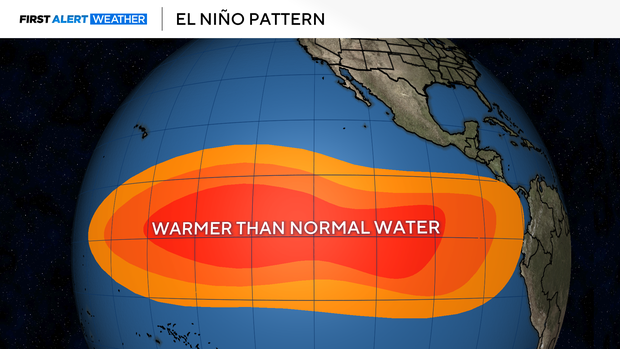
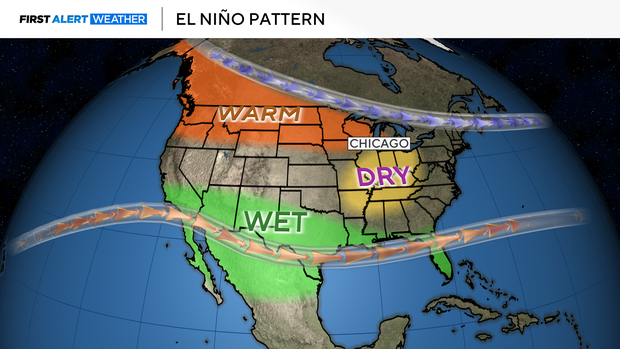
This cycle disrupts weather patterns globally, including in Chicago. While El Niño can bring a cooler, stormier than normal summer to the Great Lakes, its strongest impacts are usually felt during winter as the pattern peaks. El Niño winters in Chicagoland are typically warmer than normal with below-average snowfall as the polar jet stream shifts farther north into Canada.
While El Niño has not officially developed yet, the NOAA Climate Prediction Center issued an El Niño Watch. Water in the eastern Equatorial Pacific has been warming rapidly this spring, and El Niño conditions are likely to develop in June or July. NOAA now places the odds of El Niño developing by winter at 96% — a rare near-guarantee of the pattern.
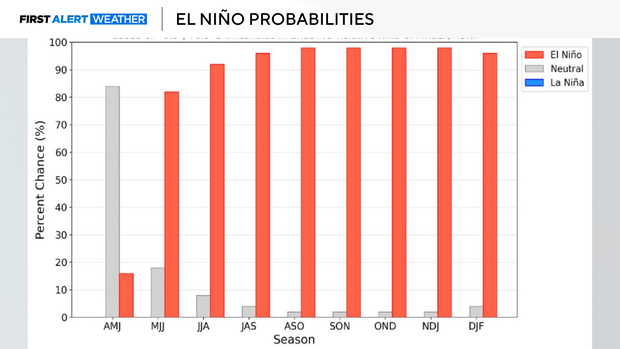
NOAA forecasters also expect a particularly intense El Niño this winter, with a 2-in-3 chance it will peak as a 'strong' or 'very strong' event. An El Niño's strength is measured by how much eastern Pacific water temperatures rise above their normal levels. The three most recent very strong El Niño events featured eastern Pacific water temperatures at least 2ºC above average — a massive marine heatwave that some forecast models suggest could be exceeded this year. That could produce one of the strongest El Niño events on record, with likely impacts on local weather.
The three most recent "very strong" El Niño events have led to wintertime temperatures running an enormous 4-degree fever in Chicago, and less than half of the city's typical snowfall between December and February.
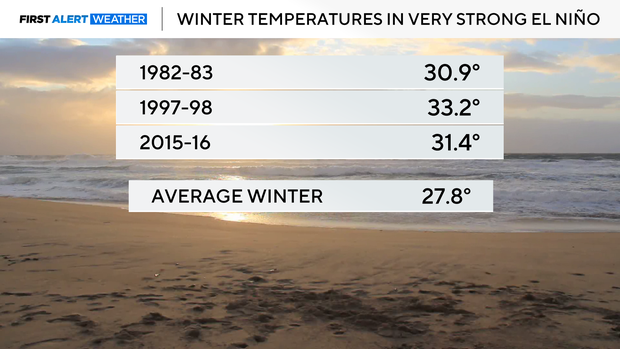
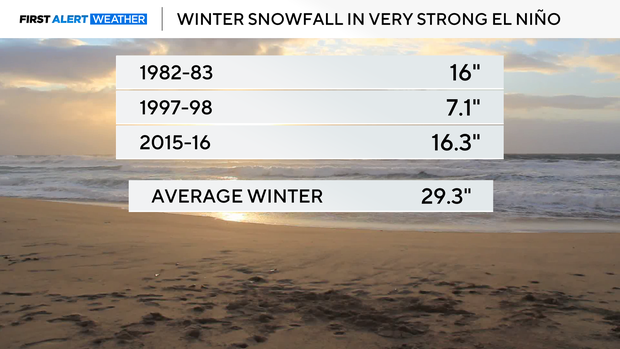
A warm 2026-27 winter locally could mean lower heating bills, less snow shoveling, and fewer days of hat and scarf weather.
Significant El Niño patterns also raise global temperatures. On top of the long-term warming trend from climate change, this year's potential for a historically strong El Niño could help make 2026 the warmest year on record worldwide. El Niño also tends to increase disruptive wind shear over the tropical Atlantic, often suppressing hurricane activity.
Stay with the CBS News Chicago First Alert Weather team as the pattern unfolds in the coming months.


