Chicago's own Mamdani? Behind DSA's fight to elect socialists to City Council first
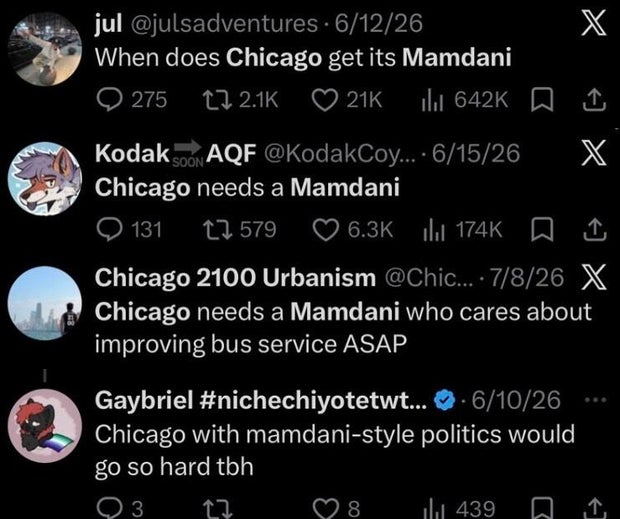
"When is Chicago getting our Mamdani?"
Variations of this question have been shared online by Chicagoans ever since the democratic socialist Zohran Mamdani was elected New York's mayor last November.
"Mamdanistan." "Mamdanize." "The Mamdani Effect." It's the slang for his platform of fast, free buses, universal childcare, and a city-owned grocery store — and people's desire for that in their own city.
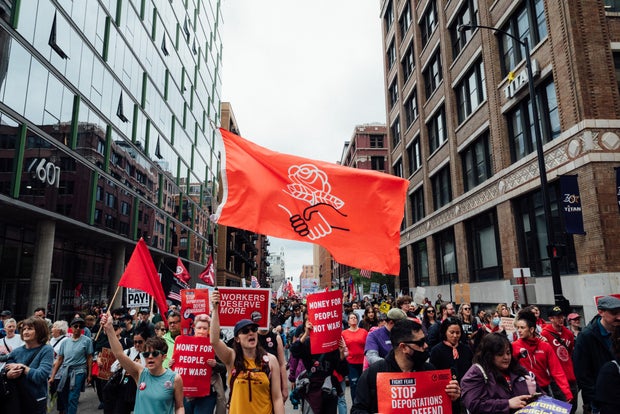
Beyond his win, there appears to be a real surge in democratic socialism, with over 35 candidates winning their primary elections at the local and national levels. The organization behind them, the Democratic Socialists of America, or DSA, has also surpassed a historic milestone of 120,000 members, making it the largest socialist organization in United States history.
Part of that surge is right here in Chicago, where the local DSA chapter has added over 300 new members in the last month alone.
But that momentum runs up against a political reality: the city's most progressive mayor since Harold Washington is polling at an all-time low. Just 13.6% of Chicagoans say they'd support Mayor Brandon Johnson in a reelection bid.
Johnson has never called himself a democratic socialist, and none of the candidates currently running to replace him in 2027 have either.
The Chicago DSA has announced another plan — one that could "mamdanify" the City Council.
It's not just online discourse, but a real question they're getting offline:
How do I oust my alderman?
That's according to Sean Duffy, co-chair of the Chicago DSA, who has been with the organization since 2017.
National momentum in Chicago
"People are seeing these big wins in New York and Colorado and want to get involved in DSA and join that movement to see change happen here in Chicago, and also just be part of a larger national movement," Duffy said.
The energy is tangible. More people are coming to DSA meetings and asking how to get involved.
"A lot of them are reaching out because they want to oust their sitting alderman or representative who is not working for a working-class agenda," Duffy said.
The DSA is not a political party, but an organization with chapters in all 50 states that helps candidates with electoral strategy and advocates for progressive reforms.
They say their mission is to "weaken the power of corporations and increase the power of working people" by decreasing the influence of money in politics and empowering ordinary people in workplaces and the economy.
Chicago DSA has helped pass the city's Fair Workweek Ordinance and paid leave requirements, and is actively pushing the Protecting Renters Ordinance to strengthen tenant rights.
Their next feat is tackling their 2027 election strategy.
"The city election is about how we address the financial crisis," Duffy said. "Either we tax the rich and expand services working people need—or we cut services and raise fees on the people already paying too much. That's the choice. Which side are you on?"
Right now, their focus is on five specific wards that already tend to vote progressive, but they will then open their endorsements to any candidate who aligns with their values.
"We want to see candidates who are working-class fighters, people who will be running up against the capitalist class, against the bosses who want to raise our rents and lower our wages," Duffy said.
The Chicago DSA endorsement process for candidates starts this month.
What is socialism, anyway?
Socialism has a long history in America, which is why there are public services.
"There are plenty of examples, such as public schools, libraries, parks, roads, fire, police, the list goes on," said Andrew Hartman, history professor at Illinois State University and author of several books about socialism in America.
Chicago was home to some of the largest socialist movements in the late 19th and early 20th century, including the Socialist Party of America and the Industrial Workers of the World.
The movements behind the reforms are "usually ignored or erased," Hartman said.
"To me, that's a really important bit of historical knowledge that more people should know, and maybe they would be less easy prey for propaganda right now," he said, explaining that periods with the largest and most effective "left-wing" organizing were usually followed by "serious periods of political repression."
The DSA was created in 1982 following the merger of two other organizations: the Democratic Socialist Organizing Committee (DSOC) and the New American Movement (NAM).
It gained national prominence and a surge in membership following Sen. Bernie Sanders' (I-Vt.) 2016 presidential campaign.
Why now?
"It's not necessarily economic theory that's going on here," CBS News' executive director of elections and surveys Anthony Salvanto explained in a 2025 interview about a CBS News poll on how Democrats view socialism. "It's more of a response, voters tell you, to an economic system they see as rigged, that they see as favoring the wealthy."
That sentiment reflects polling that found most Americans see the federal government as "corrupt" and have "little faith" in leaders' ability to fix the affordability crisis.
"The feeling that the Democrats and the Republicans have the same big money interests is a pretty widely shared sensibility," Hartman said.
He also pointed to what has disillusioned younger voters from establishment Democratic candidates.
"The genocide in Gaza and the Democratic Party's going along with it is the biggest cause of that right now. There are other causes, like their inability to effectively oppose Trump," Hartman said.
A CBS News poll found that a majority of Americans are also frustrated with the Iran war and want it to end, another contributor to people's lack of trust and the affordability crisis.
"This is a pretty unusual moment, and it's certainly one of the reasons why people are looking for alternatives, and socialism and DSA have benefited," he said.
It's an alternative that establishment democrats fear. Chicago's Rahm Emanuel wrote an opinion piece in the Wall Street Journal titled "The Bernie Bros could spoil Democrats' midterms," arguing that the "Democratic candidates in swing districts are put at a distinct disadvantage" by the DSA.
In July on Face the Nation, CBS News' Margaret Brennan read an excerpt of the piece to Sen. Sanders. "The DSA and others are saddling the party with nominees who, as [Emanuel] put it, wildly unpopular positions will protect Republicans from having to pay the price of Donald Trump's corruption. How do you respond?"
Sen. Sanders acknowledged the divide and pushed back on why.
"There's a strong division within the Democratic Party. You have an establishment, people like Rahm Emanuel, who depend on billionaire donors and want to maintain the status quo. Then you have a progressive movement winning all over the country," he said.
"What's getting the establishment nervous is that people are tired of the Rahm Emanuels and the Democratic and Republican establishments. They're asking simple questions: Why are we the only major country without healthcare as a human right? Canada does. Europe does. Somehow we can't?"
Socialism in Chicago
A socialist caucus already exists in the City Council, created with the help of the Chicago DSA.
The Chicago City Council Democratic Socialist Caucus, or DSC, officially formed in 2021 and currently has six members, including Daniel La Spata (1st Ward), Jeanette Taylor (20th Ward), Rossana Rodriguez-Sanchez (33rd Ward), Anthony Quezada (35th Ward), Angela Clay (46th Ward), and Byron Sigcho-Lopez (25th Ward), who tried to run as an independent for Congress in the 4th District.
Tackling the Chicago City Council is a strategy even a skeptic suggested, unaware of DSA's plan.
"I think their best bet is to, if they're interested in taking on a fifth floor eventually, expand their power in the city council," said Dominic Pacyga, professor emeritus at Columbia College and author of Clout City: The Rise and Fall of the Chicago Political Machine. Pacyga grew up in the Back of the Yards and worked in the Stockyards.
"It's a sort of transitional time in Chicago history," he said. Pacyga said the centralized, powerful, hierarchical machine that existed under Mayors Richard M. Daley and Rahm Emanuel is largely dissolved.
That could be an opportunity for a group like the Chicago DSA to level the playing field.
But Pacyga is skeptical about a DSA mayoral win anytime soon.
"I don't see a Mamdani figure in the current group of candidates," he said. "I just don't see it."
In a new poll from the University of Chicago's Mansueto Institute for Urban Innovation, 52% of respondents were excited about Illinois Secretary of State Alexi Giannoulias, followed by Illinois Comptroller Susana Mendoza at 47%.
"I don't see either as radical," Pacyga said.
Johnson vs. City Council
But the issue returns to the City Council, where the most progressive mayor in decades has struggled to advance his agenda.
A study from UIC's Political Science department of Johnson's first year found that he faced "far more divided roll call votes in the initial year of his term than his three predecessors did, including Lightfoot."
Mayor Johnson's most reliable voters are a majority of the City Council's Democratic Socialists caucus, according to the study.
With their help, he has advanced many of his promises, including expanding youth employment, affordable housing, mental health programs, and the Fair Workweek ordinance.
But his most progressive reforms, including a Corporate Head Tax and a Millionaires Tax, were rejected, and his 2026 budget was also defeated.
"Corporate-aligned aldermen are resistant to the needs of working people," he alleged in a press conference.
"My question is: do you support taxing the rich or not?" he said. That same sentiment is reflected in DSA's strategy to elect more socialists to the City Council.
"That is really the dividing line, what we are trying to draw in this election," Duffy said.
"Regardless of the race, regardless of whether we make an endorsement, we are trying to push that question forward. Which side are you on? Tax the rich, or austerity?"
Pacyga argues that anyone sitting on the fifth floor is in an "impossible situation," specifically citing the pension crisis, but he said that Johnson "doesn't know how to play the game" of politics and lacks the "organization" that previous administrations had.
"The two big pillars that elected him, the SEIU and the Chicago Teachers Union, are now at odds with each other," he said. "Even his supporters have now split."
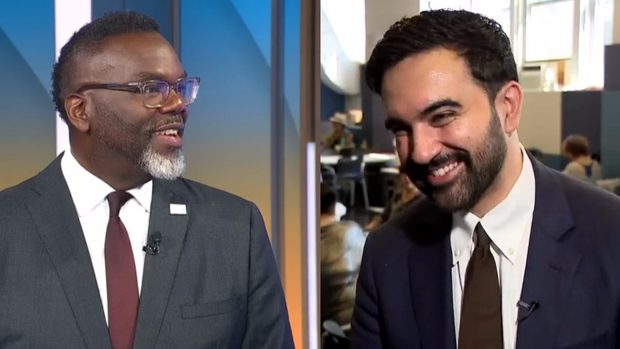
Ald. Jeanette Taylor, a member of the City Council's Democratic Socialist Caucus and a supporter of Johnson, said she would back his reelection, but wants him to be more transparent and more willing to engage with the people who helped elect him.
"If my constituents don't like a decision, they call me. We have a conversation. The mayor has to do the same thing. You owe that to the people who voted for you, who gave you money, who knocked doors for you," she said on the podcast Victim or Villain episode from July 19.
A lack of transparency is notorious in Chicago politics, and she noted that as a black man, Johnson faces heightened scrutiny.
She also expects Johnson to "be an organizer in the community way more than he has."
Learning from national wins
Although a lot of Johnson's work aligns with the Chicago DSA, they never endorsed him.
When asked, Duffy said the national movement helped solidify their stance:
"The number one takeaway from all these recent electoral wins is that all those candidates ran as proud democratic socialists," Duffy said. "None of them backed away from that label. None of them backed away from our program. They were all crystal clear."
The most remarkable win was arguably in Denver, Colorado, where 29-year-old democratic socialist Melat Kiros defeated the 30-year establishment incumbent, U.S. Rep. Diana DeGette of Colorado, in the Democratic primary.
Kiros and other figures like Darializa Avila Chevalier in New York City and Chris Rabb in Pennsylvania all ran on what the DSA calls for: universal healthcare, housing first, universal childcare, an end to the genocide in Gaza, an arms embargo on Israel, and taking zero corporate PAC money and rejecting AIPAC contributions.
These are wins that Mayor Johnson is paying attention to. When pressed about running for reelection, he said, "If there was any reason to be in somewhat of a rush would be to make sure that more progressives get elected in November," during a press conference.
"I like what's happening in Michigan," he said, referencing Abdul El Sayed, whose primary is August 4th.
"I think those victories show that people want moral clarity," Duffy said.
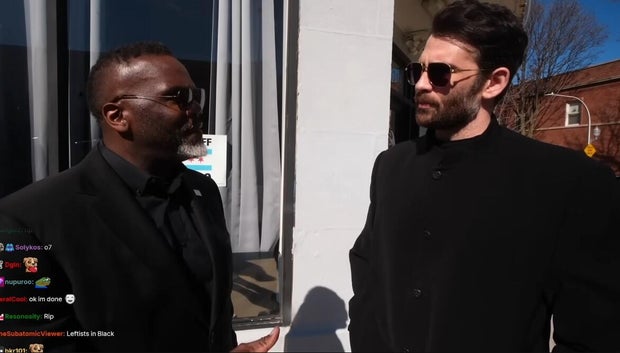
Another throughline for popular progressive candidates is the backing of Hasan Piker, who has become one of the most influential voices in the current wave of democratic socialist victories.
"Do they have moral convictions? Broadly speaking, that's what I care about," Piker said.
The Turkish-American left-wing political commentator has amassed over 10 million followers across social media platforms in the last decade and is known for his live broadcasts on Twitch.
His stream has become a campaign stop for many, including those who went on to win their primaries.
"If you're under the age of 35, you've most likely at some point gotten your news from me," he said.
When it comes to Chicago, Piker says the City Council is the right target.
"I think there's a real opportunity for the Chicago DSA to run great candidates within the alderman system and go up against the Chicago machine, which I'm certain is no longer as powerful as it once was," Piker said. "People need to be confident in their own power."
Piker has discussed Chicago politics on his streams before, and Mayor Johnson has been a guest on his broadcast twice this year.
His endorsements are not mere stamps of approval, but something called the "Hasan bump": a measurable surge in phone banking, polling numbers, and media coverage.
One of his few losses was also in Illinois: Kat Abughazaleh, who was defeated by Daniel Biss in the 9th District. "If Kat were running right now, it would be a lock," Piker said, arguing that the national momentum would have brought her more endorsements and support.
Not all of the candidates he supports are endorsed by the DSA, like Abughazaleh, but he takes that into account when vetting a candidate, a process mostly on display on his live stream.
But a "sweet spot" candidate is someone who organizes with the DSA and already has prior experience in a governmental position, he said.
When asked why, he pointed to Wisconsin state Rep. Francesca Hong as an example, who, even as a socialist, is popular among Trump voters "because she is the only candidate running on a data center moratorium."
"This is a universal issue," Piker said. "It has nothing to do with Republicans or Democrats or democratic socialists. It's a great example of putting policies first, putting an agenda first, putting the needs of the working class first."
When comparing Chicago's upcoming mayoral elections to Mamdani's win, he said part of it does come down to organizing power.
"New York City DSA was able to get that Zohran victory because they've been working tirelessly, when most people weren't paying attention, for the past decade," Piker said. "This has been an ongoing project. It's not going to happen overnight."
So maybe Chicago won't become "Mamdanistan" — but the Chicago City Council could.
Duffy said their work doesn't end in 2027.
"We're going headstrong into the 2027 elections, and later on into the 2028 elections nationally, and we're ready to elect and re-elect socialists to the City Council, up and down the ballot."


