See CBS News exit poll results for the 2026 midterm elections
Note: Results will continue to update as votes are counted.
Women voters helped carry Jackson to victory in Maine Senate race, exit polls show
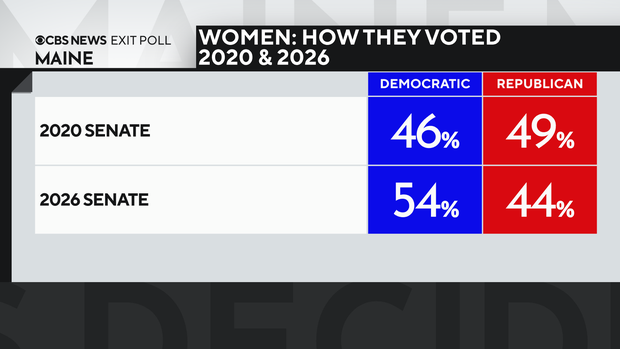
When Republican Sen. Susan Collins was reelected in 2020, she narrowly won women voters. But exit polls show they are backing Democrat Troy Jackson Tuesday.
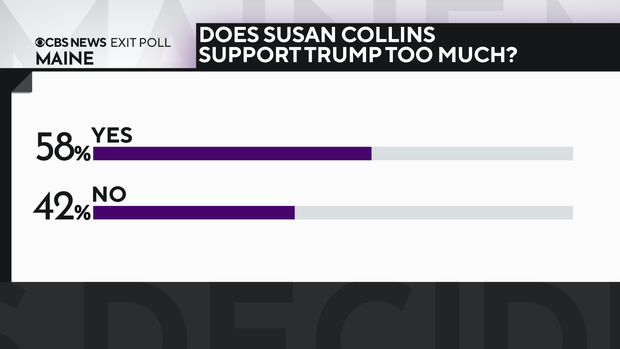
While Collins often tries to distance herself from President Trump, women voters and most Maine voters overall said she was too supportive of Mr. Trump.
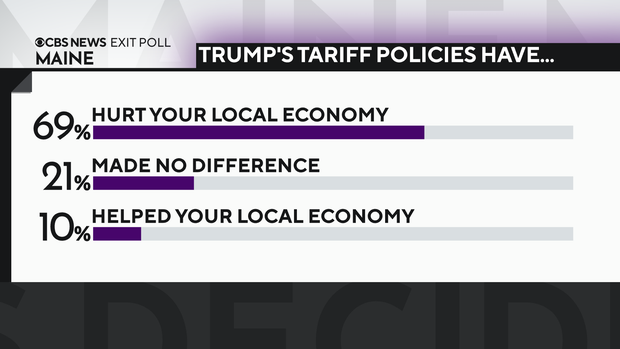
And Mr. Trump's tariffs are not popular here. Most Maine voters feel they have harmed their local economy.
Even though more voters thought Collins would do a better job than Jackson getting federal funding for Maine, that wasn't enough to push her over the top.
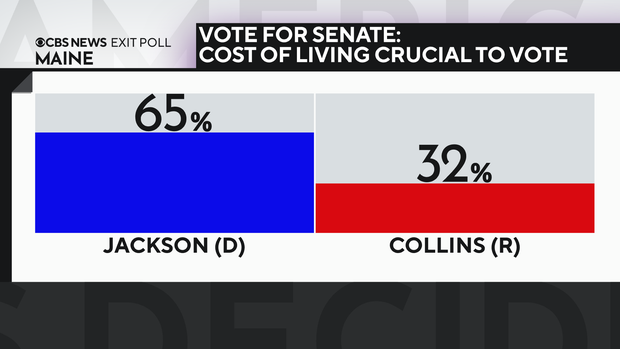
Many in the state said the cost of living was a crucial factor in their vote, and they voted for Jackson.
Ohio Senate: Democrat Sherrod Brown wins with support of younger voters, independents, those who rated economy badly
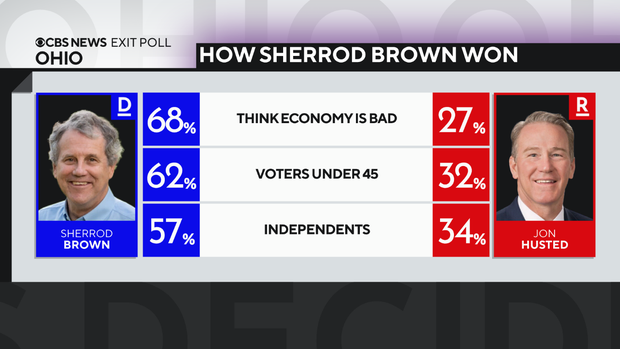
Democrat Sherrod Brown is heading back to the Senate after leading big against GOP Sen. Jon Husted with younger voters, those who rated the economy badly and independent voters.
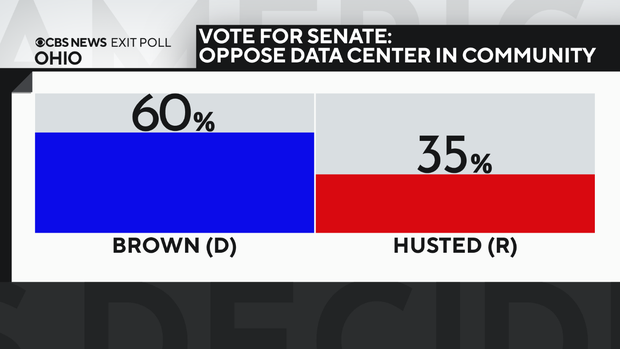
Data centers were an issue in this campaign, and those who opposed the construction of data centers in their community voted for Brown.
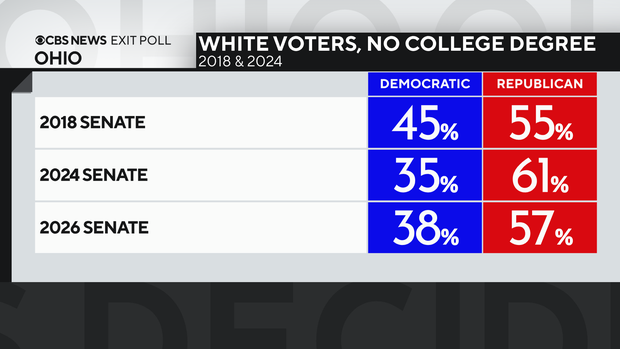
Exit polls show Brown doing slightly better with White voters without college degrees than he did in 2024. (He did not quite reach the level as he did in 2018.)
Brown is getting the backing of roughly one in 10 Republicans.
Husted was also viewed as being too supportive of President Trump.
In a state Mr. Trump won, most of these midterm Ohio voters don't think he fights for people like them.
North Carolina Senate: Democrat Roy Cooper wins
North Carolina voters liked the job Democrat Roy Cooper did as governor, so they are sending him to the Senate.
Cooper performed better than former Vice President Kamala Harris did in 2024 among key groups, including independents and White women.
Most North Carolina voters thought Cooper's opponent, Republican Michael Whatley was too supportive of President Trump.
The last time a Democrat was elected to the Senate from North Carolina was in 2008, when Kay Hagan won.
South Carolina Senate
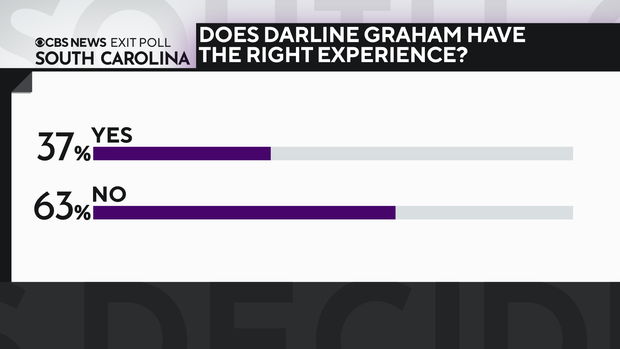
In the race between GOP Sen. Darline Graham and Democrat Annie Andrews, most voters don't think Graham has the right experience to be a U.S. senator. But it's not a dealbreaker for all voters — about a quarter who hold this view are still voting for Graham, who was named to fill the seat held by her late brother, Lindsey Graham.
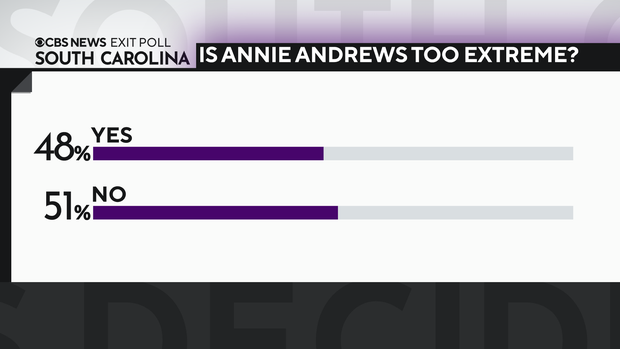
At the same time, about half of voters say of Andrews that her views are too extreme. And most of those voters are voting against Andrews.
Georgia Senate: Democrat Jon Ossoff wins
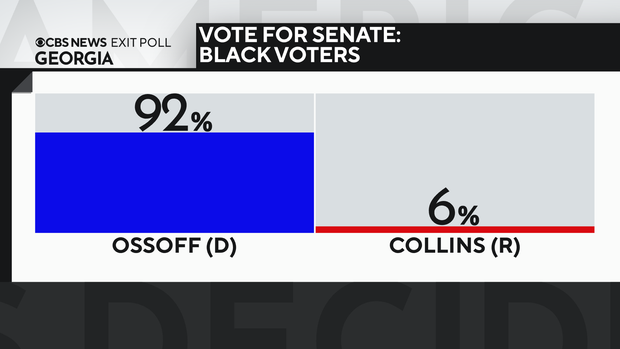
Within 40 minutes of polls closing in Georgia, CBS News projected Ossoff as the winner. Democrat Jon Ossoff is performing very well with Black voters as he defends his seat against GOP Rep. Mike Collins. Ossoff is on pace to win roughly the same share as when he won his runoff election in 2021.
He is also making some inroads with White voters, early exit polls show.
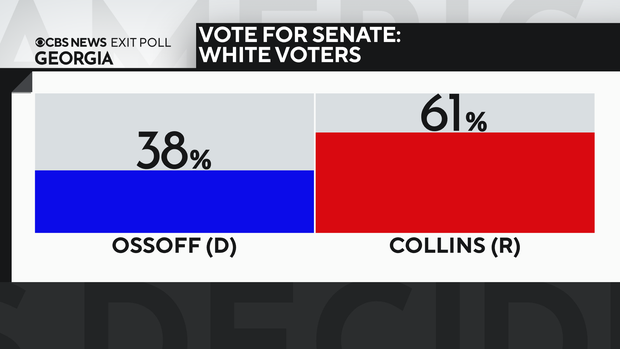
Most White voters are backing Collins, but this would be a really good performance by a Democrat in Georgia among White voters if this holds.
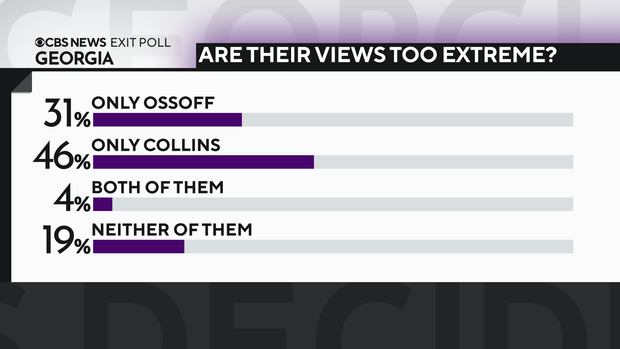
Also, on balance, more voters view Colllins' views as extreme than Ossoff's views.
Overview of CBS News 2026 exit polls for the midterm elections
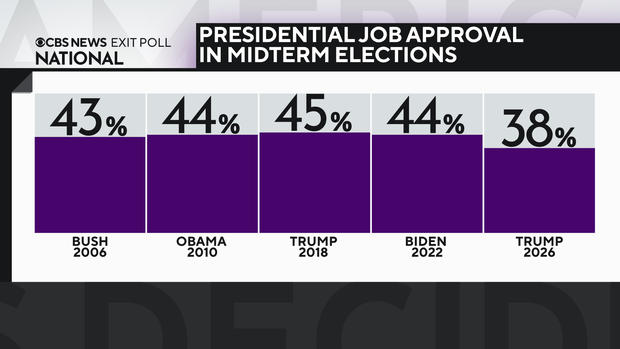
President Trump is on track for the lowest approval rating for a president in a midterm election, according to early exit polls. Currently at 38%, it's lower than it was during Mr. Trump's first term, and lower than it was for George W. Bush in 2006 when his party lost both houses of Congress.
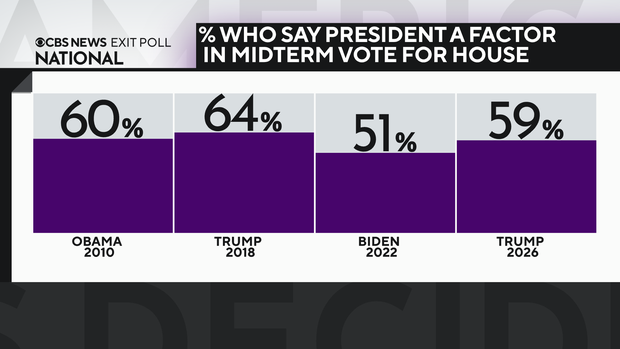
Midterm elections have often been a referendum on the sitting president, and this one is no exception. Roughly six in 10 say Mr. Trump is a factor in their vote for the House.
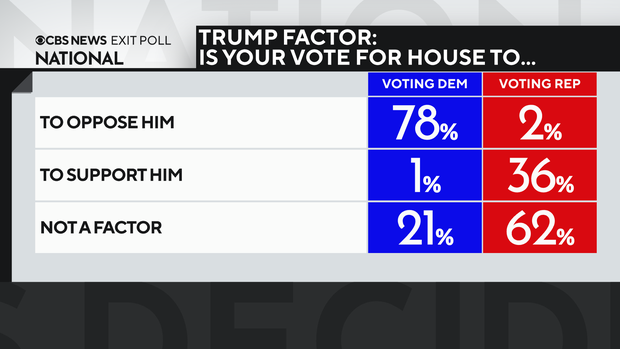
This is being driven largely by voters backing Democrats, who are overwhelmingly motivated by opposition to Mr. Trump.
But for those backing Republicans, it's less about the president. Back in 2018, most Republican voters said their vote was to support Mr. Trump. That figure is lower today.
The president has often told his supporters to pretend he is on the ballot, and for many in the MAGA base, they may be doing just that. Most MAGA Republicans say their vote is to support Mr. Trump, but most non-MAGA Reps say he is not a factor.
The mood of the electorate is a sour one
Voters are just plain not happy.
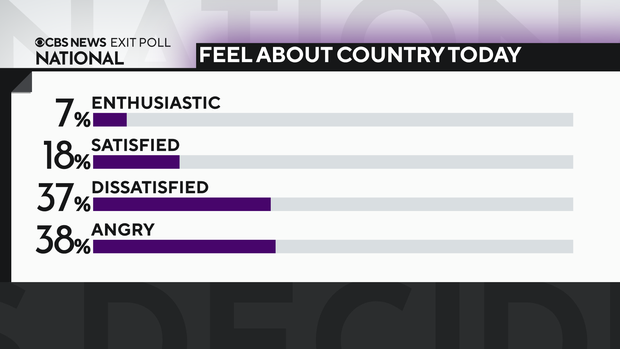
Current exit polls show roughly three-quarters of voters are at least dissatisfied with the direction of the country. More are angry now about how things are going than they were in 2024, as economic anxiety persists. Those voting for Democrats are particularly likely to be angry.
The issue of the economy and trust in Mr. Trump to fix it helped propel him to victory in 2024, but voters feel no better about the condition of the economy today.
In fact, more voters have negative views of the economy now than they did two years ago, and views of the economy are more in line with what we saw in the 2022 midterms, when the party in power lost seats.
Cost of living: Voters are feeling the pinch
Voters are feeling it in their pocketbooks. They are more than twice as likely to say their finances are worse rather than better, based on early exit polls.
Voters across parties express concern about affording everything from gas to groceries to utilities.
For two consecutive elections, most voters have said inflation caused hardship for their family, including about one in five who describe that hardship as severe.
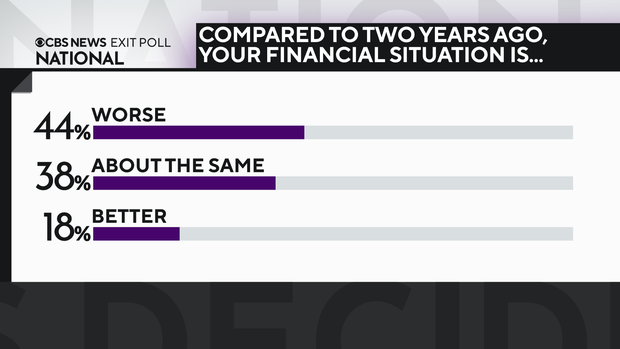
All this adds up to the cost of living being a major factor for voters across parties, but it's more crucial for those backing Democrats. Immigration enforcement is more crucial for those backing Republicans.
When voters are asked to pick their most important issue from a list, the economy comes out on top, followed by the state of democracy. Those voting for Democrats prioritize the state of democracy — an issue that has long concerned them.
For those backing Republicans, the economy is their most important issue, followed by immigration.
Voters who pick the state of democracy as their top issue are particularly likely to say government corruption is a crucial factor in their vote.
Government corruption: It's a major factor for voters across party lines
Roughly nine in 10 voters nationally say government corruption is a major factor in their vote — about the same as cost of living — and it's crucial to those voting for Democrats.
About six in 10 voters think President Trump puts his own personal interests over the country.
The Iran war
While the war with Iran is less of a factor for voters than the cost of living, the conflict is not popular. Most think the U.S. made the wrong decision to take that military action, including about a quarter of Republicans.
Those most concerned about affording gas are the most likely to disagree with the decision to attack Iran.
Does all this dissatisfaction translate to satisfaction with the party out of power?
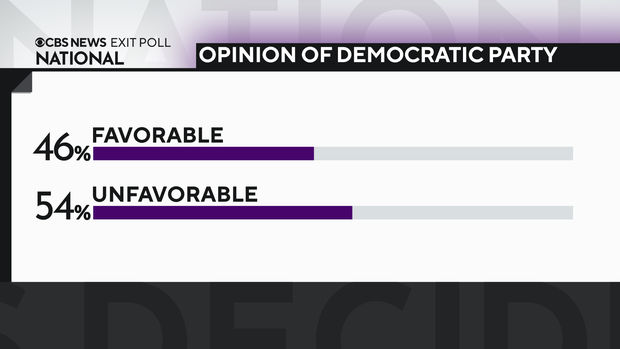
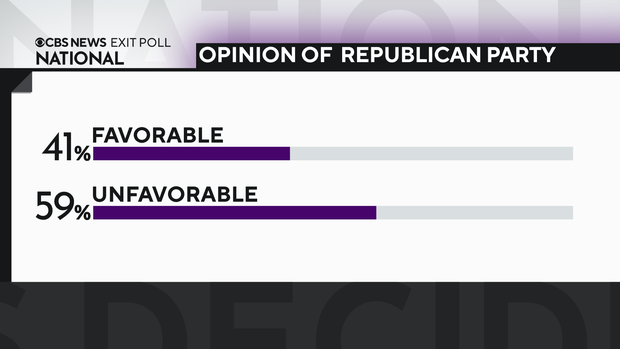
Neither political party is viewed favorably by a majority of voters.
About one in five backing Democrats for the House have an unfavorable view of the Democratic Party. Most Democrats are motivated by their opposition to Mr. Trump.
And the Democratic Party isn't overwhelmingly seen as the party better able to handle key issues.
Emerging issues
Data centers arose as an issue in this campaign. In all the Senate battlegrounds, majorities oppose the construction of a data center in their community.
More voters see artificial intelligence as doing more to harm society than to help it.
Voter confidence
Large majorities of voters are at least somewhat confident that their votes will be counted accurately both nationwide and in their own states, and that eligible voters will be allowed to vote. But while they are confident in their votes being counted, those voting Republican are far less confident that people who are not eligible to vote will be prevented from voting.
This national exit poll measures the general preference for voters nationwide in their choice for the House of Representatives. The House of Representatives, of course, is elected seat by seat.
A quick note on the states
Mr. Trump's job approval is currently underwater in nearly all the Senate battleground states, according to early exit polls, including in states that he won by double digits in 2024.
In all the Senate battlegrounds, more say their finances are worse, not better, compared to years ago.
And party control of the Senate was on the minds of voters. Majorities of those voting for Republican candidates and those voting for Democrats say which party controls the Senate was a major factor in their vote.
The CBS News exit poll interviewed thousands of voters across the country at polling locations on Election Day and in the weeks leading up to Election Day. This is how the voter polling was conducted.


