America at 250: How Hull House founder Jane Addams fought for Chicago's most vulnerable

You might drive on part of the 77-mile stretch of Interstate 90 known as the Jane Addams Memorial Tollway, but do you know the story of the woman who it's named after?
She was a pioneering social worker, advocate for immigrants and the poor, peace activist, and Nobel Peace Prize winner.
"She just had in her heart she truly wanted to make things better for people," said Nadia Maragha, an educator at the Jane Addams-Hull House Museum.
Addams was born into privilege as the daughter of a wealthy Illinois senator and prominent abolitionist.
"She grew up with this kind of expectation in herself to also be involved in some sort of helping work," said Maragha. "That was something she'd been instilled with from a young age."
Part of the first generation of American women to go to college in the 1870's, Addams joined a league of women from well-to-do families who wanted to use their education, influence, and money to fight inequality and injustice.
Addams honed in on Chicago's poor, industrial West Side in the 1880s.
"This neighborhood was a bustling immigrant neighborhood during that time," Maragha said.
West Siders at the time mostly worked in industrial jobs under very dangerous circumstances in factories and sweat shops, according to Maragha.
"There was not a lot of attention paid to issues of public health, illnesses that were going around, sanitation services," Maragha said. "She knew that a neighborhood like this and other spaces like it were affecting the people's ability to thrive."
Seeing the lack of resources, Addams and a friend named Ellen Gates Starr founded one of the first settlement houses in the U.S., called Hull House, in 1889.
Part of Hull House still exists at the Jane Addams-Hull House Museum on Halsted Street on the University of Illinois Chicago campus. The museum first opened in 1967.
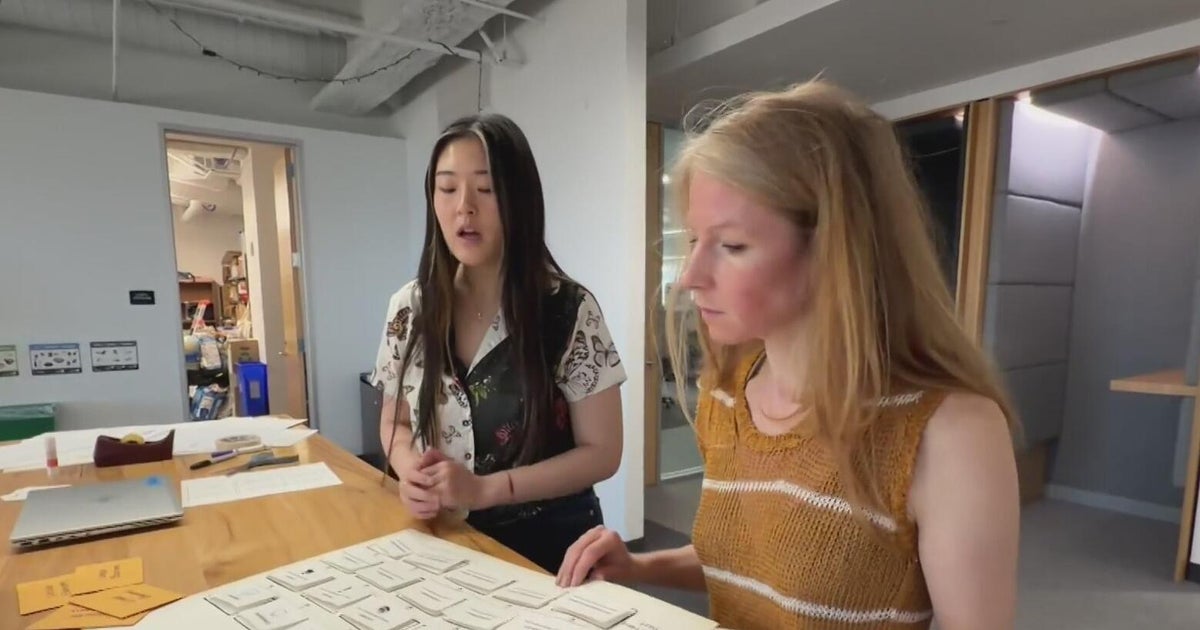
Maragha is the museum's education manager, teaching visitors about Addams' work at Hull House.
"Jane Addams wanted initially to create a space that would serve people," she said.
Hull House's first program was a daycare and kindergarten.
"They kind of grew from these childcare services to offering public health services, like a children's clinic and bath houses. They had arts and recreational activities like theaters and a gymnasium," Maragha said. "All sorts of employment and English language classes and citizenship classes that they provided."
At its height in the early 1900s, Hull House expanded to 13 buildings, serving 10,000 people each week – mostly immigrants.
"Social work as we know it today owes what it is to places like Hull House, and Hull House is kind of the foundational space," Maragha said.
The programs at Hull House were provided by mostly educated women, like Addams, who came to the settlement house to live among the people they served; to work hands-on with immigrant families.
If visitors to the museum take nothing else away from Addams' life and work, Maragha said "I want them to be inspired by the work that was done here; to get involved and know their neighbors, know what their neighbors are dealing with, and to contribute in even even very small ways to their communities and the people around them, because I feel like that's the most important thing you can do."
Beyond her work at Hull House, Addams went on to become a key advocate in the women's suffrage movement and lead international peace efforts against World War I.
In 1931, she became the first American woman to ever win a Nobel Peace Prize.
Most of Hull House buildings were demolished in 1963, but it continued providing services in 29 locations across the city until 2012.
The Jane Addams Hull House Museum is open to the public and free to visit.