AI is upending the job market. What does it mean for workers?
AI has had a top-to-bottom effect on the American workforce, cited as the force behind mass layoffs and a valued skill in workers at the same time.
In 2025, consulting firm Challenger Gray & Christmas cited AI as the reason for 50,000 layoffs. Already in 2026, Amazon has cited AI when announcing 16,000 layoffs, and chemical-maker Dow is cutting 4,500 jobs and also citing AI as a reason.
Pinterest is cutting 780 jobs, 15% of its workforce, as it pivots more of its money to AI as well.
But at the same time, job listings looking for people with AI skills are rising fast. In 2025, more than 80,000 job postings mentioned generative AI skills, a 100% increase from the year before, according to Lightcast, which tracks labor market data.
Lightcast found postings that mention AI skills pay 25%, or about $18,000, more per year than similar roles that don't require AI skills.
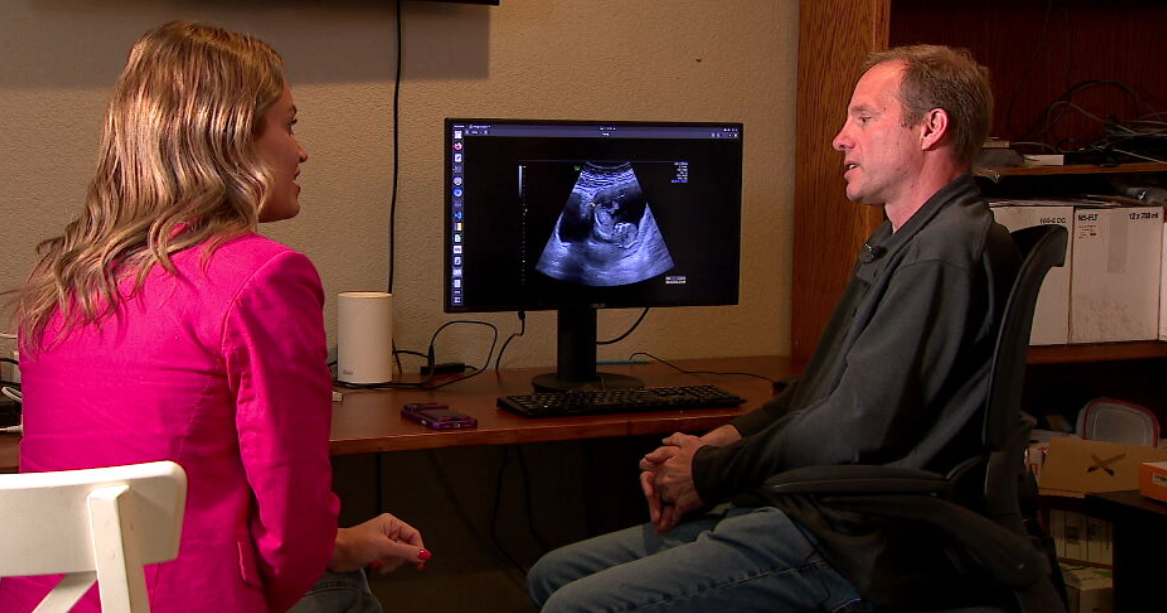
CBS News Chicago sat down with Dr. Vasant Dhar to discuss AI's transformation of the job market. Dr. Dhar is an AI researcher, NYU business and data professor and author of the book "Thinking with Machines: The Brave New World of AI."
Dhar said one thing we can be sure of is that AI is here to stay and is going to change the nature of work.
"This is a pivotal technology that you cannot afford to ignore. You ignore it at your own peril. You know, think of it as a new species, a new entity, an alien species that's descended on the planet and is now occupying it alongside of us, and doing all kinds of things for us, and getting intelligent by the day," he said. "So this is going to change work, you know, unlike previous waves of technology that changed sort of the grunt work, you know, that automated a lot of the sort of brawn, this is about automating or doing things that are cognitive."
When it comes to the layoffs now being attributed to AI, Dhar said the nature of the work being eliminated and automated can be described as "low-stakes cognitive tasks."
"You know, you collect information, you create reports, you pass the information along," he said. "There isn't any real sort of decision-making or critical thinking associated with those kinds of roles, and those are the ones that are most at risk."
Then we spoke with Foram Sheth, the chief coaching officer and co-founder of AMA LA VIDA Career Coaching, to discuss how AI is affecting the job search. From finding your next role to tailoring your résumé and getting ready for an interview, the use of AI by job seekers and recruiters has become more common.
To tailor a résumé, a job seeker can simply tell AI the job for which they're applying, and ask the technology to make the job seeker a viable candidate based on the job description, Sheth explained.
Sheth emphasized that when being pressed into service for a job search, the output of AI will be as good as what's entered into it.
"The prompt you should use is, 'I am, this title, looking for, this type of a role,'" she said. "It's going to give you options where you're like, 'Whoa, I never thought about it. It's supposed to give you adjacent roles that you never considered."
Click here to read her guide for AI use in job hunting.
Finally, Chicago-based HR strategist, career coach and résumé writer Dr. Akilah Bradford took us through what not to do if you want to avoid getting flagged, filtered out or sounding like a robot when utilizing AI in your job search.
"These AI detectors are tools now that will allow employers to say, 'Ooh, this phrase in your résumé was not written by you. It was written by this system," Bradford said, "and so these AI detectors can spit out a report that says 40% of your résumé is AI-written, or 100%, or 10%, and we want to make sure that there's enough authenticity in our own résumés so that these detectors don't get us eliminated from those opportunities."
Advised against using vague prompts, or copying and pasting AI-generated text without reviewing. Having AI do all the work for you is going to result in a résumé that fails to represent you, Bradford explained.
"AI should not be your writer, should not be your author," Bradford said. "It is your assistant, and it is your editor."