New Watertown High School is built for the future and powered by the sun

In the heart of Watertown, Massachusetts, a new kind of high school is rising. The new Watertown High School will be the first LEED Platinum 4.0 and Net Zero Energy high school in the United States, a building that will produce as much energy as it uses over the course of a year. It is a flagship project for a community that has made climate resiliency part of its building code and part of its identity.
"When it opens this spring, the new Watertown High will be completely self-sustaining and all electric," said Mark Sideris, president of the Watertown City Council.
A tiny site with big ambitions
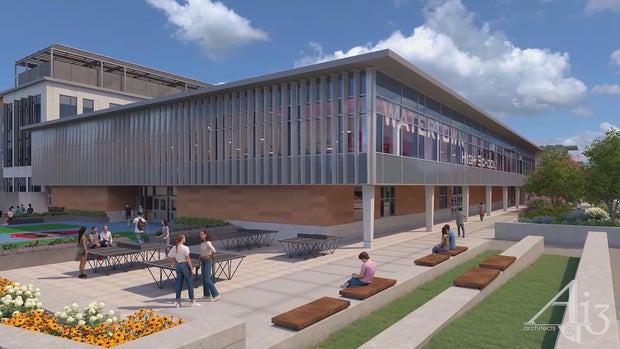
The four-story high school sits on just four acres near the center of the city. To make it work, designers went up instead of out.
Two stories of community space sit on top of a 128-space underground parking garage for staff. Above that is a compact four-story academic tower, wrapped around a central atrium. The site will also include an outdoor dining option, student gardens, hard surface play and learning zones above the garage, and a flexible field where the old high school once stood.
"The four-story design packs an entire campus onto just four acres," Superintendent Dr. Dede Galdston said. "Every inch has been carefully thought out."
Watertown's climate rules helped set the direction from the start.
"Watertown as a community is very committed to climate resiliency," Galdston said. "You can't build new buildings here unless they are zero net energy or rapidly approaching it."
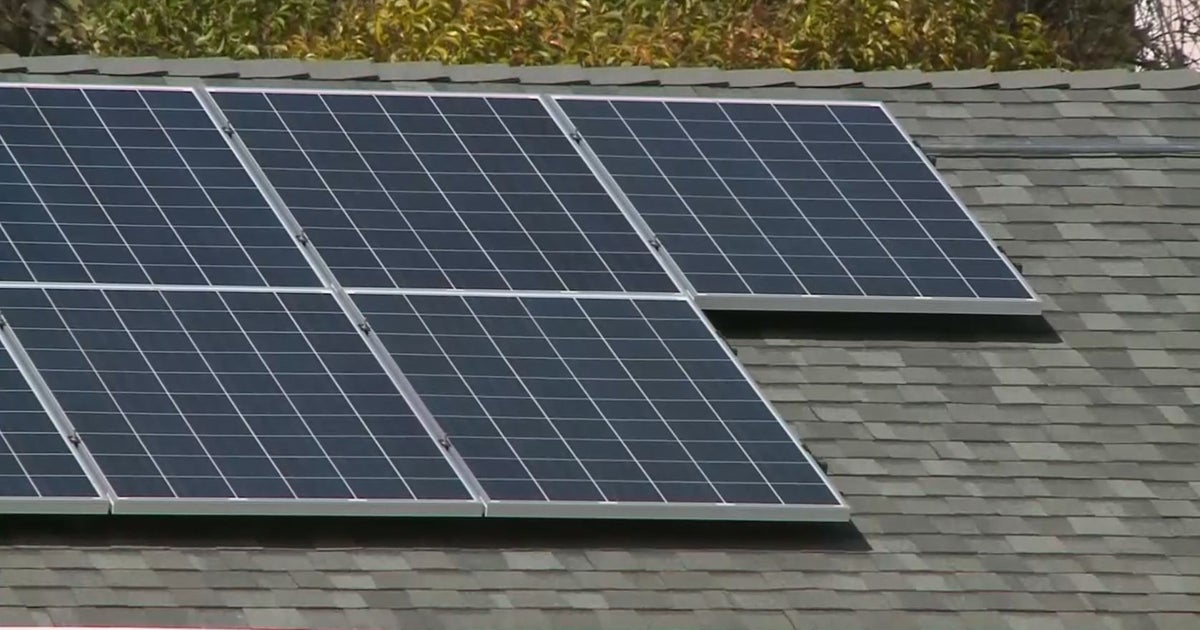
That commitment shows up underneath and above the school. Beneath the site, a network of geothermal wells will handle a large portion of the heating and cooling load, especially for the community spaces that are used seven days a week. On the roof and nearby canopies, solar panels will feed power back into the building and into on site battery storage.
Project leaders say the added cost of the Net Zero infrastructure is expected to pay for itself within the first decade of operation and then deliver energy savings for many years to come.
A building that teaches
From the outside, the school looks like a modern, urban campus. Inside, it is designed to feel open, bright, and connected.
One of the first things you notice is the light. The central atrium and large windows wrap the academic core and even reach into the double-height gym.
"You do not really see gyms with all this glazing," said Laurie Soave, on-site project manager. "It gets an amazing amount of daylight."
Even on dark, rainy days, the building feels bright. Designers were intentional about capturing natural sunlight, which cuts the need for artificial lighting and lowers the school's energy use.
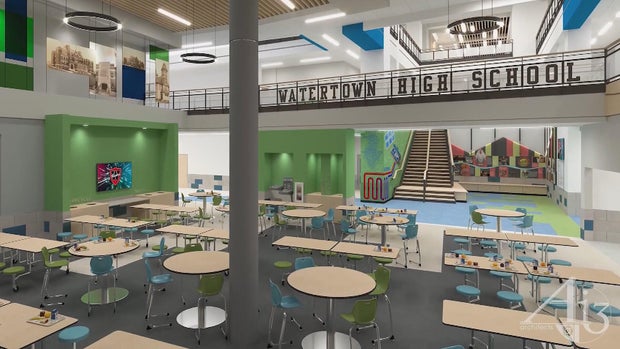
"When you walk in there, you don't feel like you are walking into a high school from the 20th century," Galdston said. "When you walk in there you really feel like the whole building is something on the edge of the future."
That future focused design extends to the classrooms and labs. Hands-on spaces line the atrium and are meant to be seen.
"You can be in a classroom on the right side and be looking down into the wood shop or across into the fitness center or the music rooms," Soave said.
The school includes dedicated spaces for carpentry, culinary arts, engineering, robotics, and early childhood education, along with traditional science labs. Students in the carpentry program will even learn how to build for climate resiliency, including how to prepare homes for solar and geothermal systems.
Theater, gym and community space
Beyond academics, the building also doubles as a community hub.
A two-story community core includes a multi-court gymnasium with a walking track, a fitness center, and a performance area that combines a traditional auditorium with a black box theater.
"The back is a black box theater," Soave explained. "We have a divider that can come down and separate it, or you can have it open if you have a large production."
There is also a public terrace just off the gym that will include benches, games, and ping pong tables. It will be open to the community when school is not in session.
"People might not have kids in school, but they will use the walking track, or the ping pong tables," Soave said. "It connects the whole community."
The school building committee, architects, and project managers met weekly for months to refine the design, responding to feedback from educators and the community. Watertown chose to move students into modular classrooms during construction so the old high school could be demolished and the new one built all at once, rather than in phases.
The project has been nearly a decade in the making, from the first statements of interest to the Massachusetts School Building Authority in the mid-2010s to the final stages of construction today.
School officials are hoping to open the new Watertown High School sometime in Spring.
"It is pretty impressive," Sideris said, looking out over the atrium.
For Watertown, this new high school is more than just a building. It is a model for how communities can build for today's students and tomorrow's climate at the same time.