Under Armour stock plunges after Trump announces reciprocal tariffs
Baltimore-based sports apparel company Under Armour had its shares fall more than 18% to $5.36 as markets closed Thursday, the Baltimore Banner reported.
UA is one of many companies seeing stock drops after President Trump's "Liberation Day" tariffs, which targeted about 60 countries. President Trump enacted a universal 10% tariff on all imports to the U.S. effective April 5, with additional "reciprocal tariffs" ranging up to 49% for countries deemed to impose unfair trade barriers, effective April 9.
In February, Under Armour told the Baltimore Banner that Mr. Trumps tariff proposals weren't expected to impact the company significantly.
But in an email to the Banner Thursday, Under Armour's Vice President of investor relation said, "Given the dynamic nature of various tariff policies to date with respect to depth, breadth, and tenure, we will await more details and then assess potential business impacts to determine what, if any, actions we may or may not [choose] to employ,"
How do tariffs work?
Tariffs are taxes imposed on imported goods. They are typically charged as a percentage of the transaction price that a buyer pays a foreign seller.
While tariffs are often characterized as being paid by other countries, they are actually paid by U.S. importers, such as Walmart or Amazon. Because tariffs create higher costs for these businesses, they often pass on all or some of the tariffs to consumers through price increases.
President Trump has argued that tariffs are aimed at equalizing trade imbalances between the U.S. and other nations. Economists, however, have said that they will likely accelerate inflation.
Impact of tariffs on Maryland's economy
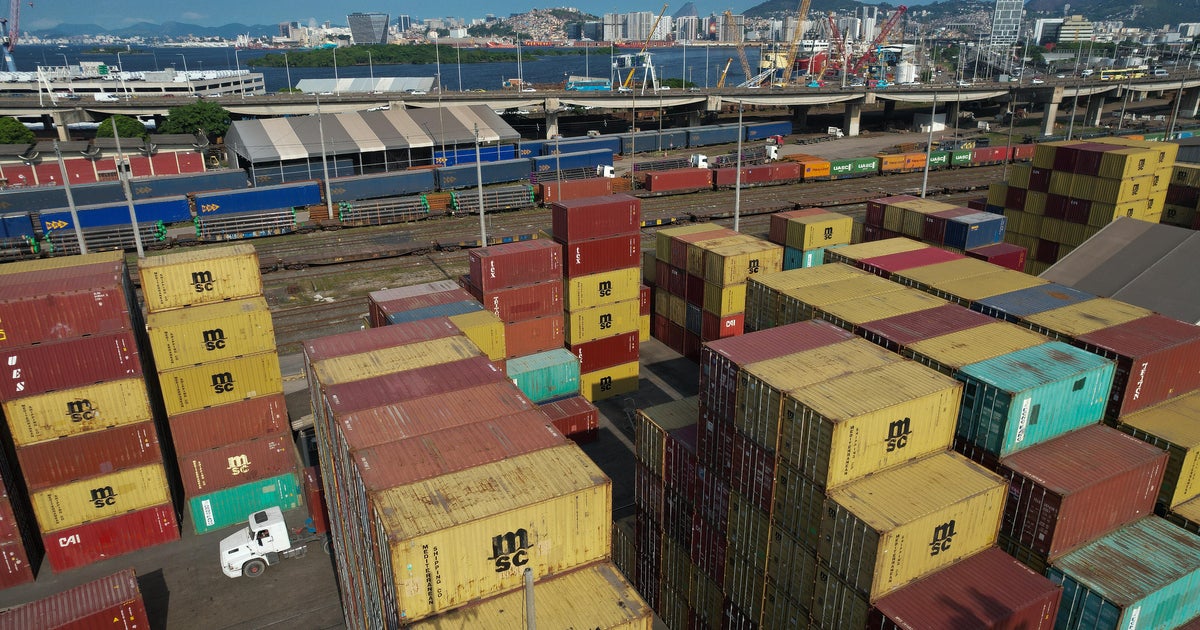
The Trump administration's recent tariffs on imports—including 25% levies on foreign automobiles, auto parts, steel, and aluminum, could to significantly disrupt Maryland's economy, particularly through the Port of Baltimore's operations and consumer prices.
If consumers stop buying imports, fewer products will flow through the Port of Baltimore, potentially jeopardizing dock jobs, experts told WJZ.
In 2024 the port handled about 750,000 cars and light truck, about 641,000 of which were imports, according to a statement issued by the Maryland Port Administration.
The state is already working to navigate a $3 billion budget deficit.
Maryland Governor Wes Moore has spoken on the recent tariffs, saying that Mr. Trump "launched a reckless trade war."