Maryland's infrastructure is at critical juncture, receives C grade, report shows
Maryland's infrastructure is at a critical juncture, receiving a C grade, according to a report by the American Society of Civil Engineers (ASCE).
The report studied Maryland's roads, aviation, bridges, dams, drinking water, energy, hazardous waste, ports, rails, solid waste, transit, and wastewater.
The state received the same C rating in its 2020 report.
A key point is that much of Maryland's infrastructure was built when the population was smaller, and it hasn't kept pace with the increasing demand.
"Which impacts quality of life for people across the state," said Rachel Sangree, the president of Maryland's ASCE. "Constant gridlock during rush hour in places like I-270 in Montgomery County, or I-95 in Baltimore, costs Marylanders billions of dollars every year in lost productivity."
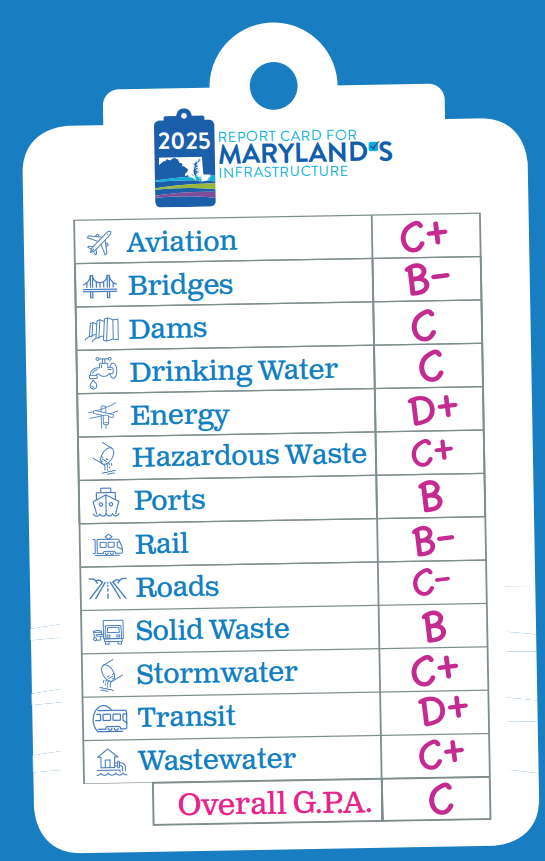
The comprehensive report evaluated the condition, performance, and future needs of 13 infrastructure categories across Maryland.
The report shows that some of the issues with the infrastructure are due to age, underfunded, and they are increasingly vulnerable to long-term sustainability and safety.
"Maryland's infrastructure is at a crossroads," the report says. "The state is facing a multi-billion-dollar funding gap to keep pace with infrastructure needs. Strategic investments and innovation to support resilience, redundancy, and scale are essential to ensure these systems remain safe and capable of supporting a thriving future for the state."
You can read the full report here.
Maryland's bridges
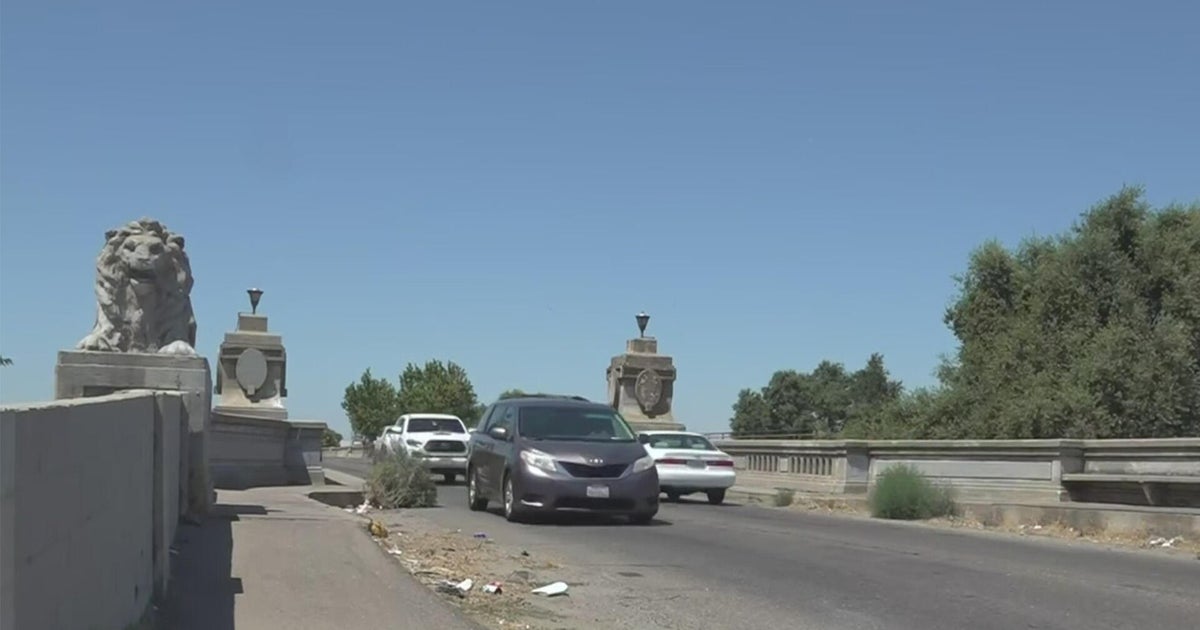
Maryland's bridges received a B- grade, as 40% of the state's bridges are more than 50 years old, like the former 53-year-old Francis Scott Key Bridge that collapsed in 2024 after a cargo ship hit one of its main pillars, and the 145-year-old Carroll Road Bridge in Baltimore County that collapsed earlier this week as a septic truck was passing over it.
The report states that the 2024 collapse of Baltimore's Key Bridge, which killed six construction workers, shows the urgent need for "resilience and redundancy" with Maryland's infrastructure.
The $2 billion Key Bridge rebuild is expected to be completed by the fall of 2028.
"Bridges are built for a 50 to 75-year design life, which means cities and counties across the state will need to prepare to rehabilitate or replace thousands of bridges," Sangree said.
Some commuters said the condition of major bridges, including the Chesapeake Bay Bridge, deemed one of America's fractured critical bridges by the NTSB last year, is always in the back of their minds.
"It was quite the concern when we had the incident with the Francis Scott Key Bridge, and immediately we thought, is this something that could happen with the Bay Bridge?" Maryland resident Alex Downes said.
State's aviation, ports, and rail systems
The ASCE report also states that Maryland's aviation, ports, and rail systems face growing capacity issues and need to be upgraded.
According to the report, aviation received a C+, ports got a B, and railways got a B- grade.
"Baltimore-Washington International Thurgood Marshall and the Port of Baltimore, both global entryways and economic powerhouses for the state, must expand and adapt to remain competitive," the report states.
Roads have a "backlog of unfunded repairs"
The report gave roads in Maryland a C-, citing rising congestion, safety concerns, and a growing backlog of unfunded repairs.
Drivers said they see the wear and tear every day, from congestion to crumbling pavement.
"It's terrible, 495 is terrible, it's probably the worst, and 50 is usually bad," said Maryland driver Joe Malone. "Compared to Delaware, Maryland is, like, I feel like my suspension might go out sometimes."
Meanwhile, Maryland's transit system was graded one of the state's worst infrastructures with a D+. The report said that Maryland's transit system struggles with aging assets and limited funding.
Energy infrastructure receives a low grade
Maryland's energy infrastructure also received a D+ grade, stating it is heavily reliant on out-of-state sources, which need to be modernized to meet the increasing demand while making sure the energy sources are reliable during transitions to renewable sources.
"If overall infrastructure is a C, I'm hoping we can do better than that," Downes said. "I'm hoping we can improve it, but I certainly don't see any major issues with our infrastructure as far as it stands right now."
State of Maryland's drinking water
Maryland's drinking water received a C grade, which is connected to the health of the Chesapeake Bay.
The drinking water, stormwater, wastewater, and dam systems are aging and becoming more and more vulnerable to extreme weather events, according to the report.
"While progress has been made in water quality, that progress is fragile and requires sustained investment and innovation," the report states, while adding that, "solid and hazardous waste systems are generally robust but face emerging challenges from climate risks and contaminations like per- and polyfluoroalkyl substances."