25 years behind bars for repeat juvenile offender who shot Baltimore County father during robbery

A teenager who pleaded guilty to shooting a father outside his Towson home in 2024 was sentenced Monday to 25 years for attempted murder.
Kai Wilson, a repeat juvenile offender, was 15 when he shot and seriously injured 50-year-old Mark McKenzie during a robbery on Dunkirk Road in Rodgers Forge.
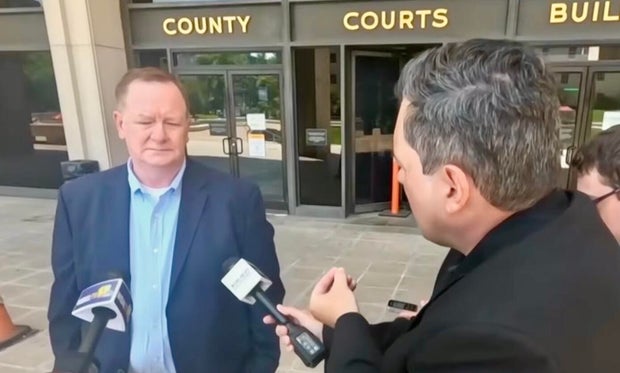
The teenager did not address the judge, but McKenzie told him directly, "You did not just attack a man. You attacked an entire community. You saw no value in anyone else's life."
The shooting
Mark McKenzie's life changed forever on September 13, 2024.
The soccer coach was unloading balls from his vehicle in the alley behind his home when Wilson, wearing a mask, confronted him with a semiautomatic handgun that had a laser pointer.
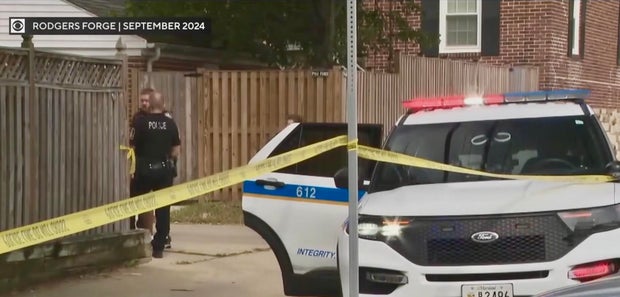
Prosecutors said Wilson demanded money from McKenzie and struck him with the gun. They said there was a struggle, and Wilson shot him in the midsection at point-blank range, causing traumatic injuries to his liver and gallbladder.
Wilson was rushed to Johns Hopkins Hospital and spent 12 days on life support.
"Your decisions that day were deadly," McKenzie told Wilson at the sentencing. "I'm only alive because Johns Hopkins brought me back after I coded."
McKenzie said he has gone through five surgeries and has another scheduled.
He told the court he lives in pain every day.
"You made a decision you could do whatever you wanted, regardless of consequences," McKenzie said
Prosecutor Matt Darnbrough called the crime "simply inexcusable."
He told Judge Robert Cahill Jr. the "dogged investigation" by Baltimore County police led to the arrests of Wilson and his accomplice, Kamar Thompson, who was 16 at the time. Thompson drove the getaway car, which had been stolen.
Thompson was also sentenced to 25 years in prison earlier this year.
Troubled past
Judge Cahill told Wilson, "The facts of this case could hardly get worse."
He said his decision to follow the recommendation of prosecutors and put Wilson in prison for well above the 8-to-15 year guidelines was based in part on the "planning" of the crime.
He said Wilson scrubbed down the getaway vehicle with bleach.
Darnbrough told the judge that Wilson was seen laughing in surveillance video recovered after the attack.
Darnbrough also said the teenager had "multiple prior contacts" with the Department of Juvenile Services, and his supervised probation in a malicious destruction of property case ended just 3 weeks before the attack on Mr. McKenzie.
Wilson committed a strong-arm robbery on an MTA bus, taking that victim's phone in the days surrounding the Rodgers Forge shooting, according to prosecutors.
They said Wilson left a rehabilitative program before the "absolutely horrific crime" that put McKenzie in the hospital
"The rehabilitative efforts on his behalf simply did not work," Assistant State's Attorney Darnbrough told Judge Cahill.
Push for rehabilitation
Wilson's public defender, Donna D'Alessio, said her client had changed his ways and had been making progress behind bars in achieving his high school diploma.
"He has become a different person," D'Alessio told the judge. "He does not want to act or live the way that he did when he was 15. Kai does not want to avoid accountability."
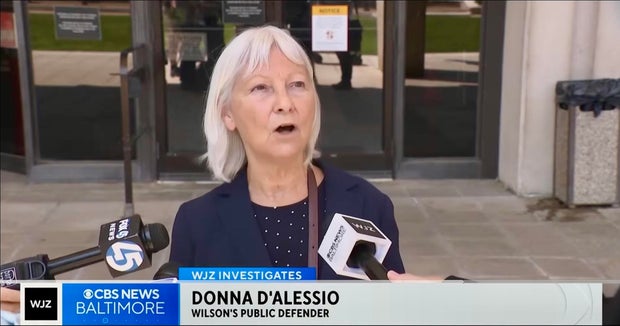
She urged the judge to stay within the sentencing guidelines.
"Kai is not beyond redemption. He's not a kid who cannot change," D'Alessio said.
She said her client has had a tough life and was homeless at 9 years old.
D'Alessio said Wilson tried to commit suicide at a young age after the death of his grandmother.
She called him "a child shaped by trauma" and said he was shot at seven times in his own neighborhood and in one incident, was caught in crossfire with his mother.
"It's like kids who grew up in war-torn countries. That's what the streets are in some places even today. These kids are growing up in war-torn streets, and it impaired their judgment," D'Alessio told WJZ Investigator Mike Hellgren outside court. "They can't develop properly if they never have a sense of safety and security. Then, their mind doesn't develop properly."
She said Wilson had been diagnosed with PTSD. "He never experienced a sense of safety," D'Alessio said.
Her client chose not to address the judge at his sentencing.
"The case was horrible. I can't minimize what happened to Mr. McKenzie. Our hearts all go out for that. He's still living with this tragedy and probably will continue to," D'Alessio said.
Justice served?
Hellgren asked McKenzie outside court whether he felt justice was served in this case.
"I'm not going to directly answer that question because when it comes down to the final part of sentencing and all those things, that's out of our control," McKenzie said. "I'm grateful for what the prosecution was able to do, and hopefully we can move on with our lives now."
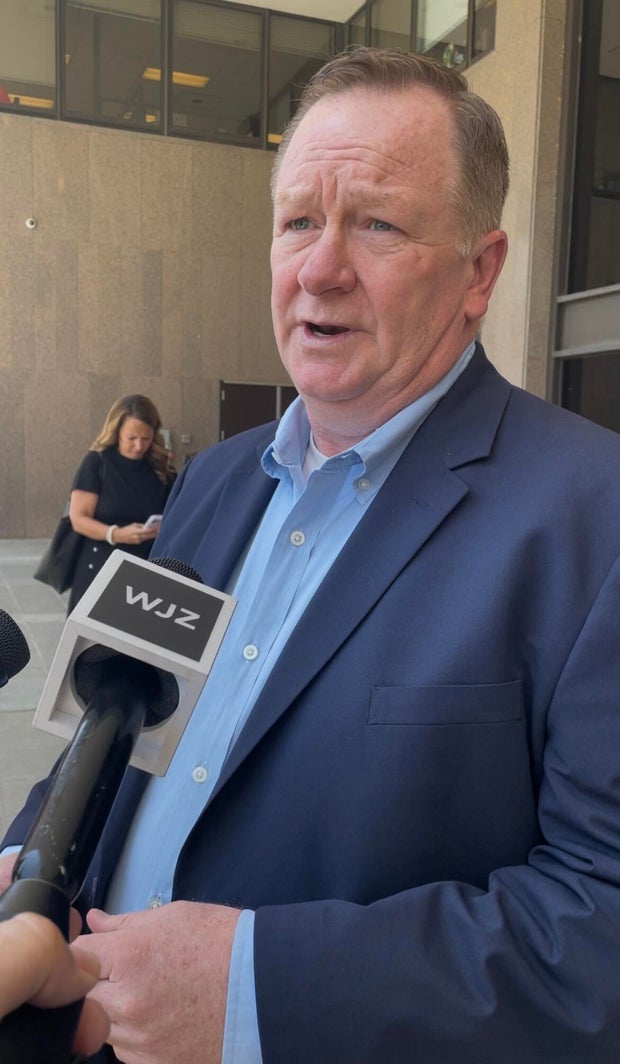
Asked if he feels the juvenile justice system is broken, McKenzie told WJZ, "Society over [several] decades has taken money out of activities for rec centers, having more camps, having more sports availability—all those things that could maybe get to some individuals before they go into these crimes. And that's where I think as a society, we need to look more at, to potentially influence or impact people at an earlier age, and I think that would be beneficial because if you look at statistics, things change when those things start to be taken away in the 90s and 2000s."
McKenzie said he remembers little about the actual attack and thanked his doctors, family and the community for support.
Asked about the message he wanted to convey to the defendant in court, McKenzie said, "It's important that they understand the consequences that come from it, and this isn't a good day across the board right now because although the challenges occurred with me, there's still people's lives that changed forever as well. I hope they get the rehabilitation that they need in their lives and that we all move on."