Mother "in disbelief" about lack of charges after son dies in Baltimore police custody
The decision not to file charges in a Baltimore man's in-custody death following a mental health crisis prompted a warning from his mother, as city leaders tackle reforms to how they respond to behavioral health.
Dontae Melton's story
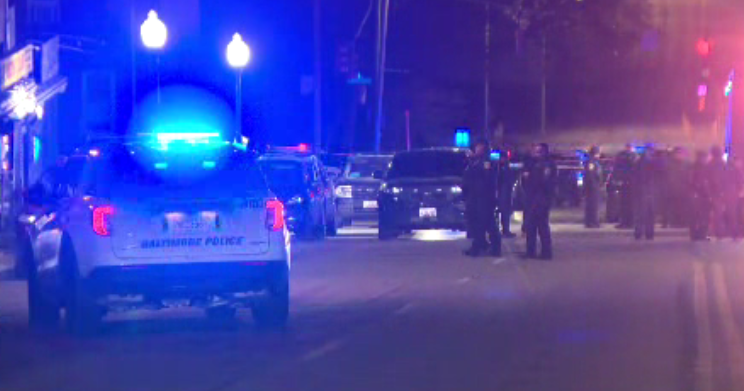
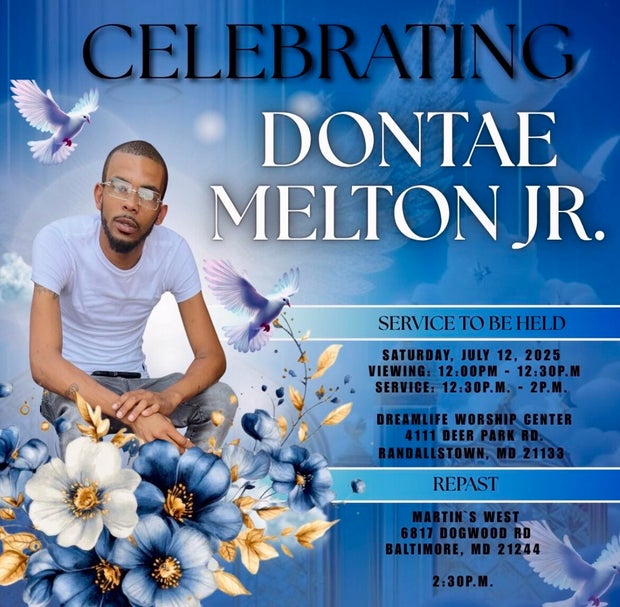
Dontae Melton Jr. was doing what his mother taught him, she said, reaching out to police for help in June 2025, at the intersection of Franklin Street and Franklintown Road
"Dontae had gone to an officer before, who helped him get to the hospital. That didn't happen this time. The complete incident was a failure," Eleshiea Goode told WJZ Investigator Mike Hellgren. "I have to live with that every single day, that I saw my son walking, talking, active, going to the police as he was taught to do. They failed him miserably."
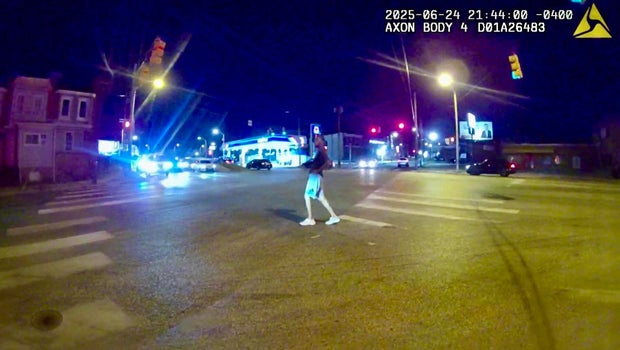
Officers restrained Melton for his own safety, according to the Maryland Attorney General's Independent Investigations Division (IID), and called for an ambulance that never came because of a breakdown in the dispatch system.
Melton's mental crisis became a physical one, too, as officers noted in body-worn camera videos that his pulse was racing and his temperature was high.
"This is not about the way they acted. This is about the inaction of them, so that's the cause of negligence," Goode said.
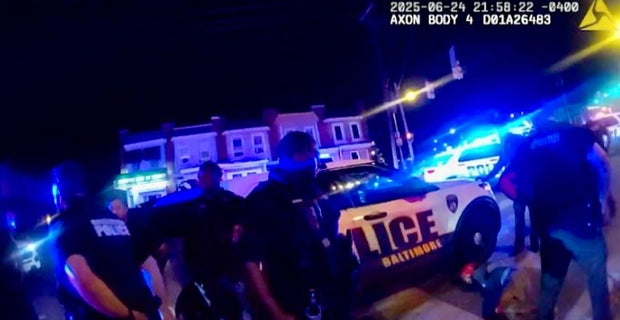
Eventually, an officer drove Melton to a hospital just three minutes away.
The medical examiner ruled his death a homicide and found he died "due to a combination of drug intoxication, hyperthermia and restraint."
The Maryland Attorney General's Office said this week they would not prosecute any of the 10 officers who responded.
Investigators wrote, "…The evidence does not show that… officers acted recklessly or negligently. Rather, the evidence shows the… officers took measures available to them, in accordance with BPD policies, to assist Mr. Melton while waiting for medical services that never arrived."
You can read their full findings here.
Melton's mother said she was in "disbelief" after reading the findings.
"The entire report was absurd. It blamed my son for having a mental health crisis. The report was victim blaming," Goode said.
Goode told Hellgren she worried a similar tragedy could happen again "because I have not heard of any changes that have happened. I've heard repeatedly that they are totally aware of the system failures. People keep saying mistakes were made, but the mistakes cost my son his life. That can never happen again."
Goode said, "Do not forget that my son was a decent human being who deserved to live."
Not alone
Just days before Melton's death, police shot and killed arabber Bilal "BJ" Abdullah in Upton after they said he pointed a gun at officers.
The attorney general's office declined to pursue charges in that case as well.
And the day after the Melton's death, Baltimore police killed a knife-wielding 70-year-old woman, Pytorcarcha Brooks, just a few blocks away. They said she was also having a mental health crisis.
Council holds hearing
The day after the attorney general released his report, the Baltimore City Council held a hearing to discuss how the city is dealing with mental health crises and alternatives to police responding to all 911 calls.
"We've seen a real measurable decline in violent crime in our city, but we're continuing to have too many issues where interactions with law enforcement end up going south and end up with someone hurt or dead," City Council President Zeke Cohen told Hellgren. "We are extremely concerned that we do not have an effective crisis response system where we can quickly provide people who can assist and provide mental health support."
Cohen wants to improve how Baltimore responds to behavioral health and noted not every call needs to involve police.
"Let's be honest, cops are not clinicians," Cohen said.
He invited outside experts to testify about what is working in other cities.
"We do currently have Baltimore crisis response, but unfortunately, they are way under capacity, and they can only respond when a person calls themselves for help or when it's a close family member that is literally standing next to the person saying my loved one is in crisis. Then, they call 988," the council president said. "What we want is a system of responders— community safety responders—who are deployed just as quickly as our police officers."
A big challenge is money, but Cohen noted opioid restitution funds may help on that front.
"There is no cost too high when it comes to saving lives," Cohen said. "It is critically important that we are tackling violence and that we are tackling community safety through whatever lens possible."