Researchers report record breeding failures for Chesapeake Bay ospreys
While the Chesapeake Bay is seeing record numbers in growth in some underwater grass, osprey breeding has continued to struggle and reached new lows in 2026.
According to a new survey completed by university researchers at the Center for Conservation Biology at Virginia's William and Mary, the 2026 breeding season in the Severn River saw productivity drop to near zero levels for the osprey population in the Chesapeake Bay.
The survey documented 101 osprey nests, including 37 active breeding nests. During the summer, observers recorded six nestlings in the active nests. Later observations and review of the data suggested that only three of those young reached fledgling age. That translates to a reproductive productivity rate of just 0.08 young per breeding nest.
Chesapeake Bay hosts world's largest osprey population
The researchers chose the 2026 nesting season so they could watch reproductive rates and evaluate the stability of the Bay-wide osprey population based on patterns observed through March to August, a statement from the center said.
The Chesapeake Bay supports the largest population of osprey in the world. But given the poor reproductive rates recorded, the population is not sustainable. Current reproductive rates are less than 50% and because of current demographics, the center expects a decline at an average rate of 14% a year. This would result in a 50% decline in the osprey population over the next decade.
The center identifies 1.15 young per breeding nest as the approximate reproductive rate necessary to maintain a stable Chesapeake Bay osprey population. At that rate, the Severn River's 37 active breeding pairs should have produced approximately 43 young.
Causes of osprey nesting failures
There are various factors contributing to osprey breeding failure, including storms, predators, human disturbance and heat stress, each of which can vary from year to year. In 2026, the main factor driving osprey decline is food stress.
This includes high rates of females not laying clutches, low provisioning rates, emaciated chicks with stunted development and other factors. The center said it is also seeing young starve in the nest.
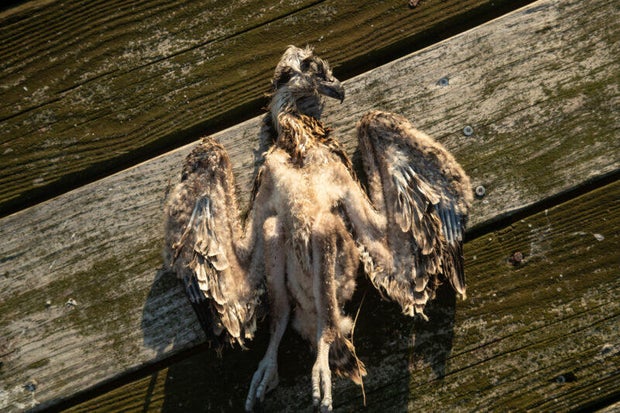
Another factor is that the Chesapeake Bay is seeing a decline in Atlantic Menhaden. Menhaden serves as an important food source for the osprey due to their high energy, density, and schooling behavior. They are also in abundance in Bay waters, but in some areas Menhaden have declined by more than 80% since the 1980's. This means the diet of the osprey has declined 50%. The reason for the decline in Menhaden is not clear, but experts think it is due to climate, commercial harvesting changes or delayed entry into Bay waters.
Ospreys depend on a high fish count during April, May and June. But when Menhaden do not arrive until June or July, it makes it hard for the osprey to eat.
To learn more about osprey decline and reproduction in the Chesapeake Bay, visit the Center for Conservation Biology.