Baltimore leaders propose sweeping public safety, 911 reforms but questions remain over cost

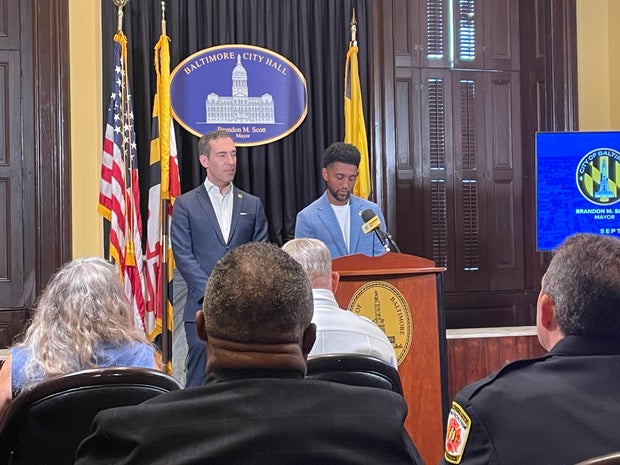
Baltimore City's mayor and council president are proposing an entirely new department — on equal footing with the police and fire departments — to handle some public safety responsibilities.
The proposed Department of Neighborhood Safety would respond to nonviolent calls involving people experiencing mental health crises and other emergencies that the mayor said place a burden on police and 911.
Several city leaders told WJZ Investigates they were not given advance notice of the proposal, including the city's state's attorney.
Crisis response deaths
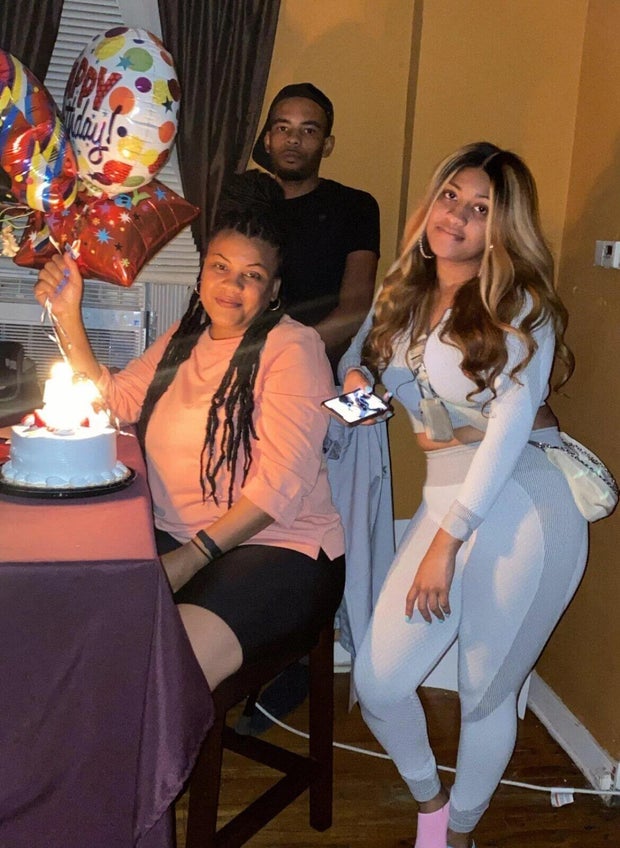
Pytorcarcha Brooks, 70, who had a history of mental health issues, was shot and killed by Baltimore police last year.

Officers used a Taser on Brooks but said she continued advancing toward them while holding a knife.
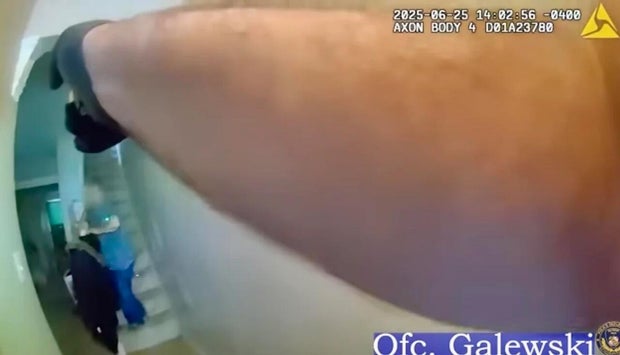
That same week, Dontae Melton was experiencing a mental health crisis when he approached a Baltimore police officer for help.
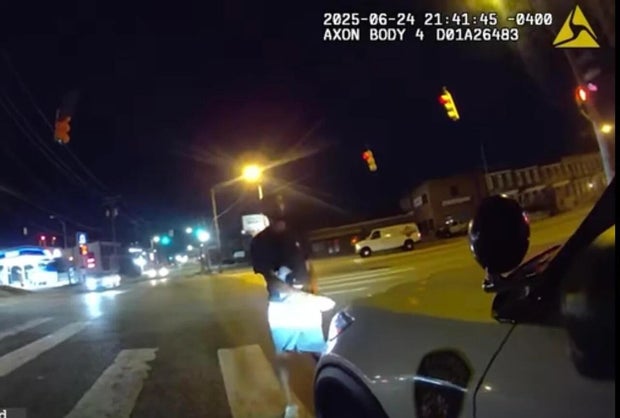
Police later restrained Melton, the father of two, and called for a medic. But the medic never arrived, and Melton died.
The Computer-Aided Dispatch, or CAD, system—which serves as a critical communication link between police, fire and 911—went down, possibly because of the heat.
Melton's mother, Eleshiea Goode, demanded change during an April investigative hearing before the city council.
"I'm asking you to fix what broke my son's life," Goode said. "A CAD system that must never go dark again, crisis response training that prepares officers to recognize stress and not escalate it. He should not have been captured. He needed help."
The Maryland attorney general's office declined to file criminal charges in either case.
Now, as part of the proposal from Mayor Brandon Scott and City Council President Zeke Cohen, the city's CAD system would be replaced at a cost of $12.4 million.
Department of Neighborhood Safety
The proposal would also create an entirely new Department of Neighborhood Safety, or DNS.
The department would have equal standing with the police and fire departments and employ trained staff to respond to nonviolent crisis calls.
Some of the startup funding would come from Baltimore's opioid settlement, but the long-term costs remain unclear.
"Obviously it's going to involve city funds. We're going to have to stand up a completely new agency, but that's why we're going to do this the right way and not rush it," the mayor said.
Scott declined to provide specifics about the long-term costs, saying it is too early.
"First, we have to get a bill passed before we can talk about any of that stuff," Scott said.
A news release from the mayor's office said $3.4 million in opioid restitution funds would be used "to support the initial planning phase," along with $1 million in federal funds to expand alternative response team capabilities.
DNS would also codify the work of the Mayor's Office of Neighborhood Safety and Engagement, or MONSE, the administration's violence-prevention program. City leaders have credited MONSE with helping contribute to a historic drop in homicides.
"This is about making sure that we are not sending folks with lights and sirens and guns and badges to something they don't need to," Scott said. "Because what our residents want the police to be doing is what they should be focused on—people with guns, gun traffickers, groups of violent people. ... Our residents do not want the police out there dealing with something they're not the most equipped to do. This is what this is about for us. Nothing else."
The mayor's office estimates that about 22,000 911 calls each year could be better handled by alternative responders rather than police.
Those calls include reports of loitering, welfare checks and requests for help involving people experiencing homelessness. The city said homeless services account for roughly one-third of those calls.
The mayor's office said responders would be trained professionals held to the same standards for response times and service as police and fire personnel.
"This is going to be administered with support from the police department. We are going to do it in an open partnership, and there will be cases most likely where an officer and a clinician or a peer co-respond together," Cohen said.
No prior notice
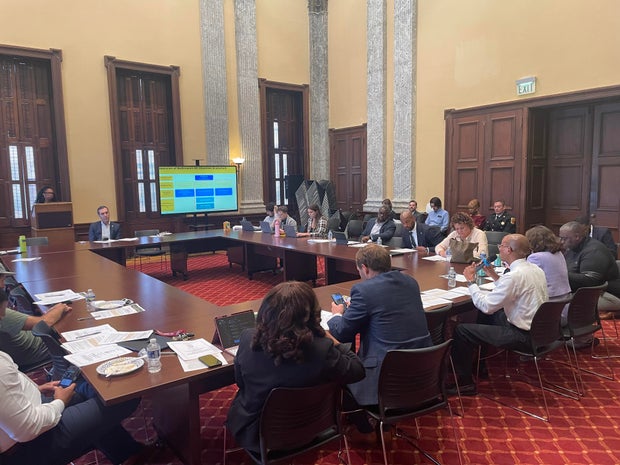
Some city leaders said they were kept in the dark about the proposal, including Councilman Mark Conway, who was removed as chair of the Public Safety Committee last week.
"Do we anticipate any cuts to the police department or the fire department as we take some of those responsibilities away from the police department and the fire department?" Conway asked during a City Council working luncheon attended by WJZ Investigates.
Cohen said the proposal would not affect the police budget.
Speaking to reporters earlier, Scott said, "That is not our intent here. We're not talking about BPD's budget. We're talking about response—proper response to incidents."
A spokesman for Baltimore City State's Attorney Ivan Bates told WJZ Investigates that Bates was unaware of the proposal until Monday morning.
"He will hold further comments until he receives additional information on the proposed department," communications chief James Bentley told WJZ Investigates reporter Mike Hellgren.
Cohen introduced the proposal Monday evening before the City Council and promised that the new department would be subject to public scrutiny.
"This is about creating a public agency that will be entirely in public, that will have every opportunity for scrutiny for accountability," Cohen said.
The proposed Department of Neighborhood Safety is modeled after a program in Durham, North Carolina.
If the City Council approves the proposal, Baltimore plans to conduct a nationwide search for an executive director and deputy director to oversee the new department.


