Mold and mushrooms reported inside Baltimore homeless shelter, OIG reveals
Mold, mushrooms and poor moisture control were discovered inside a Baltimore hotel-turned-homeless-shelter, according to a new report from the city's Office of Inspector General (OIG).
The OIG investigated complaints stemming from three shelters: The former Sleep Inn and Suites on N. Front Street, the former Holiday Inn Express on N. Gray Street and the former Fairfield by Marriott Inn & Suites Baltimore Downtown/Inner Harbor on S. President Street.
These hotels were used as emergency shelters during the COVID-19 pandemic, and the city later purchased the Sleep Inn to serve as a family shelter and the Holiday Inn to serve single men. They are both overseen by two separate contractors -- one responsible for shelter operations and the other for building maintenance.
The worst of the grievances came from the Sleep Inn family shelter, including photos showing mushrooms growing inside a room.
Complaints from shelter residents and staff
The OIG launched its investigation following a July 2025 complaint.
"The complaint alleged that residents' grievances were not being addressed and raised concerns about the condition of the buildings, food quality, and the lack of functioning laundry equipment, bedding, soap, and toilet paper. The complaint also alleged poor ventilation in the buildings as well as mold growth and pest infestations," according to the OIG report.
OIG investigators then reviewed complaints from residents and staff, interviewed current and former employees and conducted site visits.
Those familiar with the conditions in the Sleep Inn reported mold, untreated sewage, pest infestations, broken laundry facilities and unclean linens. They also alleged residents were getting sick due to the mold and bed bug exposure.
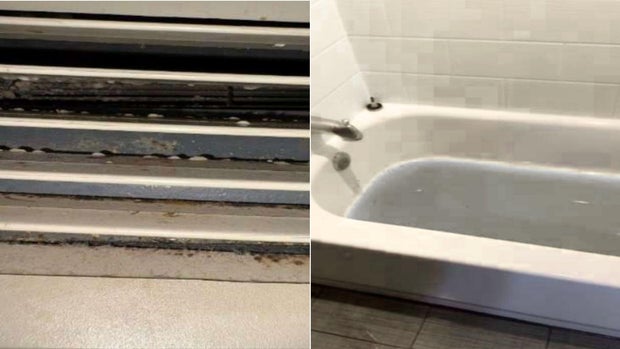
One resident said the heating and cooling units inside the rooms contained mold, while another said the ventilation fans in the bathrooms did not work, allowing moisture to build and mold to grow. Another person shared videos showing dark water backing up into their bathtub, and another complained the sheets were dirty, bloody and appeared to be from a hospital.
Residents said they felt the shelter operator retaliated against those who spoke out about the poor conditions, and they weren't receiving adequate services -- made worse by low staffing and high employee turnover.
Former employees with the Mayor's Office of Homeless Services (MOHS) also described the situation at the shelters as "critical" and "horrific," according to the report. They reported seeing mold, bed bugs, broken elevators and a lack of hot water. They said the in-unit HVAC systems often leaked, and none of the bathroom fans worked.
Mold and mushrooms
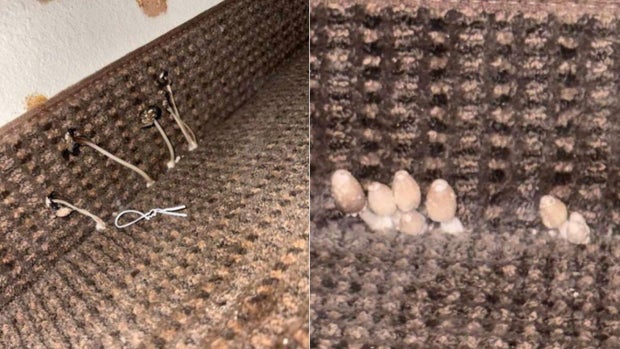
When it came to mold complaints, former employees said the building maintenance contractor would handle remediation by simply painting over the mold. They said the contractor ordered mold testing for several rooms after confirming multiple rooms had elevated levels.
The OIG also received photos showing mushrooms growing inside a room at the Sleep Inn. The photos contained in the report appear to show the mushrooms growing out of the carpet.
OIG investigators confirmed they found a work order request to investigate the fungal growth.
When investigators visited the Sleep Inn, they found the bathroom fans were not working, and the controls for the main HVAC system on the roof appeared to be switched off. They said the hallways were significantly hotter than individual rooms, and the laundry room was humid and poorly ventilated.
They also found trash carts with a strong odor sitting not far from residents' rooms, exposed pipes and insulation from a recent leak repair, and water damage on a section of the ceiling.
While the worst issues were discovered at the Sleep Inn, site visits at the Holiday Inn and Fairfield Inn also revealed water stains, humid laundry facilities and signs of pests.
OIG's recommendations
As part of the investigation, OIG spoke with the MOHS director, who acknowledged the hotels-turned-shelters pose a unique challenge, in part because they were not designed for long-term occupancy. The director said they were made aware of the mold and other complaints in June 2025 and have been working to address the concerns.
The OIG report includes three recommendations for next steps moving forward:
- Create a comprehensive oversight program to ensure proper ventilation and moisture control within homeless shelters to prevent mold growth
- Create a comprehensive maintenance contract that covers the specific needs of the homeless shelters and clears up
any confusion between MOHS and any maintenance contractors - Provide more on-site MOHS support and strengthen contract management of city contractors and city-owned properties


