Father describes family's hospitalizations from mold at Baltimore hotel turned homeless shelter

Advocates for Baltimore's homeless community are calling on Maryland's General Assembly to investigate living conditions at several hotels the city purchased and turned into shelters.
This comes one week after an inspector general report detailed mold and mushrooms growing inside one of the properties, along with other health issues.
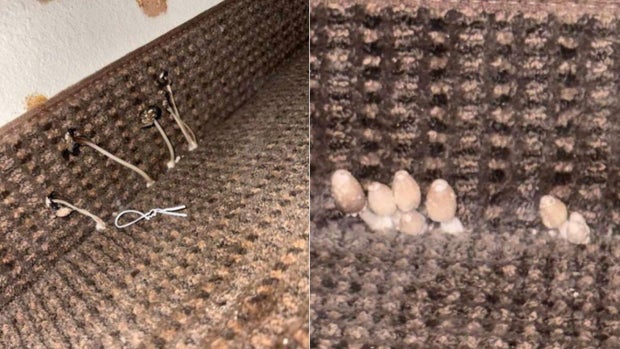
The city said it has taken steps to address maintenance issues and make sure problems do not arise again, but some residents are still scarred by what they went through.
A family's battle with mold
Two years ago, city leaders celebrated as they cut the ribbon on their newest purchases — several downtown hotels to house the homeless. They cost more than $15 million in federal taxpayer funds through the American Rescue Plan Act.

But for Marcus Clark and his family, their room at the former Sleep Inn on Fallsway turned into a nightmare when he went to the hospital experiencing severe breathing problems.
"I started experiencing symptoms that felt like a heart attack," Clark told WJZ Investigator Mike Hellgren.
Then, his children got sick.
"[My son] had symptoms that would be like a really, really terrible case of RSV, and his lungs sounded like they were collapsing. You would hear his breath catching and it sounded like something wet," Clark said. "And when we brought this to their attention, they told us it was nothing. We found spores — growing spores in our air conditioning unit where he was sleeping. We brought this to their attention. They did nothing. They said they were putting in a work order. Nothing happened."
He said things changed when Baltimore City Inspector General Isabel Cumming got involved. Last week, she released a report detailing mold in multiple rooms, possible raw sewage bubbling into tubs, mushrooms growing out of carpets, and vent fans that did not work.
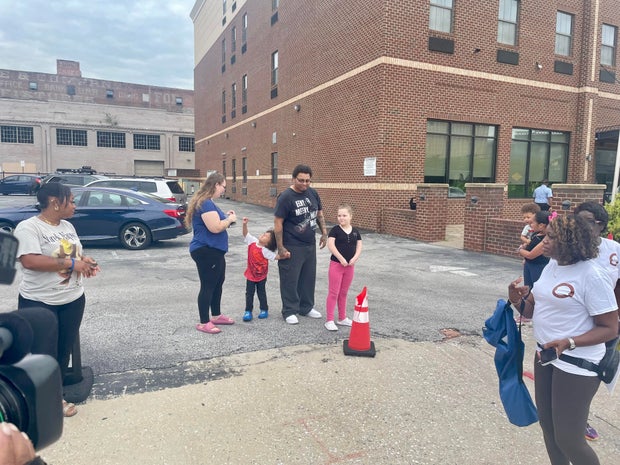
Clark told WJZ tests showed more than 1,000 toxic mold spores in his family's room. He said all three of his children went to the hospital.
"It wasn't just once. It was multiple times for all of our kids," Clark said.
He said he now lives with his family at another shelter.
"It's very scary. We wouldn't even know if the same thing is going on where we are now, because they wouldn't tell us," he said.
Quinetta Cooper told Hellgren she lived at the former Sleep Inn last year with her children who also got sick from mold.
"I have a kid who suffers from severe asthma. I had to take him to the hospital due to him having an asthma attack. It was bad," she said.
Cooper became emotional when asked what she would say to people in power.
"To the mayor, it's not fair that people have to live this way in these shelters," the mother said. "We are children of God."
Pushing for further investigation
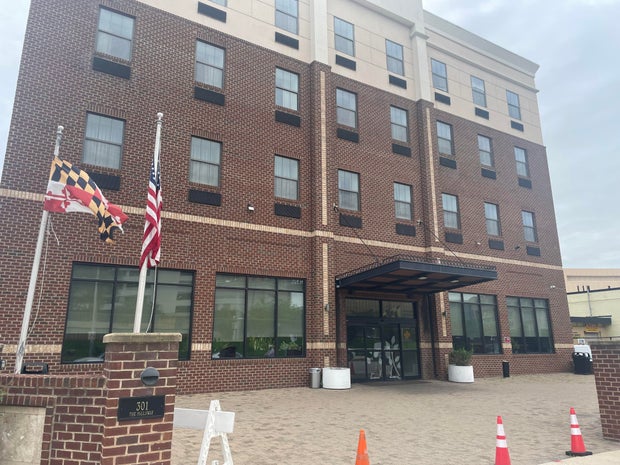
Advocates for the unhoused gathered outside the former Sleep Inn on Thursday to call on the Maryland General Assembly to conduct an investigative hearing into the millions spent on the shelters, the past maintenance issues, and what is being done to secure permanent housing for vulnerable people.
They previously called on the city council to conduct a hearing, as well.
"We're talking about the effects on these families, the children. They could be your children that have to go through some of the issues that a lot of these children had to endure in these shelters," said Reverend Christina Flowers, an advocate for the community.
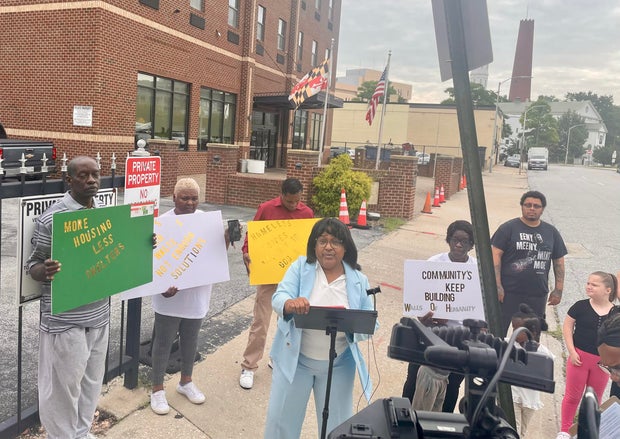
Zulieka Baysmore, who ran for mayor in Baltimore and also advocates for the community, told the crowd gathered outside the shelter there must be a more permanent solution.
"We have people who have been in this shelter for more than two years. That's absurd. It's not sustainable. It's wasteful of the taxpayer dollars," Baysmore said.
City response
Ernestina Simmons, the executive director of the Mayor's Office of Homeless Services (MOHS), responded to the inspector general's findings on Aug. 7 and said progress has been made with contractors to ensure safety issues do not arise again.
She noted monthly pest control requirements, including biweekly treatment for bedbugs in residents' rooms, and said there are weekly inspections of the ventilation systems. She stressed a new maintenance plan has been implemented.
"MOHS agrees that stronger preventive maintenance, clearer accountability, more direct on-site oversight, and consistent resident feedback mechanisms are necessary to protect resident safety and dignity," Simmons wrote. "The new facilities-management framework establishes defined tasks, frequencies, staffing, response times, escalation requirements, performance measures, and audit-ready documentation. MOHS will monitor implementation and will take corrective or contractual action when performance does not meet the established standards."
You can read the full report from the inspector general and Simmons' full response here, including detailed measures to improve maintenance.


