Baltimore City data center bill faces backlash from activists: "A huge red flag"

A Baltimore City Council bill proposing a pathway for data centers drew significant online backlash over the weekend after a local activist called for it to be taken off the table.
The bill was introduced in April by Councilwoman Phylicia Porter. It would establish the type of permit a data center would need, as well as require developers to complete a health equity assessment.
Baltimore is one of several Maryland jurisdictions with an active data center moratorium. The city's yearlong moratorium took effect in May.
The activist speaking out against the bill is also calling for an outright ban on data centers.
Red flags
Hillary Gonzalez sets the tone at the very beginning of her video.
"Baltimore City is considering a bill...and everyone concerned about data centers needs to know what this bill actually does," Gonzalez said in the Instagram video, which had garnered more than 90,000 views as of Monday afternoon.
Gonzalez is specifically referring to Council Bill 26-0174, which would require data centers to obtain a conditional use permit.
Developers would also need to submit a health equity assessment detailing potential health impacts within a 1.5-mile radius of the proposed site.
One of Gonzalez's biggest concerns is that the assessment would not be conducted by an independent party.
"That sounds like a huge red flag and also a conflict of interest to me," she said in an interview Monday. "I do not trust the developers in this city to determine what's good for this city and what isn't."
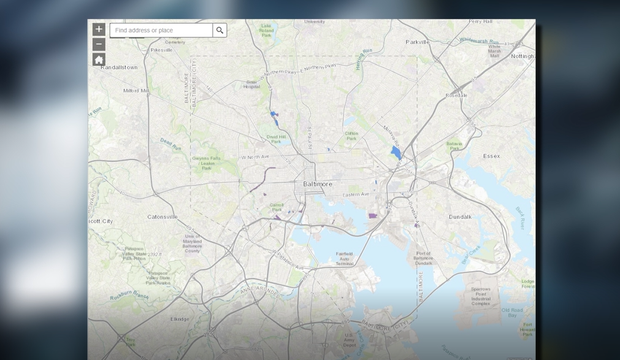
She also questioned the bill's area of impact.
"Does air stay in a 1.5-mile radius? Does water stay in a 1.5-mile radius? Does sound travel?" Gonzalez said.
Under the bill, conditional use permits would be allowed in zoning districts IMU-2, I-2 and MI.
There are only a few of these zoning districts within the city, according to city zoning records. However, some are located in well-populated areas, including Curtis Bay, Canton and Hampden.
It's important to note that the bill still has a long way to go before it could be considered for a vote.
In defense of the bill
Porter did not respond to WJZ's request for comment, and a spokesman for Baltimore City Council President Zeke Cohen said Cohen was not available Monday.
However, when introducing the bill during an April 27 meeting, Porter said the legislation aims to give Baltimoreans a say in what is developed in their communities.
"Colleagues, the data center industry is rapidly expanding across the country. Baltimore should be and can be a part of that economic future, but not at the expense of communities that have already absorbed so much," she said.
Cohen is a sponsor of the bill. When testifying in support of the moratorium, he said the city would take time to determine the best way to handle data centers.
"Until it is made clear how Baltimore can unequivocally win from this new technology, we will not participate in the race to the bottom," he said.
Gonzalez said the only way to protect Baltimore from potential harm is to prevent data centers from being built within the city.
"There's only one way to protect Baltimore, ban data centers," she said.
The bill is scheduled for public comment before the city's Planning Commission on Aug. 27 and the City Council's Land Use & Transportation Committee on Sept. 24.
Gonzalez organizes with the People's Green Liberation Coalition, which is holding a rally against data centers on Aug. 23.
The rally is scheduled to take place in front of Baltimore City Hall at 5 p.m.


