Statewide race for Georgia Public Service Commission in the spotlight as Democrats seek wins
Two Democratic challengers are trying to secure seats on the Republican-controlled board that regulates Georgia utilities, but the state GOP is making moves to fend off their attempt.
Statewide, voters will elect two commissioners to the Georgia Public Service Commission in November. The commission sets rates for electricity, natural gas, and telephone services.
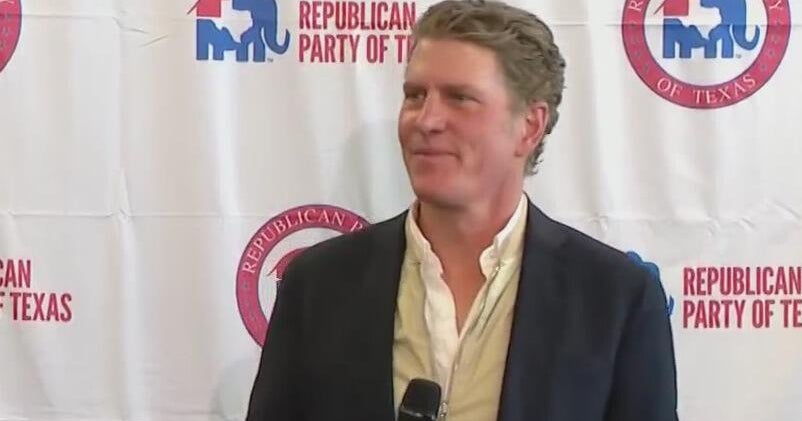
In District 2, incumbent Tim Echols is facing off against health care consultant Alicia Johnson. Echols has been a member of the commission since 2011. In the District 3 race, voters will decide between incumbent Fitz Johnson, who was appointed to the commission in 2021 by Gov. Brian Kemp and has never faced voters, and green energy advocate Peter Hubbard.
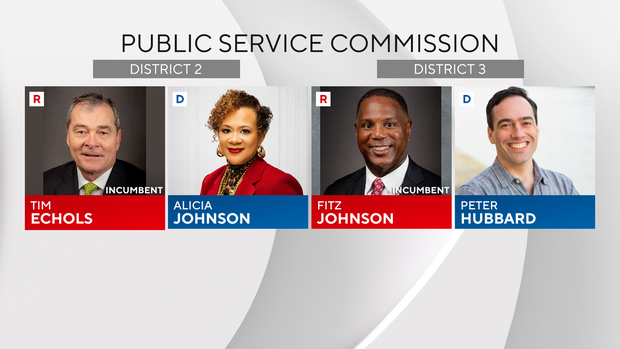
Supporters of the Democratic candidates are spending large sums on races that typically cost less than $500,000. Georgia Conservation Voters Action Fund said that it would spend more than $2.2 million. On the Republican side, Kemp is spending from his own war chest to support Echols and Johnson.
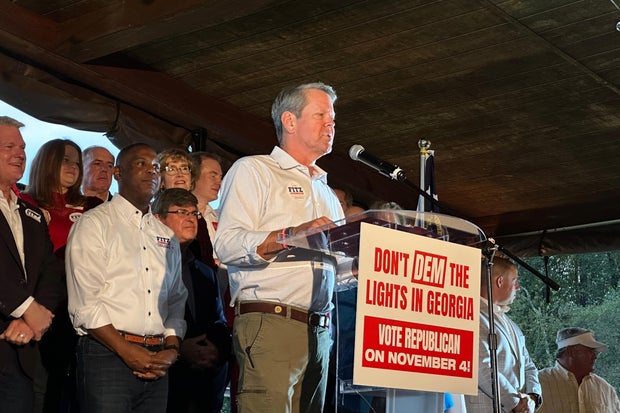
"People just don't know what's going on. They don't know how important it is, and the Democrats want it to stay that way," Kemp said at an Oct. 7 rally in Cumming, a key GOP heartland north of Atlanta.
Power rate increases and freezes
Georgia Power bills have risen six times in recent years because of higher natural gas costs and construction projects, including two new nuclear reactors at Plant Vogtle near Augusta. A typical Georgia Power residential customer now pays more than $175 a month, including taxes.
Republicans are touting a three-year freeze in base rates that they enacted in July, although bills could still rise next year to pay off nearly $1 billion in storm damage, mainly from 2024's Hurricane Helene. They're also trying to flip the cost argument on Democrats, claiming Democrats will try to shutter natural gas plants, drive up power bills with environmental mandates, and force affluent consumers to subsidize poorer consumers.
"This is the Green New Deal, and it is crushing families around this country," Fitz Johnson said.
Hubbard said Republican attacks claiming Democrats would raise bills are "patently not true."
"No one's saying that. And furthermore, you've just done that to the people of Georgia," Hubbard said, referring to bill increases approved by Echols and Fitz Johnson.
A statewide race in the spotlight
Unusually, because of a voting rights lawsuit that delayed elections, Georgia's Public Service Commission races aren't overshadowed by governor or U.S. Senate contests. While Atlanta and other cities are having municipal elections, the commission races are the only statewide offices on the ballot for many voters.
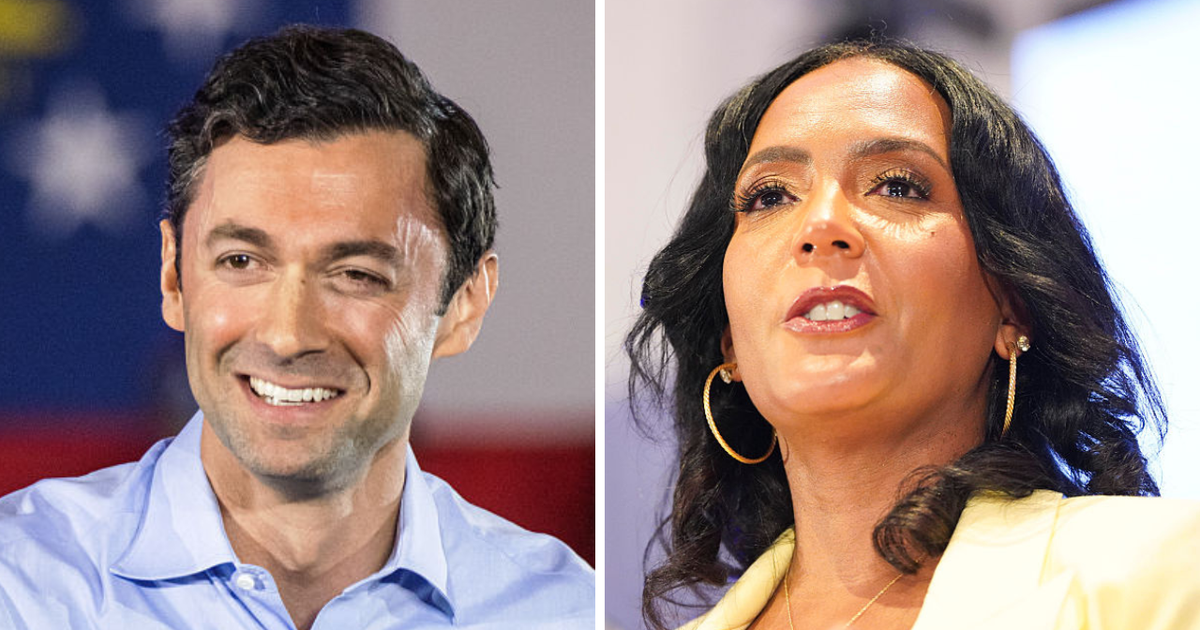
For Democrats, it's another chance to show strength in Georgia. After a long drought, Joe Biden won Georgia's presidential votes in 2020, and Democratic U.S. Sens. Jon Ossoff and Raphael Warnock were elected in a January 2021 runoff. But while Warnock was reelected in 2022, Democrats lost from governor on down that year.
No Georgia Democrat has won a nonfederal statewide office since 2006.
A win for Democrats could juice fundraising, candidate recruitment, and enthusiasm going into 2026, when Ossoff will try to win reelection and Democrats will try to win a gubernatorial race for the first time since 1998.

What's the future of Georgia's power grid?
There are other issues at stake, especially with electricity demand projected to rise because of the growth in computer data centers. The commission passed rules it says will protect other ratepayers from shouldering the costs for data centers, but Democrats say those rules are too flimsy.
The typical Georgia Power residential customer is paying more than $14 a month just for the new reactors at Vogtle, after Georgia Power and its co-owners spent $30.9 billion — coming in seven years late and $17 billion over budget.
Both Echols and Fitz Johnson say they support additional nuclear reactors, with Echols telling The Associated Press on Monday that he would vote for more nuclear plants now if the federal government would provide protection against cost overruns. He added that nuclear is 'too risky' right now."
Alicia Johnson and Hubbard emphasize solar and wind power, motivated by concerns about carbon emissions from natural gas plants that Georgia Power wants to build. The Democrats also support lowering how much Georgia Power can earn on the money it invests, the key driver of the company's profits.
There are other signs of trouble for Republicans. Echols says city elections statewide are likely to bring out more Democrats than Republicans. Although microscopic, Democratic turnout far outstripped Republican turnout in primaries over the summer, and Democrats may be more eager to vote because of discontent with President Donald Trump.
"I mean, I'm going to have a hard enough time getting my relatives to go out and vote," Echols said.
Overall, the commission races remain obscure. Early voting started last week, and only 112,000 people have cast votes through Monday.
The Associated Press contributed to this report.